Home/Blog/TypeScript for Modern Teams: Why Typed JavaScript Matters in AI Offices
human + AI workflows
TypeScript for Modern Teams: Why Typed JavaScript Matters in AI Offices
TypeScript for Modern Teams: Why Typed JavaScript Matters in AI Offices TypeScript is commonly described as JavaScript with type syntax. That simple idea can be useful for teams th
11 MIN READ
31 Jul 2026
human + AI workflows
TypeScript for Modern Teams: Why Typed JavaScript Matters in AI Offices
TypeScript is commonly described as JavaScript with type syntax. That simple idea can be useful for teams that want more clarity in shared code and workflows. In an AI office environment like Nonilion, typed contracts can help reduce ambiguity in handoffs and make shared work easier to follow.
01What Is TypeScript?
TypeScript is a strongly typed programming language that builds on JavaScript. It adds static typing and optional type annotations, while still transpiling to JavaScript for execution.
Want your team to run this workflow with AI-native execution?
A practical way to think about it is this: TypeScript adds syntax on top of JavaScript so developers can describe data more clearly and catch errors earlier in the editor. That tighter integration with tooling is one reason it is used for application-scale JavaScript.
For modern teams, that means TypeScript is not only about code style. It is about making data shapes, function inputs, and expected outputs more explicit before runtime. In collaboration-heavy environments, that clarity can reduce the space where misunderstandings hide.
02TypeScript vs JavaScript
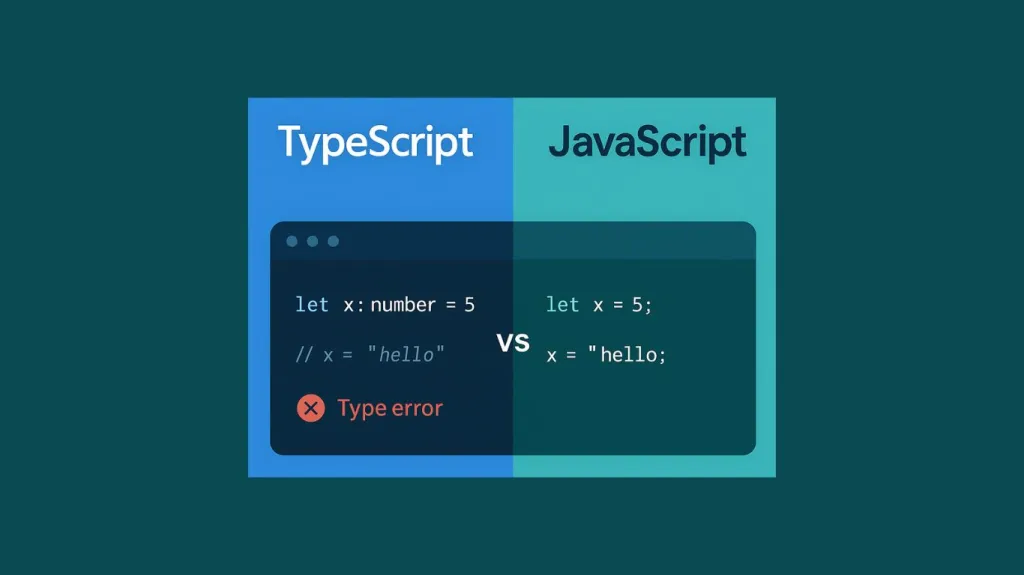
The most important difference is that JavaScript is flexible, while TypeScript adds a type layer that helps teams work with more structure. TypeScript is a superset of JavaScript, so existing JavaScript knowledge still applies.
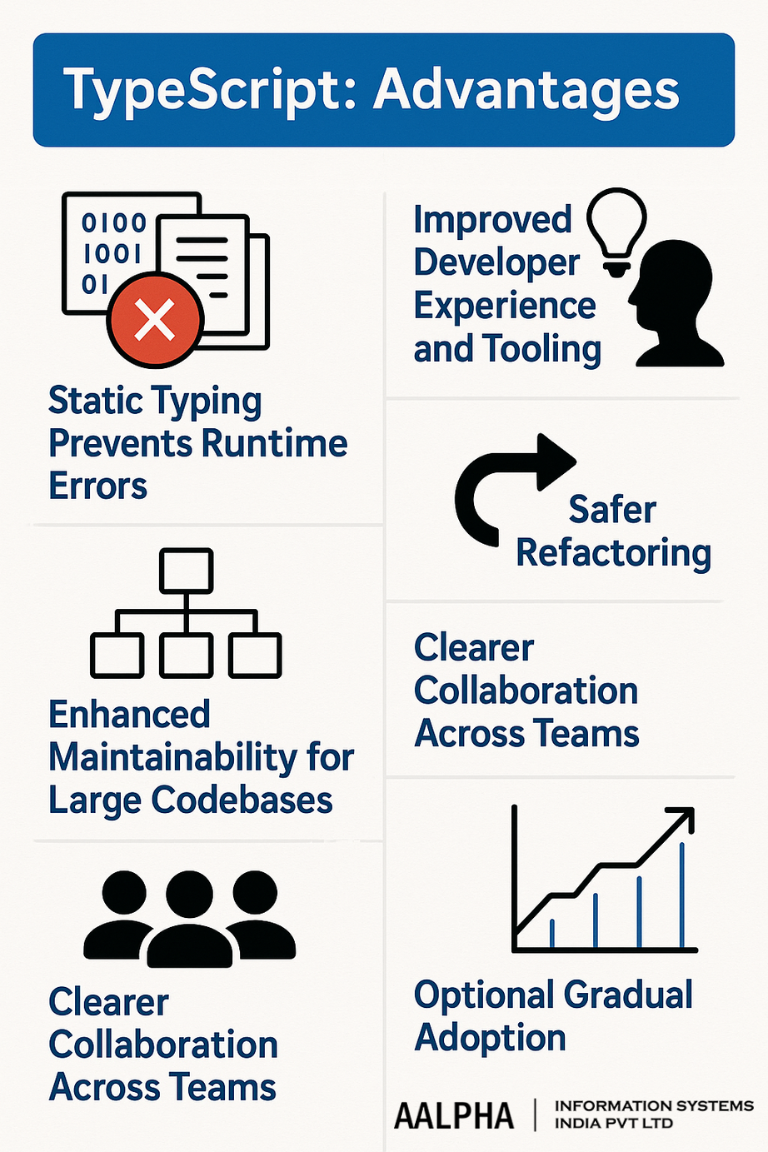
That matters in real workflows because flexibility alone can become harder to manage as systems grow. When many people contribute to the same codebase, optional type annotations and static typing help editors and compilers surface issues earlier.
A useful way to frame the tradeoff is:
JavaScript offers speed and simplicity for direct scripting and smaller tasks.
TypeScript adds a clearer contract for larger teams and larger applications.
TypeScript can be adopted gradually, which lowers the barrier to entry.
TypeScript compiles to JavaScript, so the output remains compatible with JavaScript execution.
This is why the difference matters beyond syntax. In complex workflows, the question is not just “Can the code run?” but “Can the team trust what the code means?”
03Why TypeScript Became a Common Choice for Scaling Complex Codebases
The analyzed sources consistently point to scale as a central reason TypeScript is widely used. It is described as a language for application-scale JavaScript and as a tool that gives better tooling at any scale.
That combination is useful because scale creates ambiguity. As codebases grow, more people touch more files, and more assumptions get encoded into functions, modules, and interfaces. TypeScript helps teams describe data and behavior more explicitly, which supports safer refactoring and more reliable editor feedback.
There is also a tooling dimension. TypeScript is designed to work closely with editors and build workflows, and it supports integration with build automation tools. That makes it especially useful when teams want a tighter loop between writing code and validating it.
For product teams, the strategic value is straightforward:
Catch errors earlier in the editor.
Make data structures easier to understand.
Support gradual adoption in existing JavaScript projects.
In other words, TypeScript is not just a language choice. It is also a coordination choice.
04How TypeScript Reduces Ambiguity in Async, Distributed, and Multi-Agent Systems
As workflows become more async and distributed, ambiguity becomes one of the biggest hidden costs. TypeScript helps reduce that ambiguity by making data contracts more explicit, especially when values move across modules, services, or execution steps.
This is particularly relevant in systems where humans and AI agents share responsibility. If an agent prepares structured output, and a human later reviews or extends it, typed data can make the handoff more predictable. The same is true when a task moves from planning to execution to follow-up.
TypeScript is also useful because it supports definition files that describe the type information of existing JavaScript libraries. Based on the sources, this allows other programs to use values as if they were statically typed TypeScript entities. That can be useful in distributed systems, where different parts of the workflow need a common understanding of the same data.
In practice, TypeScript helps teams answer questions like:
What shape should this task object have?
What does this function expect as input?
What should be returned after async execution?
What can an AI agent safely generate for a human reviewer?
When those answers are explicit, collaboration becomes easier to scale.
05TypeScript in AI Office Workflows: Typed Contracts for Humans and AI Agents
In an AI office, work is not only produced by people. It is also prepared, routed, summarized, and executed by AI agents. That makes typed contracts especially valuable because they give both humans and agents a shared structure to work from.
Nonilion is a useful lens for this because an AI office depends on coordination across meeting follow-ups, async execution, and workflow automation. In that kind of shared workspace, TypeScript can help define the objects and interfaces that keep work moving without constant clarification.
For example, a typed workflow can make it easier to separate:
a meeting note from a task assignment,
a task assignment from an execution step,
and an execution step from a review-ready update.
That structure matters when AI agents are involved because agents perform best when the expected input and output are clear. Humans also benefit because typed data reduces the need to interpret loosely formatted handoffs.
This is where TypeScript becomes more than a developer tool. It can also support coordination between human and AI work.
06Where TypeScript Adds the Most Value in Collaboration-Heavy Product Teams
TypeScript adds the most value when work crosses boundaries. That includes boundaries between teams, between services, and between people and automation.
The sources suggest it is especially useful for large applications and for developers who want better tooling at scale. In collaboration-heavy product teams, that usually means the highest-value use cases are the ones with repeated handoffs and shared data structures.
JavaScript libraries used across multiple parts of a product
TypeScript also supports gradual adoption, which is important for teams that cannot pause delivery to rewrite everything at once. That makes it a practical choice for organizations that want more structure without losing momentum.
For AI office workflows, the same logic applies. The more often a task is passed between a human and an agent, the more value there is in making the contract explicit.
07When TypeScript Is Worth the Overhead—and When It Is Not
TypeScript is not automatically the right answer for every situation. The added syntax and type discipline create overhead, so the decision should match the complexity of the work.
It is usually worth it when:
the codebase is large,
many people collaborate on the same system,
data shapes matter across multiple steps,
or the workflow depends on safer refactoring and earlier error detection.
It may be less useful when:
the task is small and temporary,
the script is simple and isolated,
or the added structure does not buy meaningful coordination benefits.
The key question is not whether TypeScript is “better” in the abstract. It is whether typed structure reduces enough ambiguity to justify the added discipline. Based on the analyzed sources, that tradeoff becomes more favorable as scale and collaboration increase.
08How to Use TypeScript for Safer Handoffs, Refactoring, and Workflow Automation
TypeScript is especially effective when teams use it to make handoffs more reliable. The more a workflow depends on shared objects, the more useful it is to define those objects clearly.
A practical approach is to use TypeScript to support three things:
Safer handoffs — define the shape of data before it moves to the next person or system.
Refactoring — rely on type information and editor feedback to reduce accidental breakage.
Workflow automation — keep automated steps aligned with the same data expectations used by humans.
This is also where TypeScript supports human + AI collaboration. If an AI agent generates a draft task, a follow-up summary, or a structured update, typed contracts make it easier for a human to review the output and for downstream automation to consume it.
That is especially relevant in Nonilion-style workflows, where meeting follow-ups and async execution need to stay synchronized across a shared workspace.
For AI offices, TypeScript is best understood as a reliability tool. It helps define the shared language that humans and AI agents use when work needs to move quickly but accurately.
In this platform context, that means typed interfaces can support a workspace where meeting follow-ups are captured consistently, task objects are structured for automation, and async execution can proceed with fewer assumptions. The benefit is not just cleaner code; it is cleaner coordination.
This matters because AI offices depend on trust in the handoff. If an agent prepares a task and a human reviews it later, both sides need to interpret the same structure in the same way. TypeScript helps make that possible by reducing ambiguity at the level where work is defined.
10A this platform Example: Typed Task Objects, Meeting Follow-Ups, and Async Execution
Imagine a shared workflow in which a meeting produces action items, an AI agent turns them into task objects, and a human later reviews priorities before execution begins. TypeScript can help define the shape of those objects so the workflow stays consistent from one step to the next.
A useful pattern would be:
meeting notes become structured follow-up items,
follow-up items become typed task objects,
task objects move into async execution,
and execution results return as reviewable updates.
That sequence is exactly where typed contracts matter. It gives the AI agent a clear format to generate, gives the human a clear format to inspect, and gives the automation layer a clear format to process.
In that sense, this platform is not just a place where TypeScript could be used. It is the kind of AI office where TypeScript’s strengths become visible: fewer misunderstandings, cleaner handoffs, and more dependable collaboration between humans and agents.
11Key Takeaways
TypeScript is JavaScript with type syntax, but its real value is organizational. It helps teams catch errors earlier, describe data more clearly, and scale collaboration with less ambiguity.
It is most valuable when work is complex, shared, and async. That is why it fits naturally into AI offices, where humans and AI agents need typed contracts to coordinate reliably.
For this platform-style workflows, the lesson is simple: when task objects, meeting follow-ups, and automation steps are structured well, collaboration becomes easier to trust and easier to scale.
12Why This Trend Matters for Nonilion
This trend matters to Nonilion because it points to a bigger change: teams are moving from simple calls toward persistent, AI-supported collaboration spaces. Nonilion can bridge live presence, meeting context, avatars, and follow-up work so the trend becomes a usable workflow instead of a headline.
13Shareable Extracts
The trend is not just "TypeScript for Modern Teams: Why Typed JavaScript Matters in AI Offices" - it is a signal that team coordination is becoming the next competitive edge.
Hot take: the teams that win from this shift will not be the ones with more meetings; they will be the ones with clearer shared context after every meeting.
If typescript for modern teams: why typed javascript matters in ai offices keeps moving this fast, remote teams need a workspace where conversation, presence, and follow-up stay connected.
TypeScript for Modern Teams: Why Typed JavaScript Matters in AI Offices TypeScript is commonly described as JavaScript with type syntax.
That simple idea can be useful for teams that want more clarity in shared code and workflows.
14Social Hooks
Everyone is talking about TypeScript for Modern Teams: Why Typed JavaScript Matters in AI Offices. The overlooked part is what happens to team workflows after the headline fades.
The uncomfortable question behind TypeScript for Modern Teams: Why Typed JavaScript Matters in AI Offices: are teams adapting their collaboration systems fast enough?
This is not a meeting trend. It is a coordination trend, and products like Nonilion sit right in the middle of that shift.