Home/Blog/The $500M Question: Harvey, Open-Source, and the Future of Specialized AI Agents
human + AI workflows
The $500M Question: Harvey, Open-Source, and the Future of Specialized AI Agents
The $500M Question: Harvey, Open-Source, and the Future of Specialized AI Agents The landscape of artificial intelligence is rapidly evolving, with significant investments fueling
15 MIN READ
28 Oct 2026
human + AI workflows
The $500M Question: Harvey, Open-Source, and the Future of Specialized AI Agents
The landscape of artificial intelligence is rapidly evolving, with significant investments fueling the development of highly specialized AI solutions. A prime example is Harvey, a legal AI startup that has made headlines by raising substantial capital, including a recent $550 million funding round at a valuation reaching $15.5 billion to $15.6 billion. This monumental investment underscores the growing demand for AI tools capable of automating complex tasks within professional services. This article explores the implications of such concentrated investment in proprietary legal AI, contrasting it with the compelling vision of open-source alternatives, and examining how these specialized AI agents are reshaping the future of work within AI offices, where human and AI collaboration is becoming the new standard.
01Harvey's Ascent: Powering Legal Intelligence with $550M for AI
Harkening to the core question of how Harvey raised 500M for legal AI, the legal AI company Harvey recently announced a $550 million funding round. This substantial capital infusion was co-led by Diffusion and Lightspeed Venture Partners, pushing the company's valuation to an impressive $15.5 billion to $15.6 billion. This follows previous funding that brought Harvey's total raised capital to over $1.5 billion since its launch in 2022, signaling strong investor confidence in its specialized AI offerings for the legal sector.
Want your team to run this workflow with AI-native execution?
Harvey's value proposition extends beyond mere AI tools; it encompasses the entire infrastructure required for integrating AI into existing legal workflows. The company focuses on building custom models designed to automate complex legal tasks, providing a comprehensive platform for law firms and in-house legal teams. This includes purpose-built AI agents that execute intricate legal work end-to-end.
The platform offers a unified view of how various products support an entire legal practice. Key features highlighted include Agents, Vault for secure document storage and bulk analysis, Knowledge management, and Spaces for collaboration. Additionally, Harvey provides Command Center capabilities, Contract Intelligence, Horizon Scanning, IntakeNew, Connector LibraryNew, and Legal Work OrchestrationNew, all designed to streamline legal operations. These solutions cater to a diverse range of industries, including Healthcare & Life Sciences, Energy & Utilities, Technology, Media, Entertainment & Telecom, and the Public Sector, as well as practice areas such as Litigation, Transactional law, and Innovation.
This significant investment in Harvey underscores a broader trend: the increasing specialization of AI agents to address the unique demands of vertical markets. For legal professionals, Harvey's offerings aim to enhance efficiency, provide deeper insights, and enable legal teams to
focus on higher-value strategic work rather than repetitive document review.
02Why Specialized Legal AI Commands a Premium
Legal work is unusually well suited to specialized AI agents. Much of it involves structured, repeatable activities: comparing clauses, extracting obligations, identifying deadlines, reviewing regulations, preparing first drafts, and locating relevant authorities. At the same time, the consequences of an error can be substantial. A missed limitation period, misread indemnity, or unsupported legal conclusion can create financial and reputational exposure.
That combination creates demand for systems that are more reliable than a general-purpose chatbot. A legal AI product must understand terminology, preserve citations, distinguish facts from assumptions, and operate within confidentiality and access-control requirements. It also needs to fit the way lawyers already work. A tool that produces a fluent answer but cannot show the source document, explain its reasoning, or preserve an audit trail will have limited value in a professional practice.
This is one reason companies such as Harvey are valued differently from ordinary productivity applications. Their opportunity is not simply to sell access to a language model. It is to become part of the operating layer for legal work. If an agent can assist with intake, research, drafting, review, knowledge retrieval, and workflow management, it can potentially influence a large portion of a firm’s daily operations.
The premium also reflects the cost of enterprise deployment. Large firms expect secure infrastructure, customer support, administrative controls, integration with existing systems, and contractual commitments around data handling. They may require regional hosting, single sign-on, detailed permissions, retention policies, and documented evaluation procedures. Building and maintaining those capabilities is expensive, particularly when the product must meet the expectations of regulated customers.
03Rebuilding the Core as an Open-Source Project
The open-source alternative begins with a different premise: the most important legal AI capabilities should be inspectable, adaptable, and deployable by the people using them.
Rather than attempting to reproduce every feature of a fully funded enterprise platform, I focused on the core workflow. A user provides a set of legal documents and a question or task. The system retrieves the relevant passages, assembles context, asks a language model to produce an answer, and returns citations that allow the user to verify the result.
That sounds straightforward, but the quality of the system depends on the details. Documents must be parsed without losing headings, page numbers, tables, or footnotes. Text must be divided into meaningful sections instead of arbitrary character blocks. Search must combine semantic similarity with exact keyword matching, because legal questions often turn on a precise phrase. The model must be instructed not to invent authority when the supplied material does not support an answer.
A minimal architecture can be organized into several layers:
Document ingestion – accepts PDFs, word-processing files, web pages, and plain text.
Parsing and normalization – extracts text while preserving useful metadata such as document title, section, page, and paragraph.
Indexing – stores both keyword indexes and vector embeddings for retrieval.
Agent orchestration – routes tasks such as summarization, comparison, issue spotting, and question answering.
Citation and verification – links every important claim back to the source material.
Evaluation and observability – records failures, latency, retrieval quality, and user feedback.
Security controls – separates users, matters, documents, and model calls.
The result is not a magic replacement for counsel. It is a transparent research and drafting assistant that can be tested, modified, and deployed within an organization’s own environment.
04Retrieval Matters More Than Model Hype
One of the clearest lessons from building the system is that retrieval quality often matters more than choosing the newest model. A powerful model cannot reliably answer a question if it receives the wrong passages. Conversely, a smaller model can perform well when it is given focused, authoritative context.
Consider a question about termination rights in a commercial agreement. A naïve system might retrieve a paragraph containing the word “termination” but miss the definitions section, notice requirements, cure period, or provisions that modify the right elsewhere in the contract. A better system retrieves related clauses, follows cross-references, and presents the relevant sections together.
This is why legal retrieval benefits from a hybrid approach. Keyword search catches exact terms such as “change of control,” “most favored customer,” or “material adverse effect.” Semantic search catches paraphrases and conceptually related language. A reranking step can then prioritize passages that are both relevant and sufficiently specific to the question.
The agent should also know when to ask for clarification. “Is this clause enforceable?” is not a complete question without a jurisdiction, governing law, factual context, and sometimes the procedural posture of a dispute. A responsible system should identify those gaps rather than fill them with confident assumptions.
05Agents Need Boundaries
The word “agent” can suggest an autonomous digital lawyer operating without supervision. That is the wrong mental model for high-stakes legal work. In practice, useful agents are bounded systems with defined tools, permissions, and escalation paths.
It should not silently send an amendment to a counterparty, approve a risk exception, or represent that a legal conclusion has been verified by counsel. Those actions require explicit authorization and, in many settings, human judgment.
The same principle applies to legal research. An agent can search a collection of cases, extract holdings, organize authorities, and draft a research memo. A lawyer still needs to verify that the cases are current, applicable, accurately characterized, and relevant to the facts. Human review is not an embarrassing concession; it is part of the control system.
Good agent design therefore makes uncertainty visible. Answers should distinguish between information found in the source documents, reasonable inferences, and areas requiring further research. Confidence scores can be useful, but they should not be treated as proof of correctness. A citation that opens the exact supporting passage is generally more valuable than a percentage suggesting that the model is “92% confident.”
06What Open Source Changes
Open source changes the economics and governance of legal AI. A law firm or company can inspect the implementation, run the system in its own environment, and connect it to internal repositories without surrendering every document to a third-party service. Teams can adapt prompts, retrieval policies, and evaluation sets to their own practice areas.
It also makes experimentation more accessible. A small legal operations team can create a prototype for employment agreements, procurement contracts, litigation discovery, or regulatory monitoring without negotiating a large platform contract first. Researchers can test different embedding models, chunking strategies, and citation methods. Developers can contribute fixes when they discover a parsing error or a security weakness.
There are tradeoffs. Open-source software does not eliminate infrastructure costs, maintenance responsibilities, or compliance obligations. An organization operating its own system must manage authentication, backups, updates, incident response, and model-provider agreements. It must also decide whether the model itself is hosted locally, accessed through an API, or deployed through a private cloud.
The right comparison is therefore not “expensive proprietary product versus free software.” It is “managed platform versus configurable infrastructure.” A proprietary platform may provide a faster path to production and a broad set of integrated features. An open system may provide more control, lower vendor dependency, and greater flexibility. Different firms will make different choices depending on their risk tolerance, technical capacity, and workflow requirements.
07Measuring Whether It Actually Works
Legal AI should be evaluated with more than a product demonstration. A polished answer to a carefully selected question says very little about reliability in daily use.
A practical evaluation set should include representative documents and difficult edge cases. It should test whether the system:
retrieves the correct provision;
preserves negative language such as “except” and “unless”;
handles defined terms consistently;
identifies conflicts between documents;
cites the correct page or section;
refuses to answer when evidence is missing;
avoids fabricating cases, quotations, or obligations;
maintains permissions across matters.
Evaluation should include both automated checks and expert review. Citation precision can measure whether cited passages actually support a claim. Retrieval recall can measure whether the relevant passage appeared among the results. Lawyers can assess substantive accuracy, usefulness, clarity, and whether the output creates a misleading impression of certainty.
Operational metrics matter as well. If an agent takes two minutes to answer a routine question, users may abandon it. If it produces too many false positives, reviewers may spend more time checking alerts than doing the original work. The goal is not maximum automation at any cost. The goal is measurable improvement in speed, consistency, and decision quality.
08The Real Competitive Advantage
The long-term advantage in legal AI may not come from access to a single model. Models are increasingly available to many companies, and their capabilities continue to converge. Differentiation is more likely to come from workflow design, proprietary evaluations, trusted integrations, domain-specific data, and the ability to earn user confidence.
A legal team will continue using a system if it saves time without creating unacceptable risk. That requires a product that understands how matters are organized, how documents relate to one another, and where human approval belongs. It must work with the firm’s existing document management, billing, email, knowledge, and collaboration systems rather than forcing users to maintain a separate island of information.
This is also where open-source projects can contribute even when they do not compete directly with heavily funded platforms. They can establish reusable patterns for citations, permissions, evaluation, and local deployment. They can expose assumptions that commercial systems may hide. They can give organizations a starting point for understanding what they actually need before purchasing a large platform.
09The Future of the AI Office
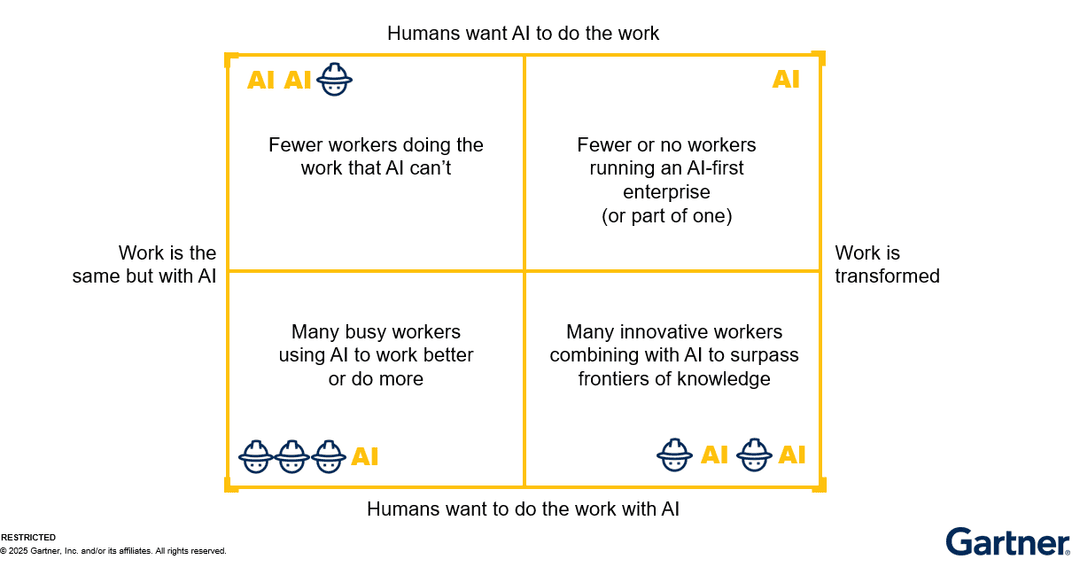
The emerging AI office will not be populated solely by autonomous agents. It will be a hybrid environment in which human professionals delegate bounded tasks, inspect results, revise outputs, and make consequential decisions.
A partner might ask an agent to identify unusual provisions across 200 agreements. An associate could use another agent to build a first-pass chronology from case materials. A legal operations team might monitor regulatory changes and route relevant updates to the right practice group. In each case, the agent handles search, organization, and drafting while the human remains accountable for interpretation and action.
The most effective organizations will treat these systems as operational infrastructure rather than novelty chatbots. They will create policies for approved use, maintain evaluation datasets, train staff to recognize failure modes, and establish clear rules for confidential information. They will also preserve an audit trail showing what sources were used and what edits a human made.
Harvey’s fundraising demonstrates how much capital investors believe is available in this market. An open-source implementation demonstrates something different: the underlying ideas are accessible. The future of legal AI will likely include both models—highly integrated commercial platforms and open systems built for customization.
The central question is not whether a language model can produce legal text. It can. The more important question is whether an AI system can help professionals work faster while remaining verifiable, secure, and accountable. That standard—not the size of a funding round—will ultimately determine which legal AI tools become part of everyday practice.
For Harvey raised 500M for legal AI, I built the same and open sourced it, Nonilion can be used as the practical AI-office example: a shared workspace where human teammates and AI agents keep discussion, decisions, and execution connected.
The reason Harvey raised 500M for legal AI, I built the same and open sourced it keeps returning to Nonilion is simple: the topic becomes more useful when it turns into coordinated work, not just another article, chat, or dashboard.
10Why This Trend Matters for Nonilion
This trend matters to Nonilion because it points to a bigger change: teams are moving from simple calls toward persistent, AI-supported collaboration spaces. Nonilion can bridge live presence, meeting context, avatars, and follow-up work so the trend becomes a usable workflow instead of a headline.
11Shareable Extracts
The trend is not just "The $500M Question: Harvey, Open-Source, and the Future of Specialized AI Agents" - it is a signal that team coordination is becoming the next competitive edge.
Hot take: the teams that win from this shift will not be the ones with more meetings; they will be the ones with clearer shared context after every meeting.
If the $500m question: harvey, open-source, and the future of specialized ai agents keeps moving this fast, remote teams need a workspace where conversation, presence, and follow-up stay connected.
The $500M Question: Harvey, Open-Source, and the Future of Specialized AI Agents The landscape of artificial intelligence is rapidly evolving, with significant investments fueling the development of highly specialized AI solutions.
A prime example is Harvey, a legal AI startup that has made headlines by raising substantial capital, including a recent $550 million funding round at a valuation reaching $15.5 billion to $15.6 billion.
12Social Hooks
Everyone is talking about The $500M Question: Harvey, Open-Source, and the Future of Specialized AI Agents. The overlooked part is what happens to team workflows after the headline fades.
The uncomfortable question behind The $500M Question: Harvey, Open-Source, and the Future of Specialized AI Agents: are teams adapting their collaboration systems fast enough?
This is not a meeting trend. It is a coordination trend, and products like Nonilion sit right in the middle of that shift.
This article on Harvey raised 500M for legal AI, I built the same and open sourced it was generated by the Nonilion AI blog workflow using web research inputs and AI-assisted synthesis.