



human + AI workflows
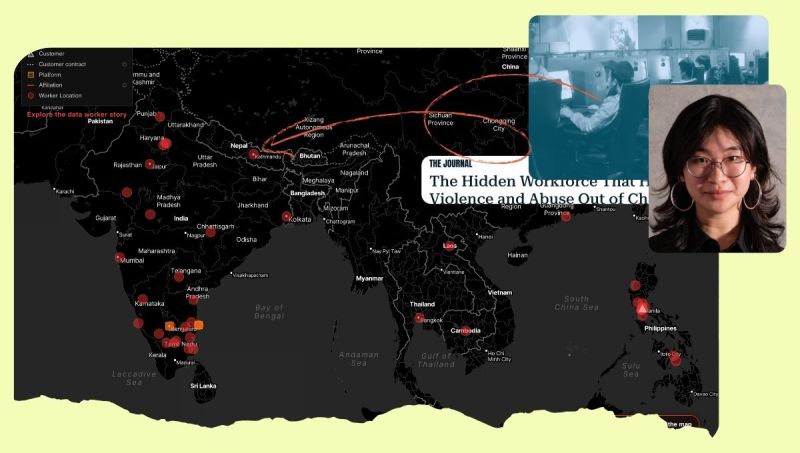
Brown Student Maps the Hidden Global Labor Powering AI
Brown Student Maps the Hidden Global Labor Powering AI The rapid advancement of artificial intelligence has sparked widespread discussions about its profound impact on the global l
Brown Student Maps the Hidden Global Labor Powering AI
The rapid advancement of artificial intelligence has sparked widespread discussions about its profound impact on the global labor market. While AI agents are increasingly integrated into our daily workflows, the underlying human effort that fuels these systems often remains unseen. The critical work of a Brown student mapping the hidden global labor powering AI offers a vital perspective, compelling us to consider the intricate human infrastructure behind the algorithms. This mapping illuminates how platforms like Nonilion, designed for human + AI collaboration in virtual AI offices, become even more essential in harmonizing these complex dynamics.
01Unmasking the Invisible Architects of AI: A Deeper Look
Imagine the profound implications of a Brown student's breakthrough work in mapping the hidden
Want your team to run this workflow with AI-native execution?
global labor powering AI. Behind every apparently autonomous model is a chain of tasks performed by people: collecting and cleaning data, labeling images and text, transcribing speech, evaluating model responses, filtering harmful material, writing prompts, checking factual claims, and monitoring systems after deployment.
These workers may be employed directly by technology companies, hired through specialized vendors, or recruited through online platforms. Their locations, wages, employment status, and levels of protection can vary sharply. Some are highly trained researchers and software engineers. Others perform repetitive microtasks for low pay and with limited information about how their contributions will be used.
A map of this labor system makes the AI economy easier to understand. It shows that “automation” is not a single event in which machines simply replace people. Instead, AI development often redistributes work across a layered supply chain. Tasks that appear to be completed by a model may depend on thousands of earlier human decisions.
02The Many Forms of Human Work Behind AI
The most visible AI workers are usually engineers, product managers, and researchers. They design model architectures, build data pipelines, develop evaluation methods, and decide how systems should be deployed. Their work is important, but it represents only one part of the process.
Before a model can learn from an image, someone may need to identify what appears in that image. Before it can summarize a document, text may have to be digitized, categorized, and reviewed. Speech-recognition systems depend on recordings and transcripts that capture different accents, dialects, languages, and environments. Self-driving systems require enormous collections of road scenes, with people marking vehicles, pedestrians, traffic signs, and road boundaries.
Generative AI introduces additional forms of review. Human evaluators may compare two answers and select the more useful one. They may rank responses for accuracy, clarity, tone, or safety. In some projects, reviewers create example answers that teach a model how a helpful assistant should respond. Other workers test systems with adversarial prompts, looking for misinformation, privacy violations, discriminatory outputs, or instructions that could facilitate harm.
Content moderation is another crucial layer. Models trained on internet-scale material can encounter graphic violence, sexual exploitation, abuse, hate speech, and other disturbing content. Human reviewers may be asked to classify or remove such material, often under demanding productivity targets. The psychological consequences of this work have become an important labor and public-health concern.
03A Global and Uneven Supply Chain
The geography of AI labor is not accidental. Companies frequently distribute tasks across countries where skilled workers are available at lower cost, where labor regulations differ, or where large multilingual workforces can handle specialized projects. Data-labeling and content-review operations have been reported in regions including South and Southeast Asia, Africa, Latin America, and Eastern Europe, alongside major technology centers in North America, Europe, and East Asia.
A global map can reveal how different kinds of work cluster in different places. A city with strong universities may supply technical researchers and language specialists. Another region may become known for image labeling or transcription. A third may host moderation centers serving particular languages or time zones. The result is an international production system in which a model developed in one country may rely on data gathered in another and evaluated by workers in several more.
This distribution can create economic opportunity. Online work gives some people access to international clients, flexible schedules, and income that would otherwise be difficult to obtain. Specialized annotation can also build useful skills, particularly when workers receive training in language, software, or quality assurance.
Yet opportunity is not distributed evenly. Workers may be paid by the task rather than by the hour, making income unpredictable. Time spent searching for tasks, waiting for approval, correcting rejected submissions, or dealing with platform outages may go unpaid. Contractors can also face sudden account suspensions without a clear appeal process. A worker who depends on one platform may have little bargaining power when rates change.
04The Problem of Visibility
The term “hidden labor” describes more than work that is physically distant from a company’s headquarters. It also refers to labor that is absent from the public story of AI. Product announcements often emphasize computing power, model scale, and technical breakthroughs. They rarely identify the people who corrected labels, challenged unsafe answers, or supplied cultural knowledge that made a system more reliable.
This invisibility has practical consequences. If users do not know that people helped produce an AI system, they may assume the system is more autonomous and objective than it really is. If investors and policymakers cannot see the labor supply chain, they may overlook working conditions while focusing on innovation and productivity. And if workers are treated as interchangeable inputs, companies may have fewer incentives to provide stable employment, mental-health support, or meaningful participation in decisions about the systems they help build.
Mapping can challenge that invisibility. A map does not merely list countries or platforms. It can connect a task to the organization that commissioned it, the vendor that managed it, the platform that distributed it, and the model or product that benefited from it. Such documentation helps answer basic questions: Who performed the work? Under what terms? Who reviewed the result? Who captured the value?
05Data Quality Is Also a Labor Issue
Human involvement is often discussed as a technical requirement for better data, but it is equally a question of fairness. A label is not a neutral fact when the task involves ambiguity, culture, or judgment.
Consider an image-labeling project involving clothing, household objects, or social situations. Workers may interpret an image differently depending on their language and cultural context. A moderation rule written in one country may not transfer cleanly to another. A speech dataset may underrepresent regional accents because the people collecting or reviewing recordings were not given enough time to include them.
When companies treat disagreement as an error rather than as information, they can erase legitimate differences in interpretation. Better systems require clear instructions, reasonable time limits, opportunities to flag uncertainty, and compensation for the expertise involved. Workers should not be forced to guess simply to meet a quota.
The same principle applies to generative AI evaluation. A response that seems polite and useful to one group may sound evasive, offensive, or unsafe to another. Multilingual and multicultural evaluation is therefore not just a final quality check. It is part of deciding what an AI system is expected to do.
06The Human Cost of Safety Work
Safety review is frequently presented as a feature of responsible AI, but responsibility must include the people performing that review. Repeated exposure to violent or exploitative material can contribute to stress, anxiety, burnout, and other mental-health effects. Short-term contracts and remote arrangements may make it harder for workers to access counseling or report problems.
Companies and vendors can reduce these risks through several measures: limiting exposure time, rotating assignments, providing professional psychological support, establishing clear escalation procedures, and allowing workers to refuse especially harmful material without retaliation. Productivity targets should account for the difficulty of the content rather than treating every item as equivalent.
Transparency is important as well. Public descriptions of a system’s safety process should explain, at an appropriate level, whether human review was used and how reviewers were supported. A company should not claim that a model is “safe by design” while concealing a workplace in which safety workers bear the greatest burden.
07What a Fairer AI Labor Model Could Look Like
The Brown student’s mapping effort is valuable not only because it documents a problem, but because it can support better choices. Once the labor chain is visible, policymakers, companies, researchers, and users can ask what standards should apply.
One priority is clearer employment classification. Workers who perform ongoing, directed work for a company may deserve protections that are difficult to reconcile with being treated as entirely independent contractors. Local laws differ, but basic issues remain broadly relevant: minimum compensation, timely payment, protection from discrimination, access to benefits, and a meaningful process for challenging disciplinary decisions.
A second priority is pay transparency. Workers should know how rates are calculated, how much time a task is expected to take, and what conditions lead to rejection. Platforms can publish aggregate information about compensation and approval rates without exposing individual workers. This would make it easier to compare projects and identify arrangements that depend on unpaid labor.
Third, workers need a voice in how AI systems are developed. Participation might include worker councils, independent audits, consultation with unions, or formal channels for reporting harmful instructions and inaccurate guidelines. People who perform evaluation and moderation often see system failures before executives or users do. Their knowledge should be treated as an operational resource, not an inconvenience.
Finally, AI companies should document their labor supply chains in much the same way that responsible manufacturers document materials and suppliers. A labor-impact statement could describe the categories of tasks involved, the countries where work occurred, the use of subcontractors, compensation structures, and safeguards for sensitive assignments.
08Collaboration Between People and AI
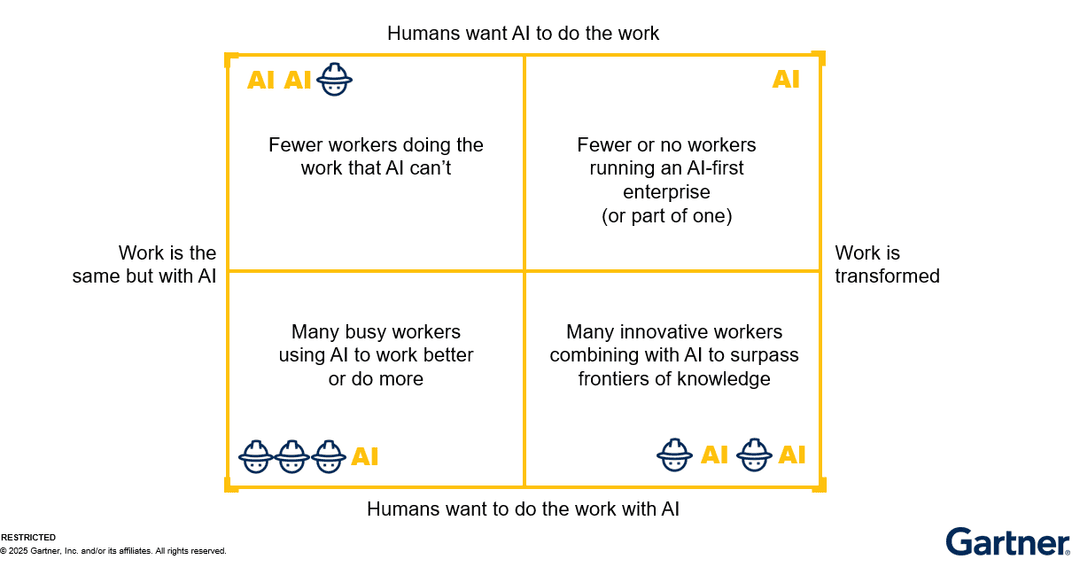
The existence of hidden labor also complicates the idea that AI will simply remove human work. In many settings, the more realistic model is collaboration. AI can sort large datasets, identify likely errors, draft responses, or prioritize cases. People can provide judgment, context, creativity, and accountability.
That collaboration works best when responsibilities are explicit. A human reviewer should understand what the system can and cannot do. An AI assistant should make uncertainty visible rather than presenting guesses as facts. Managers should measure the quality of the combined process, not merely the speed of the automated component.
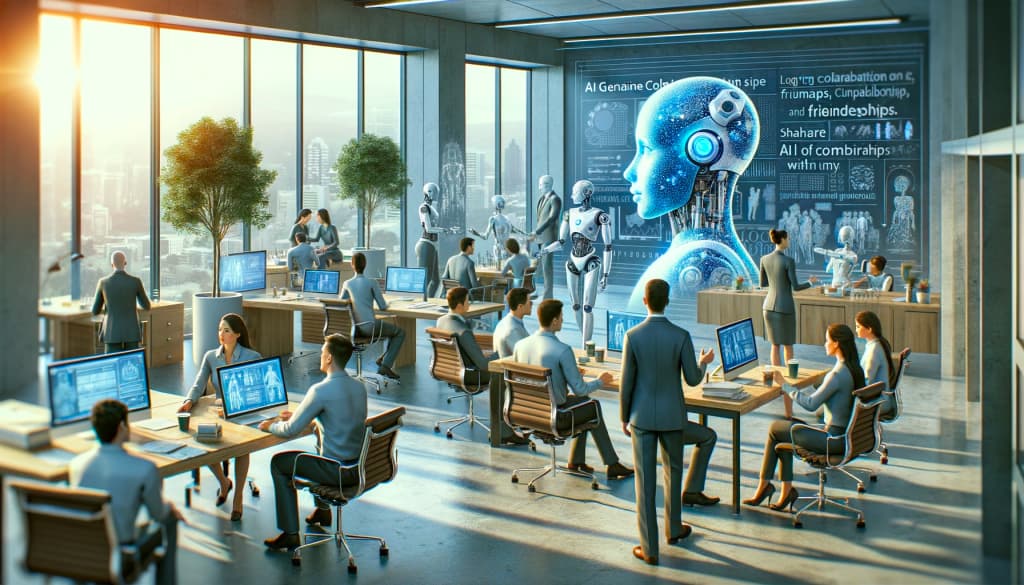
Platforms such as Nonilion fit into this discussion by emphasizing human + AI collaboration in virtual AI offices. The central challenge for such platforms is not only coordination. It is ensuring that collaboration does not become a way to hide responsibility. A virtual workspace should make tasks, ownership, review stages, and escalation paths visible. It should help teams understand which decisions were automated, which were made by people, and where additional expertise is required.
Good collaboration can also improve recognition. If a system tracks contributions responsibly, organizations may be able to credit reviewers, domain specialists, and quality analysts for the value they create. That does not eliminate the need for fair pay or employment protections, but it can challenge the assumption that only model builders contribute to AI innovation.
09From a Map to Accountability
A map is a starting point, not a solution. It cannot by itself raise wages, prevent exploitation, or guarantee that a model behaves safely. Its importance lies in changing what can be seen and therefore what can be questioned.
Researchers can use labor maps to study patterns in pay, workload, and geographic concentration. Journalists can trace relationships between technology companies and vendors. Policymakers can identify where existing labor laws fail to cover platform-based work. Consumers and business customers can ask whether the AI tools they purchase depend on responsible labor practices.
The map can also improve public understanding. AI is often described in terms of models, chips, data centers, and software. Those components matter, but they do not tell the whole story. The systems also depend on translators, annotators, moderators, testers, researchers, administrators, and countless people whose contributions may be reduced to a benchmark score or a completed task.
Recognizing that reality does not diminish the achievements of AI researchers. It places those achievements in their proper context. Technological progress is produced through institutions, supply chains, and human decisions. A model’s capabilities reflect not only its architecture, but also the choices made by the people who selected data, defined categories, handled ambiguity, and determined what counted as a satisfactory answer.
10The Questions That Remain
The Brown student’s work points toward a larger research agenda. How many people contribute to a typical AI product? How much of their work is subcontracted? Which tasks are paid fairly, and which depend on unpaid preparation or unpaid waiting time? What protections exist for workers exposed to traumatic content? How are cultural disagreements recorded rather than erased? And who is accountable when a system harms someone?
There are no universal answers. Labor arrangements vary by project, country, company, and task. That is why careful documentation matters. Broad claims about “AI workers” can obscure important differences between a software engineer, a freelance translator, a content moderator, and a researcher evaluating model bias. A useful account should distinguish their roles while showing how their work connects.
The most important shift may be conceptual. AI should not be evaluated only by asking whether it is fast, powerful, or profitable. It should also be evaluated by asking what kind of work it creates, whose expertise it uses, and whether the people involved share in the benefits.
Making hidden labor visible is an essential step toward that broader assessment. The map created by a Brown student helps move the conversation beyond the myth of frictionless automation and toward a more complete picture of how AI is actually made. Behind every intelligent system is an extended network of human judgment. Treating that network as visible, valuable, and worthy of protection is not separate from building better AI—it is part of the task.
11Why This Trend Matters for Nonilion
This trend matters to Nonilion because it points to a bigger change: teams are moving from simple calls toward persistent, AI-supported collaboration spaces. Nonilion can bridge live presence, meeting context, avatars, and follow-up work so the trend becomes a usable workflow instead of a headline.
12Shareable Extracts
- The trend is not just "Brown Student Maps the Hidden Global Labor Powering AI" - it is a signal that team coordination is becoming the next competitive edge.
- Hot take: the teams that win from this shift will not be the ones with more meetings; they will be the ones with clearer shared context after every meeting.
- If brown student maps the hidden global labor powering ai keeps moving this fast, remote teams need a workspace where conversation, presence, and follow-up stay connected.
- Brown Student Maps the Hidden Global Labor Powering AI The rapid advancement of artificial intelligence has sparked widespread discussions about its profound impact on the global labor market.
- While AI agents are increasingly integrated into our daily workflows, the underlying human effort that fuels these systems often remains unseen.
13Social Hooks
- Everyone is talking about Brown Student Maps the Hidden Global Labor Powering AI. The overlooked part is what happens to team workflows after the headline fades.
- The uncomfortable question behind Brown Student Maps the Hidden Global Labor Powering AI: are teams adapting their collaboration systems fast enough?
- This is not a meeting trend. It is a coordination trend, and products like Nonilion sit right in the middle of that shift.
14Sources and Author
Sources
-
Excuse Me AI Where Have all the Jobs Gone www.linkedin.com/pulse/excuse-me-ai-where-have-all-jobs-gone-floyd-...
-
AI + work: Understanding AI's impact on the labor market connect.brookings.edu/register-to-watch-ai-work-understanding-ais-i...
-
College students are changing course in search of 'AI-proof ...
Author
This article on Brown student maps the hidden global labor powering AI was generated by the Nonilion AI blog workflow using web research inputs and AI-assisted synthesis.