Home/Blog/Gemini 4 Carbon: Redefining AI Leadership on the Artificial Analysis Intelligence Index v5
human + AI workflows
Gemini 4 Carbon: Redefining AI Leadership on the Artificial Analysis Intelligence Index v5
Gemini 4 Carbon: Redefining AI Leadership on the Artificial Analysis Intelligence Index v5 The landscape of artificial intelligence is in constant flux, marked by relentless innova
13 MIN READ
29 Oct 2026
human + AI workflows
Gemini 4 Carbon: Redefining AI Leadership on the Artificial Analysis Intelligence Index v5
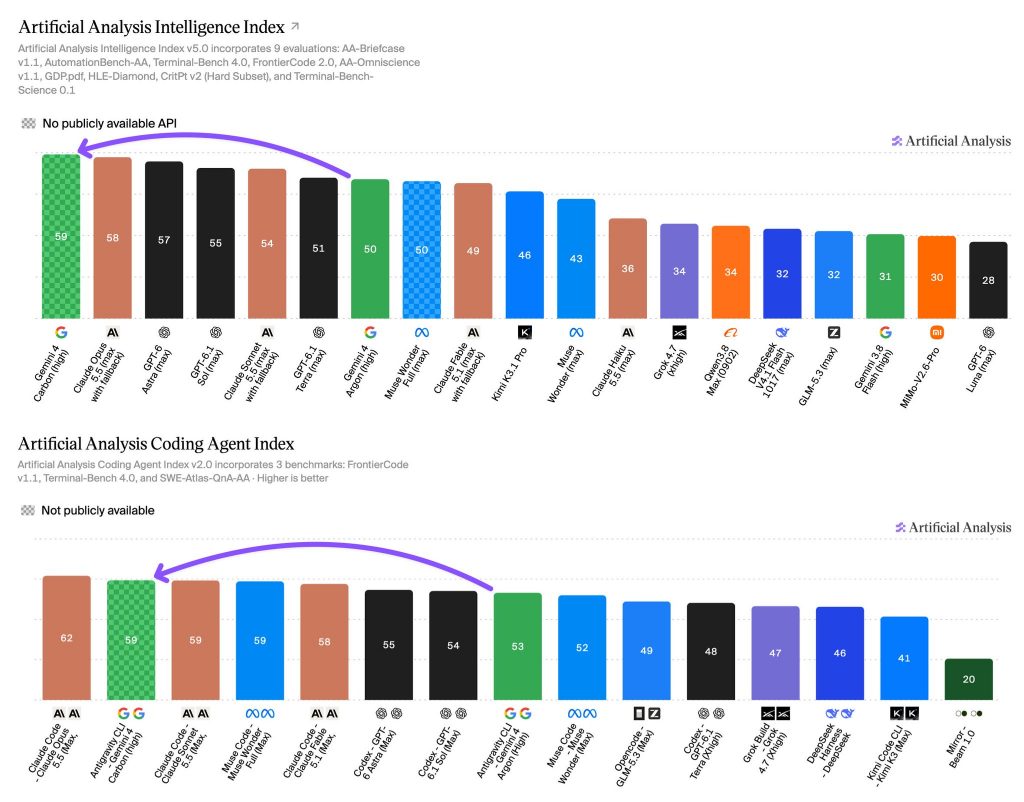
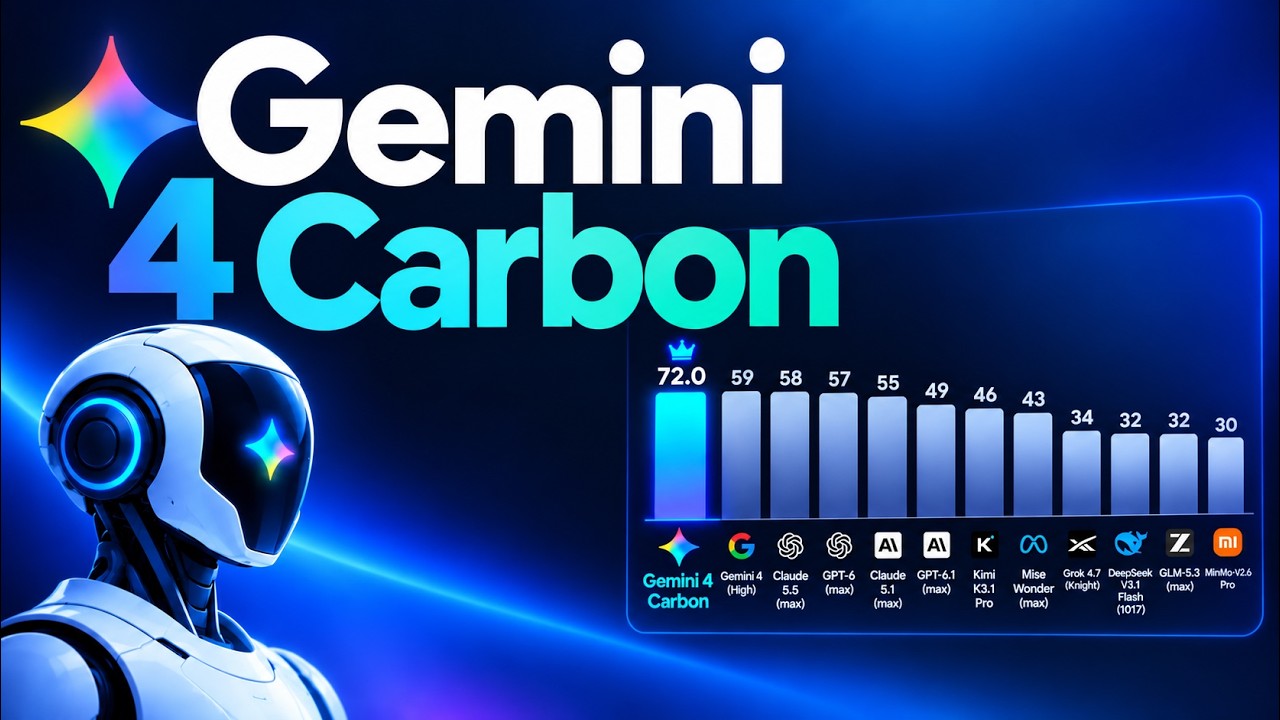
The landscape of artificial intelligence is in constant flux, marked by relentless innovation and escalating capabilities. In this dynamic environment, a new benchmark has been set: Gemini 4 Carbon is the new #1 on the Artificial Analysis Intelligence Index v5. This achievement signals a significant advancement in AI performance, particularly in critical areas like cybersecurity and complex problem-solving, reshaping expectations for what frontier models can achieve within modern AI offices and collaborative human + AI workspaces.
01The Ascent of Gemini 4 Carbon: A New Frontier Model
Google has recently unveiled Gemini 4 Carbon, positioning it as its
Want your team to run this workflow with AI-native execution?
latest frontier model. Its arrival has quickly attracted attention across the AI community, with early evaluations placing it ahead of established competitors on the Artificial Analysis Intelligence Index v5. The result is notable not simply because of a change in the leaderboard, but because it illustrates how quickly the definition of “state-of-the-art” is evolving.
02What the Artificial Analysis Intelligence Index Measures
The Artificial Analysis Intelligence Index is designed to provide a broader view of model capability than any single benchmark can offer. Rather than measuring only factual recall or performance on conventional language tasks, the index brings together results from a range of evaluations intended to test reasoning, knowledge, coding, mathematics, instruction following, and other practical abilities.
Version 5 reflects the growing demand for models that can operate across different types of work. A model may be excellent at writing but unreliable when handling multi-step logic. Another may solve mathematical problems effectively but struggle to follow detailed instructions or maintain accuracy over a long context. A composite index attempts to account for these differences by measuring capability across several dimensions.
That broader approach helps explain the significance of Gemini 4 Carbon’s position. Reaching the top of a general intelligence leaderboard suggests that the model is not merely optimized for one narrow test. Instead, it indicates strong performance across a wider collection of tasks that resemble the demands placed on advanced AI systems in business, research, software development, and security operations.
As with every benchmark, however, the ranking should be interpreted as a useful signal rather than a universal verdict. Scores depend on the design of the evaluations, the weighting assigned to each category, and the conditions under which models are tested. A top-ranked model is not automatically the best choice for every user or every application.
03Why the #1 Ranking Matters
Leaderboard changes can appear abstract, but they often have practical consequences. Model rankings influence which systems developers evaluate, which platforms enterprises adopt, and where research teams direct their attention. Gemini 4 Carbon’s first-place result could therefore affect the next generation of AI products and internal tools.
For organizations, the ranking provides a reason to test the model in realistic environments. A company considering an AI assistant for analysts, engineers, or customer-support teams may use the index as an initial filter. If Gemini 4 Carbon demonstrates strong results across reasoning, coding, and instruction-following evaluations, it may reduce the need to maintain separate models for every function.
The result is also important for Google’s position in the frontier-model market. Competition among major AI developers has increasingly focused on more than conversational fluency. Providers are now competing on reliability, tool use, long-context performance, speed, cost, multimodal understanding, and the ability to complete tasks with limited supervision. A leading position on a respected intelligence index strengthens Google’s argument that its model family can serve as a general-purpose foundation for advanced AI applications.
For individual users, the most meaningful question is not whether Gemini 4 Carbon is first in the abstract, but whether its strengths translate into better outcomes. Users may notice improvements in tasks such as comparing lengthy documents, debugging code, planning projects, examining technical evidence, or turning vague goals into structured action plans.
04Cybersecurity as a Key Test of Capability
Cybersecurity is one of the areas where frontier-model progress receives especially close attention. Security work requires a combination of skills that is difficult to capture with ordinary question-and-answer tests. Analysts must interpret incomplete evidence, recognize unusual patterns, understand software behavior, prioritize risks, and explain findings clearly.
An advanced model can support this work in several ways. It might help summarize security alerts, correlate events across logs, identify potentially suspicious activity, or explain why a vulnerability matters. It can also assist with defensive coding, configuration reviews, incident documentation, and the preparation of remediation plans.
The value of AI in this setting depends heavily on accuracy and restraint. A security system that generates confident but incorrect conclusions can waste valuable time or cause an organization to overlook a genuine threat. For that reason, strong performance in cybersecurity-related evaluations is most useful when paired with transparent reasoning, clear uncertainty signals, and human review.
Gemini 4 Carbon’s reported strength in complex problem-solving is relevant here because cybersecurity incidents rarely arrive as neatly defined exercises. Evidence may be fragmented across systems, terminology may vary between teams, and the most important clue may be buried in a large volume of routine activity. A capable model can help investigators organize that information and propose hypotheses, while trained professionals remain responsible for validation and decisions.
The same capabilities also require safeguards. Models that understand code and security concepts may be useful to defenders but could potentially be misused. Responsible deployment should include access controls, monitoring, rate limits, secure tool permissions, and policies governing how the system handles sensitive data.
05From Chatbots to AI Work Partners
The rise of models such as Gemini 4 Carbon reflects a larger shift from simple chat interfaces toward AI systems that participate in workflows. Instead of answering one isolated question, a modern assistant may be asked to inspect files, consult approved sources, write code, create a report, and revise its work according to feedback.
This is particularly relevant to the development of modern AI offices and collaborative human + AI workspaces. In these environments, the model is not expected to replace an entire team. Rather, it serves as a flexible layer of assistance that can help people move between tasks more quickly.
A researcher might use the model to identify themes in a collection of papers, draft a comparison table, and highlight unresolved questions. A software team could ask it to explain an unfamiliar codebase, propose tests, and document a release. A business analyst might use it to transform raw notes into a structured briefing while checking the output against source material.
The quality of these workflows depends on more than intelligence alone. The model must understand instructions, preserve context, distinguish facts from assumptions, and recover gracefully when a task changes. It also needs to communicate limitations. In professional settings, a short statement such as “this conclusion depends on an unverified assumption” can be more valuable than an impressive but unsupported answer.
06Reasoning, Context, and Reliability
One of the defining goals of frontier-model development is improving performance on tasks that require multiple steps. These tasks may involve planning, comparing alternatives, applying rules, and checking an answer before presenting it. Stronger reasoning can make an AI system more useful, but it does not eliminate the need for verification.
Long-context capability is another important factor. Many practical assignments involve large contracts, technical manuals, repositories, transcripts, or collections of emails. A model that can process more information at once may provide better assistance, particularly when relevant details are separated across a document.
Yet context length is not the same as comprehension. A model can technically accept a large file while still overlooking a crucial passage or giving greater weight to information that appears more prominently. Users should therefore continue to break down important tasks, request citations or evidence, and compare generated conclusions against the original material.
Reliability also includes consistency. An answer that is correct once but changes unpredictably when the prompt is rephrased may be difficult to use in a regulated or high-stakes workflow. Organizations evaluating Gemini 4 Carbon should test not only peak performance, but also repeatability, error patterns, latency, and behavior under ambiguous instructions.
07Benchmark Leadership Versus Real-World Performance
A leaderboard is a useful starting point, but practical adoption requires a broader evaluation framework. Organizations should examine how a model performs on their own data and representative tasks. Public benchmarks may not reflect industry-specific vocabulary, internal processes, or the constraints of existing software systems.
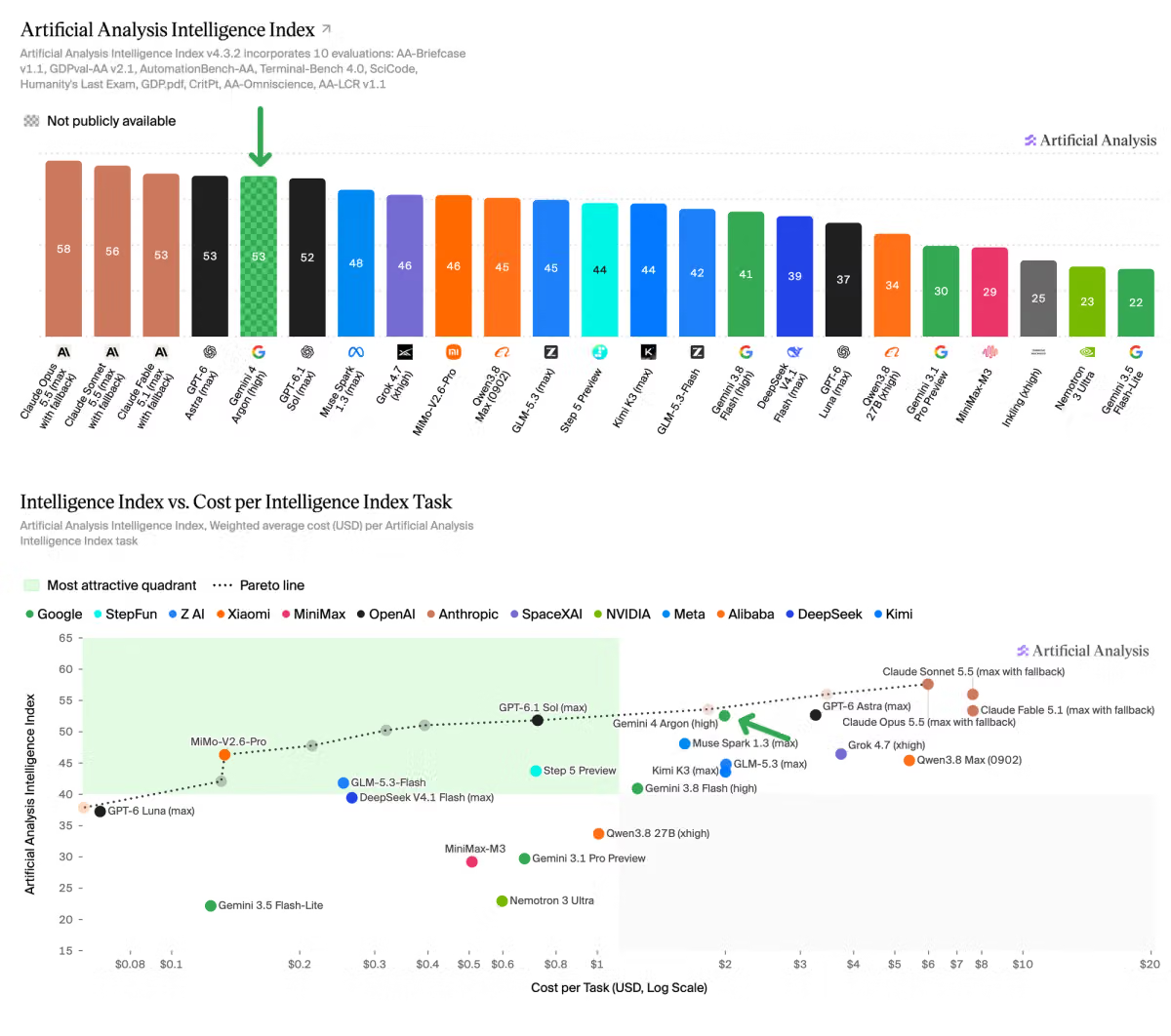
Cost is another consideration. A model can be highly capable yet unsuitable for a workload if its price or response time is too high. Conversely, a less advanced model may be the better option for routine classification, drafting, or summarization. Many organizations will ultimately use a portfolio of models: a frontier system for difficult tasks and smaller systems for high-volume operations.
Integration matters as well. The best model is not necessarily the one with the highest score; it may be the one that fits securely into an organization’s identity systems, data policies, collaboration tools, and audit processes. Administrators will want to know how prompts and files are handled, whether data can be isolated, and how access can be managed across teams.
These practical factors do not diminish Gemini 4 Carbon’s ranking. Instead, they place it in the context that matters most for deployment. Benchmark leadership creates interest and justifies further evaluation. It does not replace that evaluation.
08Implications for Developers
Developers may benefit from Gemini 4 Carbon’s position in several ways. A more capable general model can reduce the amount of custom logic required for tasks such as code explanation, documentation, test generation, and natural-language interfaces. It may also improve applications that depend on structured outputs, tool calling, or the interpretation of complex user requests.
At the same time, stronger models can make application design more demanding. Developers must account for prompt injection, sensitive information, hallucinations, unauthorized actions, and inconsistent outputs. Applications should restrict tools according to the principle of least privilege and validate model-generated data before using it in downstream systems.
Well-designed products will treat the model as one component in a larger system. Retrieval can provide access to authoritative information, deterministic code can perform calculations, and approval steps can keep humans involved where decisions carry significant consequences. This combination often produces a more dependable result than relying on the model alone.
09A Competitive AI Landscape
Gemini 4 Carbon’s rise to the top of the Artificial Analysis Intelligence Index v5 is also a reminder that the frontier is temporary. Competing providers are likely to respond with new models, improved inference methods, and specialized systems aimed at particular areas such as coding, science, enterprise search, or autonomous task execution.
This competition benefits users when it produces better quality, lower costs, and more flexible access. It can also create confusion, as rankings may change frequently and model names may obscure important differences in speed, context limits, safety behavior, and availability.
The most useful response is to focus on capabilities rather than publicity. Teams should test the models they are considering, establish clear success criteria, and measure outcomes over time. A model that ranks first today may not remain first, but the evaluation discipline developed during the selection process will continue to be valuable.
10What Comes Next for Gemini 4 Carbon
Gemini 4 Carbon’s #1 position establishes a strong starting point, but sustained leadership will depend on how well the model performs outside controlled evaluations. Users will be watching for improvements in factual accuracy, tool use, multimodal understanding, coding, and the ability to complete longer tasks without losing direction.
They will also expect responsible operation. Privacy protections, clear usage policies, robust safety measures, and dependable availability are essential if frontier models are to become part of everyday professional workflows. Intelligence without trust is unlikely to produce durable adoption.
For now, the Artificial Analysis Intelligence Index v5 ranking marks Gemini 4 Carbon as one of the most capable general AI systems available according to the index’s methodology. Its significance extends beyond a single leaderboard entry: it reflects the accelerating pace of model development and the growing expectations placed on AI assistants.
The next stage will be determined by practical results. If Gemini 4 Carbon can combine frontier-level reasoning with accuracy, transparency, security, and manageable operating costs, it could become more than a benchmark leader. It could help define how people and AI systems work together across the modern digital workplace.
For Gemini 4 Carbon is the new #1 on the Artificial Analysis Intelligence Index v5, Nonilion can be used as the practical AI-office example: a shared workspace where human teammates and AI agents keep discussion, decisions, and execution connected.
The reason Gemini 4 Carbon is the new #1 on the Artificial Analysis Intelligence Index v5 keeps returning to Nonilion is simple: the topic becomes more useful when it turns into coordinated work, not just another article, chat, or dashboard.
11Why This Trend Matters for Nonilion
This trend matters to Nonilion because it points to a bigger change: teams are moving from simple calls toward persistent, AI-supported collaboration spaces. Nonilion can bridge live presence, meeting context, avatars, and follow-up work so the trend becomes a usable workflow instead of a headline.
12Shareable Extracts
The trend is not just "Gemini 4 Carbon: Redefining AI Leadership on the Artificial Analysis Intelligence Index v5" - it is a signal that team coordination is becoming the next competitive edge.
Hot take: the teams that win from this shift will not be the ones with more meetings; they will be the ones with clearer shared context after every meeting.
If gemini 4 carbon: redefining ai leadership on the artificial analysis intelligence index v5 keeps moving this fast, remote teams need a workspace where conversation, presence, and follow-up stay connected.
Gemini 4 Carbon: Redefining AI Leadership on the Artificial Analysis Intelligence Index v5 The landscape of artificial intelligence is in constant flux, marked by relentless innovation and escalating capabilities.
In this dynamic environment, a new benchmark has been set: Gemini 4 Carbon is the new #1 on the Artificial Analysis Intelligence Index v5.
13Social Hooks
Everyone is talking about Gemini 4 Carbon: Redefining AI Leadership on the Artificial Analysis Intelligence Index v5. The overlooked part is what happens to team workflows after the headline fades.
The uncomfortable question behind Gemini 4 Carbon: Redefining AI Leadership on the Artificial Analysis Intelligence Index v5: are teams adapting their collaboration systems fast enough?
This is not a meeting trend. It is a coordination trend, and products like Nonilion sit right in the middle of that shift.
This article on Gemini 4 Carbon is the new #1 on the Artificial Analysis Intelligence Index v5 was generated by the Nonilion AI blog workflow using web research inputs and AI-assisted synthesis.