



virtual coworking
openclaw: What Developers Need to Know
From Personal Assistant to Collaborative AI Office: The OpenClaw Paradigm and Beyond Introduction: The Dawn of the Personal AI Assistant The promise of AI has long been to lighten
01From Personal Assistant to Collaborative AI Office: The OpenClaw Paradigm and Beyond
Introduction: The Dawn of the Personal AI Assistant
The promise of AI has long been to lighten our load. For years, this meant intelligent automation tools, but a new wave of personal AI assistants shows potential to redefine individual productivity. Among the tools emerging in this space is OpenClaw, an open-source, autonomous AI agent designed to execute tasks via large language models (LLMs) through familiar messaging platforms. It is presented as an AI designed to perform practical tasks, such as clearing inboxes, managing calendars, and checking flights—all from a single chat interface. This approach aims to be a step towards proactive, personalized digital assistance.
While powerful for individuals, what does this herald for the future of collective work? How do we scale this individual autonomy to organizational intelligence? This is where the concept of an AI office and platforms like Nonilion come into play, with the goal of transforming individual AI agents into collaborative team members within a shared virtual workspace where humans and AI co-exist and co-create.
Want your team to run this workflow with AI-native execution?
OpenClaw: The Power of Autonomous Individual Automation
What is OpenClaw?
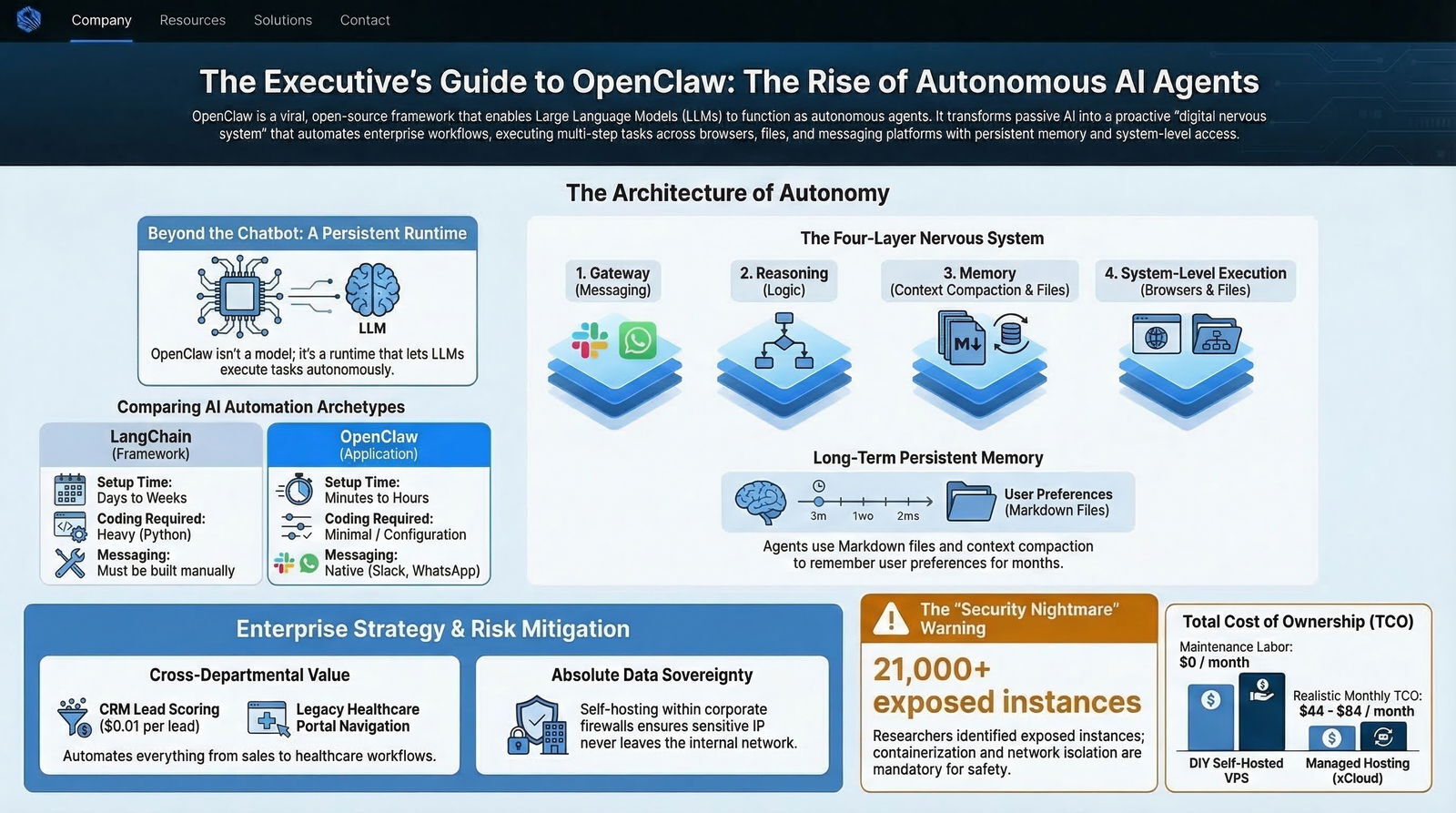
OpenClaw is a free and open-source autonomous artificial intelligence agent that can execute tasks via large language models (LLMs). It is described as being designed to "actually do things" by connecting these powerful AI models to real-world tasks. Its user interface is deeply integrated with popular messaging platforms like WhatsApp and Telegram, making it accessible through any chat app you already use. Furthermore, it offers cross-platform compatibility, running on macOS, Linux, and Windows, allowing users to install and run it on their own devices.
Moving beyond reactive chatbots, OpenClaw is presented as a proactive personal agent, aiming to anticipate needs and execute tasks autonomously. For instance, it is designed to manage calendars, send emails, or even check users in for flights, potentially without explicit prompts, suggesting a capacity for persistent memory and browser control.
Why is OpenClaw Significant for Individuals?
For individuals, OpenClaw aims to offer efficiency gains by streamlining mundane, repetitive tasks. This is intended to free up individual cognitive load, allowing users to focus on higher-value work. The self-hosted, personal nature of OpenClaw offers the potential for a personalized experience, emphasizing privacy and customization. It also introduces a "Skill Workshop" feature, allowing users to turn agent work into reusable skills, hinting at a future where individual automations can be shared or adapted. OpenClaw represents an approach to how AI can empower individuals to reclaim time and enhance personal productivity, contributing to the evolving landscape of individual AI capabilities.
The Unseen Gap: Scaling Individual Autonomy to Team Collaboration
The Limitations of "Personal" in a "Professional" Context:
While OpenClaw focuses on personal task management, its inherent design creates individual silos of productivity. An optimized inbox for one person doesn't automatically translate to an optimized workflow for an entire team's shared project. Personal agents like OpenClaw operate primarily within an individual's context. They don't inherently understand broader team goals, cross-functional dependencies, or the nuanced dynamics of shared organizational workflows.
If every team member were to leverage their own personal AI assistant, the challenge would merely shift from individual task execution to coordinating a multitude of disparate, AI-driven activities. This could introduce new forms of friction and complexity, rather than reducing it, as each agent operates independently without a unified understanding of collective objectives.
The Challenge of Collective Intelligence:
The modern professional environment demands more than just automating individual tasks; it requires intelligent remote coordination, seamless information flow, and the ability to execute complex projects asynchronously across diverse teams. This highlights a significant "team gap." Consider a scenario: an OpenClaw instance is designed to clear an individual's calendar and send emails, but how does that individual's AI communicate with another team member's AI to find a mutually agreeable meeting time, prepare a shared agenda, or follow up on action items that span multiple roles and departments? This is the fundamental gap that personal AI assistants, by their very nature, struggle to bridge.
This evolution of AI in the workplace suggests a paradigm shift from purely personal assistants to a framework that fosters human + AI collaboration at an organizational scale, moving towards collective intelligence rather than isolated efficiency.
The AI Office Paradigm: Where Collaborative AI Agents Thrive with Nonilion
Defining the AI Office:
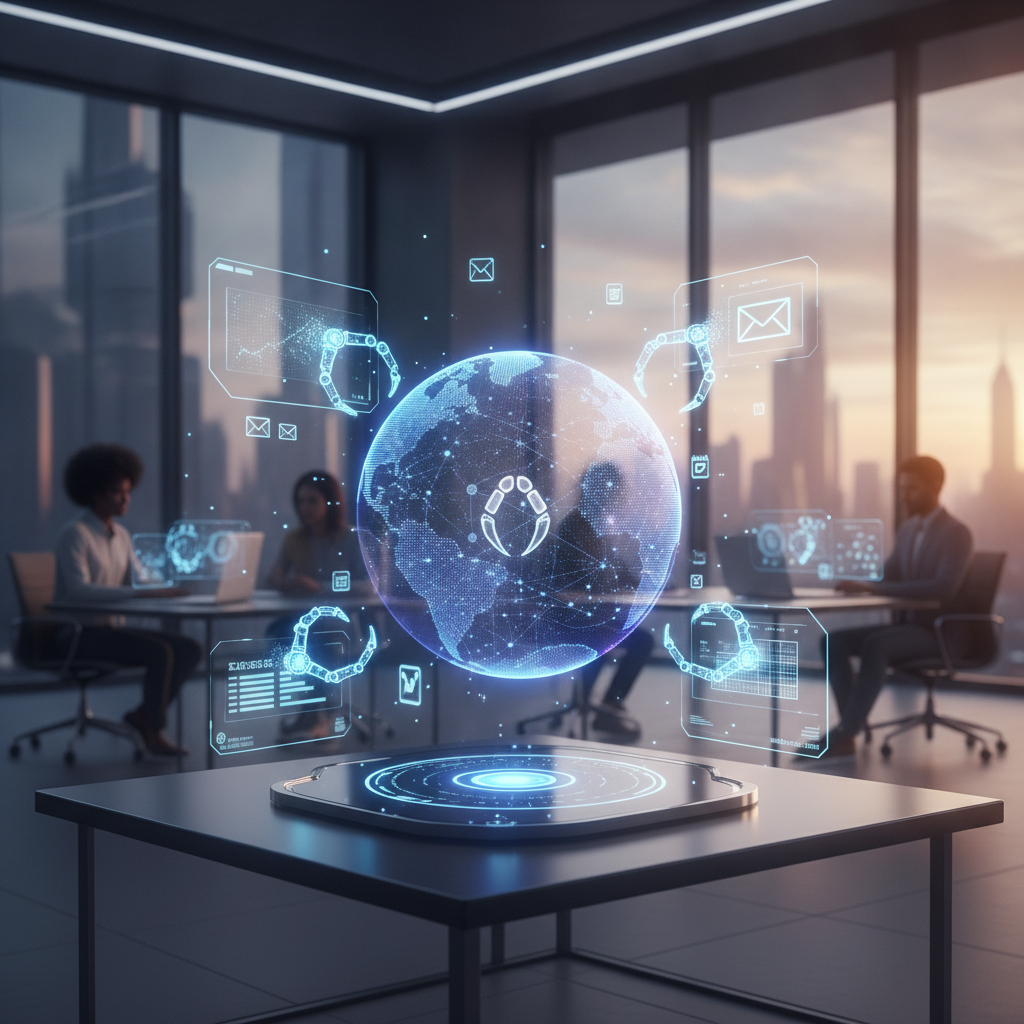
The concept of the "AI office" extends far beyond a mere collection of personal AI assistants. It envisions a holistic, integrated environment where multiple AI agents work collaboratively alongside humans within a shared virtual workspace. This paradigm shifts the focus from individual productivity to collective output, strategic coordination, and overall organizational efficiency, with the goal of offering collective intelligence as a service.
Nonilion as a Platform for the AI Office:
Nonilion is specifically designed to address the "team gap" identified earlier. It serves as the platform where autonomous agents move beyond personal tasks to become integral, collaborative members of a shared virtual workspace. [this platform](https://this platform.com/) provides the overarching framework for these AI agents to understand collective objectives, access shared resources, and contribute cohesively to team-wide initiatives.
Enabling True AI Agent Collaboration:
Within this platform, AI agents are empowered with shared context and goals, allowing them to engage in streamlined workflows. For example, an agent could manage meeting follow-ups, ensuring action items are assigned, tracked, and communicated across relevant team members—a complex, multi-faceted task well beyond the scope of a personal assistant. this platform’s capability for robust async execution is crucial here; agents can work independently on parts of a larger project, sharing updates and progress without requiring constant human oversight, which is vital for distributed teams and complex projects.
This platform enables sophisticated workflow automation where AI agents can initiate, monitor, and complete multi-step processes that involve data retrieval, analysis, communication, and decision-making, significantly enhancing team coordination. In this AI office, humans provide strategic direction, define objectives, and oversee outcomes, while AI agents handle the intricate execution, data synthesis, and communication, fostering a truly synergistic human + AI collaboration.
Building a Collaborative Future: The Practicalities of Human-AI Co-existence
Redefining Roles and Responsibilities:
In an AI office environment, human roles evolve. Humans shift from task execution to strategic thinking, complex problem-solving, and creative endeavors. They become the architects and conductors of AI-driven processes, focusing on high-level objectives and innovation. AI agents, in turn, are no longer just tools but active participants, capable of independent action and communication, yet always operating within defined parameters and under human guidance, acting as an extension of the team.
The Importance of Shared Understanding:
Establishing clear communication protocols is paramount, ensuring that humans and AI agents can effectively communicate, share information, and report progress. Building trust in AI also requires transparency in its actions and decision-making processes, fostering a predictable and reliable collaborative environment.
Skill Development and Adaptability:
For humans, the AI age encourages developing new skills in prompt engineering, AI governance, and collaborative workflow design. Concurrently, the AI office environment allows agents to learn from interactions, adapt to new data, and continuously improve their performance within the shared ecosystem, leading to a dynamic and increasingly efficient collaborative future.
Conclusion: The Evolution of Work – From Personal AI to Collective Intelligence
Personal AI assistants like OpenClaw have paved the way by demonstrating the potential impact of individual automation, aiming to clear inboxes and manage tasks efficiently. However, the true transformation lies in moving beyond individual efficiency to collective intelligence. The AI office is an evolving concept with emerging implementations, where AI agents become integral, collaborative members of a team, working in tandem with their human counterparts.
Platforms like this platform aim to be part of this evolution, providing a shared virtual workspace where AI agents and humans can engage in seamless human + AI co-working, with the goal of enhancing remote coordination and async execution. The future of work is not about replacing humans with AI, but about augmenting human capabilities with intelligent, collaborative agents, unlocking new dimensions of productivity, innovation, and strategic advantage for every organization.
02Why This Trend Matters for Nonilion
This trend matters to Nonilion because it points to a bigger change: teams are moving from simple calls toward persistent, AI-supported collaboration spaces. Nonilion can bridge live presence, meeting context, avatars, and follow-up work so the trend becomes a usable workflow instead of a headline.
03Shareable Extracts
- The trend is not just "openclaw: What Developers Need to Know" - it is a signal that team coordination is becoming the next competitive edge.
- Hot take: the teams that win from this shift will not be the ones with more meetings; they will be the ones with clearer shared context after every meeting.
- If openclaw: what developers need to know keeps moving this fast, remote teams need a workspace where conversation, presence, and follow-up stay connected.
- From Personal Assistant to Collaborative AI Office: The OpenClaw Paradigm and Beyond Introduction: The Dawn of the Personal AI Assistant The promise of AI has long been to lighten our load.
- For years, this meant intelligent automation tools, but a new wave of personal AI assistants shows potential to redefine individual productivity.
04Social Hooks
- Everyone is talking about openclaw: What Developers Need to Know. The overlooked part is what happens to team workflows after the headline fades.
- The uncomfortable question behind openclaw: What Developers Need to Know: are teams adapting their collaboration systems fast enough?
- This is not a meeting trend. It is a coordination trend, and products like Nonilion sit right in the middle of that shift.
05Sources and Author
Sources
-
OpenClaw — Personal AI Assistant openclaw.ai
-
OpenClaw — Personal AI Assistant github.com/openclaw/openclaw
-
OpenClaw en.wikipedia.org/wiki/OpenClaw
-
Anyone actually using Openclaw? : r/LocalLLaMA www.reddit.com/r/LocalLLaMA/comments/1r5v1jb/anyone_actually_using_...
Author
This article on openclaw was generated by the Nonilion AI blog workflow using web research inputs and AI-assisted synthesis.