



Developer Productivity
hermes-agent: What Developers Need to Know
The Hermes Agent and Beyond: Exploring the Path to Collective Intelligence in the AI Office The landscape of artificial intelligence is evolving rapidly, moving beyond the era of s
01The Hermes Agent and Beyond: Exploring the Path to Collective Intelligence in the AI Office
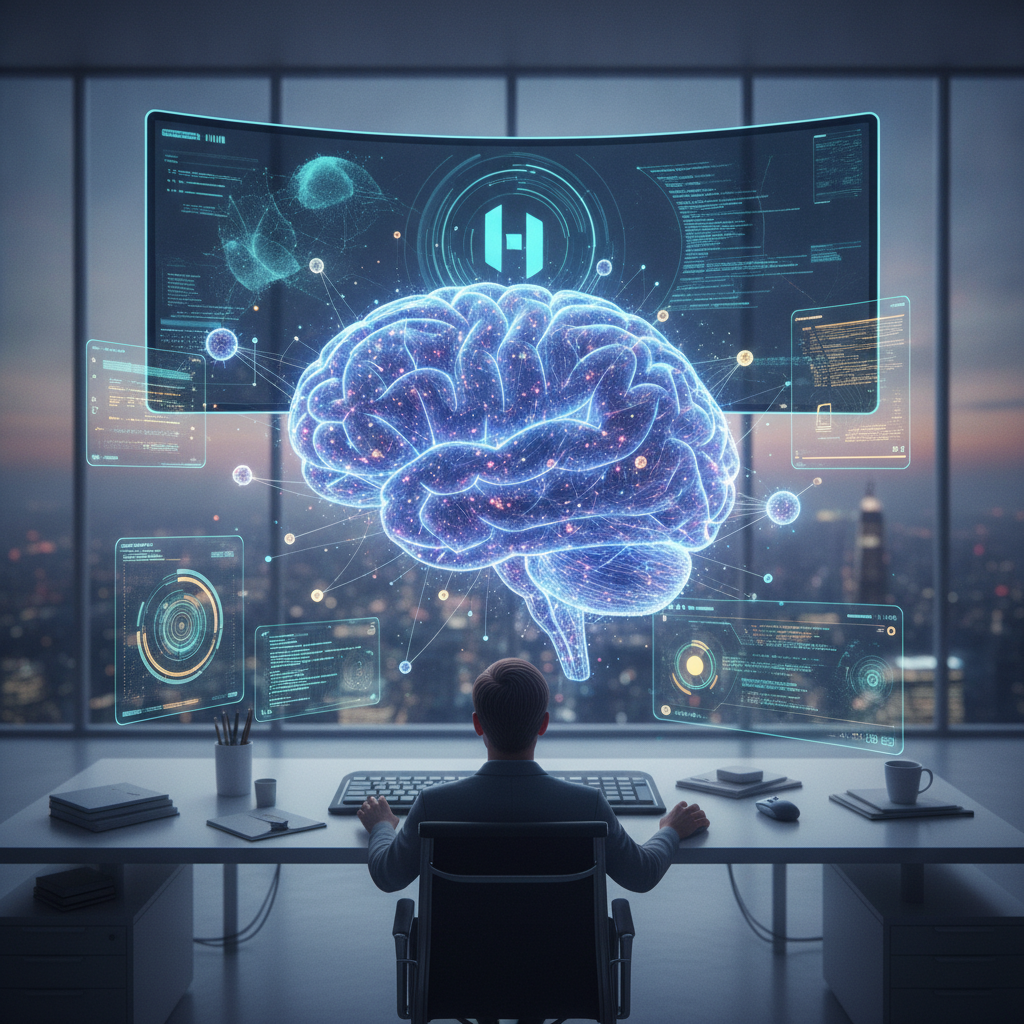
The landscape of artificial intelligence is evolving rapidly, moving beyond the era of simple chatbots to more sophisticated agents with learning capabilities. These advanced AI agents are designed to learn and adapt, which can begin to reshape how we interact with technology and how we work.
An example of an AI designed with self-improving capabilities is the Hermes Agent. Developed by Nous Research, Hermes Agent incorporates a built-in learning loop as a core design principle. It creates skills from experience, refines them through use, and builds a deepening, persistent model of its individual user across sessions. This means Hermes Agent is designed to be a dynamic, personalized digital assistant that aims to "grow with you," with the goal of enhancing individual productivity and automation.
While tools like Hermes Agent offer individual users capabilities to personalize an AI assistant, the next evolution lies in scaling this individual intelligence to a collective level. Nonilion is building towards this future: an AI office designed for agents and humans to collaborate in a shared workspace, with the goal of fostering collective intelligence and supporting organizational growth. This article will explore how the principles of individual agent learning, exemplified by Hermes Agent, can be considered for integration into a more collaborative AI office environment.
Want your team to run this workflow with AI-native execution?
Understanding Agents with Self-Improving Capabilities: The Hermes Example
To appreciate the potential for collective intelligence, understanding the approach of agents like Hermes can be helpful. Hermes Agent is defined as a self-improving, open-source AI agent developed by Nous Research, explicitly designed to learn and adapt from user interaction. It aims to represent a shift in how AI assists us.
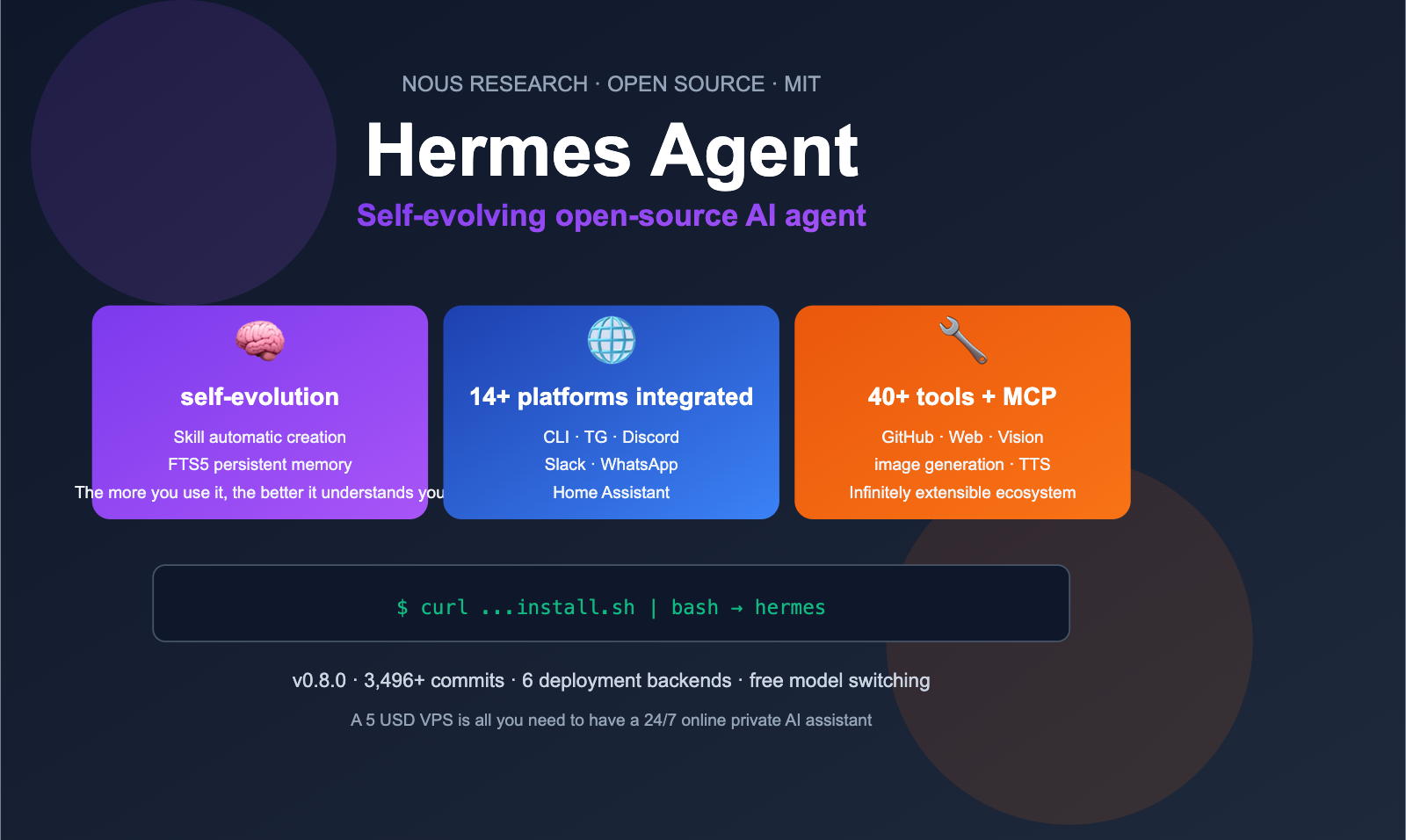
Key aspects of its mechanics are:
- Learning Loop: Hermes Agent operates with a built-in learning loop. It observes user interactions, reflects on outcomes, and then creates new skills or refines existing ones based on this continuous feedback. This iterative process allows it to become increasingly proficient and tailored to specific tasks.
- Skill Creation from Experience: A key feature is its ability to identify patterns in user requests and formalize them into reusable capabilities. For instance, if a user frequently asks for specific types of data extraction or summarization, Hermes Agent can develop a dedicated "skill" for that task, making future executions faster and more accurate. This aims to move beyond simple prompting towards more automated processes.
- Knowledge Persistence: Unlike ephemeral interactions with many AI tools, Hermes Agent retains information and context across sessions. It "nudges itself to persist knowledge" and builds a "deepening model of who you are," creating a persistent memory of its user and their ongoing tasks. This means it remembers preferences, past projects, and specific workflows, making each subsequent interaction more informed and efficient.
- Individual Empowerment: The underlying philosophy of Hermes Agent is to empower the individual. It is designed for personal automation, task management, and individual productivity enhancement by adapting to your unique workflow and preferences. It can run on various environments, from a local machine to a server or cloud, making it a versatile personalized digital assistant.
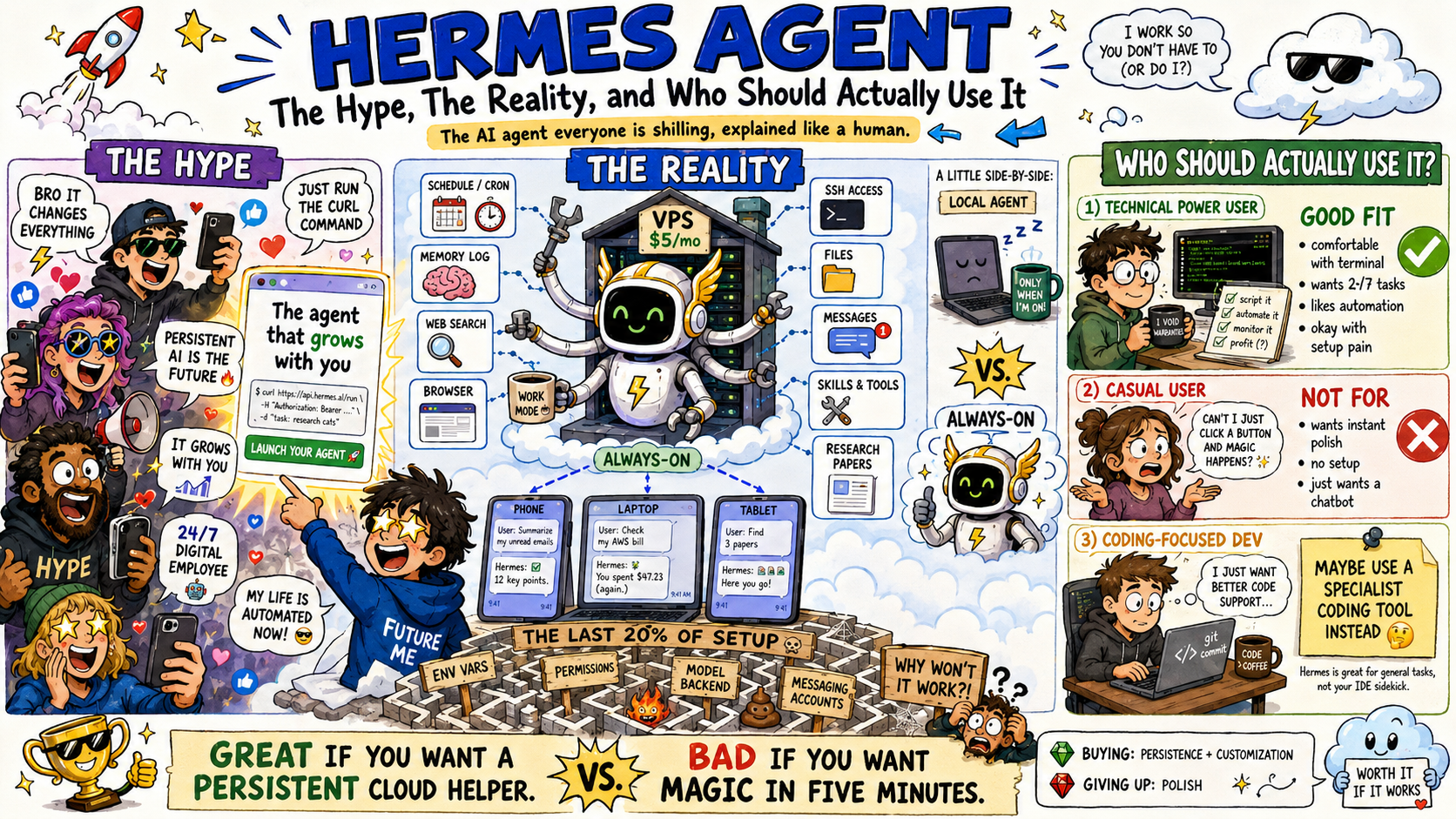
This "agent that grows with you" philosophy represents a notable shift. Instead of users adapting to the AI, the AI adapts to the user, becoming a personalized partner designed to assist in daily tasks.
The Leap from Personal to Collective Intelligence: Challenges and Opportunities
While the capabilities of an individually-optimized agent like Hermes Agent can be effective for personal use, they face inherent limitations when scaled to a team or organizational context. The focus on individual agents highlights the challenges of siloed intelligence:
- Siloed Knowledge: How does an agent's personal learning, however deep, contribute to a shared team understanding? If each agent builds a unique model of its individual user, that knowledge remains isolated, unable to benefit the broader organization.
- Lack of Shared Context: Individual agents operate effectively within a single user's context. A team, however, needs a collective context, a shared understanding of projects, goals, and organizational knowledge that individual agents aren't inherently designed to grasp.
- Coordination Overhead: Managing multiple individual agents, each optimized for a single user, for a single complex project can quickly become unwieldy. The effort required to coordinate their individual outputs might negate the efficiency gains.
This brings us to the organizational goal: the potential of AI agents can be significantly enhanced when they can learn, share, and collaborate across an organization. The focus can benefit from shifting beyond personal productivity to collective problem-solving and strategic execution. This requires building a shared memory, a mechanism where AI agents can contribute to and draw from a common pool of organizational knowledge, rather than each operating in its own informational bubble.
Imagine a future where agents not only grow with you but also with your team, learning from collective experiences and contributing to a shared intelligence. This vision for collaborative AI holds the potential to deliver significant value.
The Role of a Shared AI Office: Connecting Hermes Agent Principles to Collaborative AI Workspaces like Nonilion
Scaling the principle of an agent's self-improvement from an individual to an organizational level is a significant development in AI integration. How can an entire organization benefit from AI agents that learn and adapt collectively?
- Collective Skill Development: Just as Hermes Agent learns from individual user interactions, agents within an AI office can learn from team projects, shared data, and collaborative feedback. This could facilitate the development of new, organization-specific skills – for example, an agent might learn the nuances of a company's financial reporting processes by observing multiple human financial analysts.
- Shared Knowledge Graph: Moving beyond individual agent memory, the goal is to establish a unified, dynamic knowledge base. This shared knowledge graph would be accessible to all human and AI participants, allowing agents to contribute observations, insights, and new "skills" (such as specific workflow patterns or data extraction methods) that enrich the collective understanding.
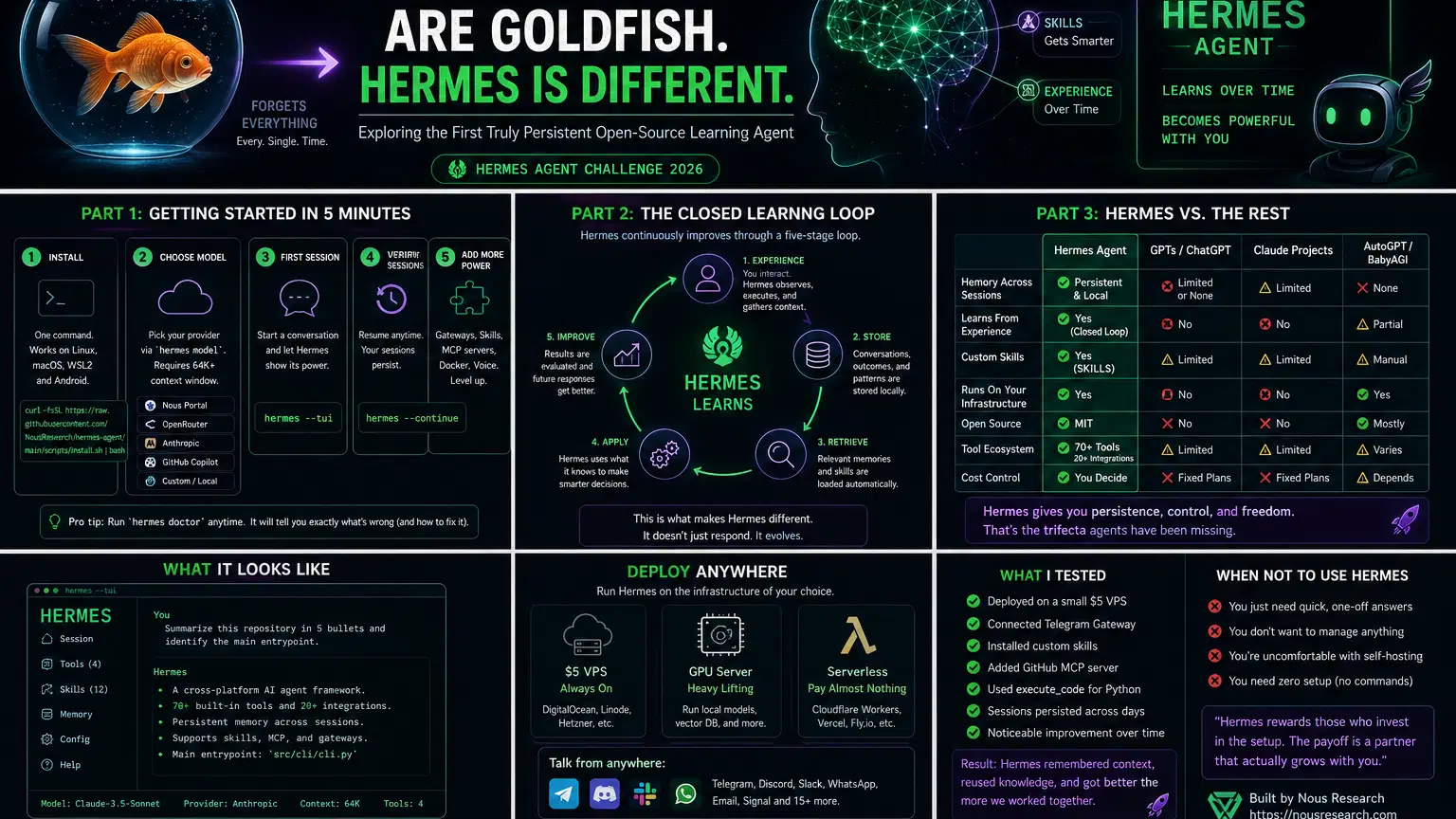
This is an area where Nonilion aims to support collective intelligence. Nonilion offers the AI office as a shared ecosystem – a virtual environment where diverse AI agents, including those inspired by self-improving approaches like Hermes, can operate, interact, and learn together with humans. Nonilion facilitates the integration of individual agent capabilities into team workflows, with the goal that an agent's learned skill can benefit the entire team. For instance, an agent that learns to summarize specific meeting types (inspired by Hermes' skill creation and knowledge persistence) could then apply this skill across relevant team meetings within , potentially supporting the generation of follow-ups and action items for the team. This capability aims to enhance workflow automation and team coordination across projects, working to transform individual insights into organizational assets.
Nonilion's architecture is designed to prevent knowledge silos, allowing agents to contribute to and draw from a collective intelligence. This shared foundation aims to empower teams to execute tasks more efficiently, support more informed decisions, and foster innovation by leveraging the combined intelligence of their human and AI workforce.
Approaches to Collective Intelligence: How AI Agents Could Learn Together
Achieving collective intelligence within an AI office requires specific mechanisms that enable agents to learn from and contribute to a shared pool of knowledge. While the provided sources focus on Hermes Agent's individual learning, we can infer how these principles might scale:
- Knowledge Graph Integration: Agents can contribute their observations, insights, and newly developed "skills" (e.g., specific workflow patterns, data extraction methods, or even nuanced communication styles) to a central, dynamic knowledge graph. This graph acts as the organization's collective memory, accessible to all human and AI participants. This scales Hermes' individual knowledge persistence to an organizational level.
- Observational Learning from Human Interaction: Just as Hermes Agent builds a deepening model of its individual user, agents in a shared workspace can learn by observing human team members' workflows, decisions, and communication patterns. This passive learning, coupled with active contribution to the knowledge graph, allows agents to develop a richer understanding of organizational dynamics and needs.
Central to this architecture is The Role of Human Guidance:
- Curating Agent Learning: Humans play a crucial role in guiding and validating the collective learning process. They can help ensure that agents develop relevant, ethical, and accurate skills that align with organizational goals.
- Feedback Loops: Establishing clear and continuous feedback mechanisms is crucial for agents to improve their collective performance and adapt to evolving organizational needs. Humans can provide qualitative input to help fine-tune agent behavior and knowledge acquisition.
Through these mechanisms, AI agents could potentially move towards offering proactive insights and strategic support, based on their collective understanding of the organization's operations, history, and goals, aiming to become more integrated partners.
The Future of AI Offices: this platform's Approach
The modern office is evolving into a dynamic ecosystem where human and AI collaboration can increasingly influence productivity and innovation. In this evolving landscape, AI agents are seen as potentially transitioning from being mere tools to becoming more integrated, co-working partners. This shift has the potential to reshape team structures, roles, and decision-making processes, potentially leading to more adaptive organizational structures.
[this platform](https://this platform.com/) offers a workspace for human + AI co-working, designed to facilitate the integration of AI agents into organizational workflows. From asynchronous communication and potential support for meeting follow-ups to project management, [this platform](https://this platform.com/) aims to support a new approach to collaboration.
By offering a shared environment where agents can learn, share, and execute tasks collaboratively, [this platform](https://this platform.com/) aims to contribute to the development of organizational intelligence. Here, the collective learning of AI agents, drawing inspiration from the individual learning of a Hermes Agent, is intended to contribute to a greater whole, with the goal of making the organization more intelligent, agile, and efficient. [this platform](https://this platform.com/)’s vision is to create a resilient, intelligent workspace that adapts and evolves with the organization, driven by the continuous learning of both its human and AI inhabitants, aiming to enhance collaboration for the future.
Conclusion: Towards an Intelligent Continuum
The journey from an individual AI agent like Hermes to the concept of a collective AI office represents a significant evolution in how we conceive of work and collaboration. Hermes Agent demonstrates the capabilities of an AI designed to learn and adapt to its user, building a persistent model of individual needs and workflows.
However, a significant potential of AI agents lies in their ability to transcend individual empowerment and contribute to a shared organizational intelligence. [this platform](https://this platform.com/) is committed to exploring this future, aiming to make advanced human + AI collaboration a practical reality for organizations. By providing a shared, intelligent workspace where humans and AI agents can co-create, learn, and interact, [this platform](https://this platform.com/) aims to contribute to a new era of productivity and innovation.
The self-improving agent is emerging; the self-improving organization is a goal for the future.
02Why This Trend Matters for Nonilion
This trend matters to Nonilion because it points to a bigger change: teams are moving from simple calls toward persistent, AI-supported collaboration spaces. Nonilion can bridge live presence, meeting context, avatars, and follow-up work so the trend becomes a usable workflow instead of a headline.
03Shareable Extracts
- The trend is not just "hermes-agent: What Developers Need to Know" - it is a signal that team coordination is becoming the next competitive edge.
- Hot take: the teams that win from this shift will not be the ones with more meetings; they will be the ones with clearer shared context after every meeting.
- If hermes-agent: what developers need to know keeps moving this fast, remote teams need a workspace where conversation, presence, and follow-up stay connected.
- These advanced AI agents are designed to learn and adapt, which can begin to reshape how we interact with technology and how we work.
- An example of an AI designed with self-improving capabilities is the Hermes Agent.
04Social Hooks
- Everyone is talking about hermes-agent: What Developers Need to Know. The overlooked part is what happens to team workflows after the headline fades.
- The uncomfortable question behind hermes-agent: What Developers Need to Know: are teams adapting their collaboration systems fast enough?
- This is not a meeting trend. It is a coordination trend, and products like Nonilion sit right in the middle of that shift.
05Sources and Author
Sources
-
NousResearch/hermes-agent: The agent that grows with you github.com/nousresearch/hermes-agent
-
Hermes Agent | Nous Research hermes-agent.nousresearch.com
-
Has anyone here explored Hermes Agent by Nous ... www.reddit.com/r/LocalLLM/comments/1t47ec0/has_anyone_here_explored...
-
Hermes Agent Documentation
Author
This article on hermes-agent was generated by the Nonilion AI blog workflow using web research inputs and AI-assisted synthesis.