Home/Blog/Tidal AI Policy: What It Means for Music, Trust, and Human + AI Review Workflows
human + AI workflows
Tidal AI Policy: What It Means for Music, Trust, and Human + AI Review Workflows
Tidal AI Policy: What It Means for Music, Trust, and Human + AI Review Workflows Tidal AI Policy has become part of a broader conversation about trust, attribution, and platform in
11 MIN READ
29 Jun 2026
human + AI workflows
Tidal AI Policy: What It Means for Music, Trust, and Human + AI Review Workflows
Tidal AI Policy has become part of a broader conversation about trust, attribution, and platform integrity. The available sources suggest that TIDAL uses content guidelines and terms intended to support platform safety and content integrity. At the same time, the platform is operating in a wider environment where AI-generated music, AI-assisted content, and deceptive uploads are increasingly part of moderation and review workflows.
For teams working in shared digital environments, including AI offices like Nonilion, this is a useful example of how humans and AI agents can collaborate to review uploads, check metadata, route edge cases, and keep workflows moving with clear governance.
01What is Tidal AI Policy? A practical overview
Want your team to run this workflow with AI-native execution?
The sources suggest that TIDAL’s approach is centered on platform safety, artist trust, and content integrity. Related reporting indicates that TIDAL does not allow music uploaded to its platform to be used to train AI models.
There is also an operational detail in TIDAL’s terms: if a user does not upload an image or artwork with a track, TIDAL may provide a default image or artwork on the user’s behalf, and that default may be AI generated. That means the policy is not only about audio content. It can also affect artwork and metadata workflows.
In practice, Tidal AI Policy appears to focus on a few broad areas:
preventing deceptive or impersonation-based uploads,
limiting unauthorized use of uploaded music for AI training,
and maintaining content integrity across tracks, artwork, and platform presentation.
02Why Tidal AI Policy matters now
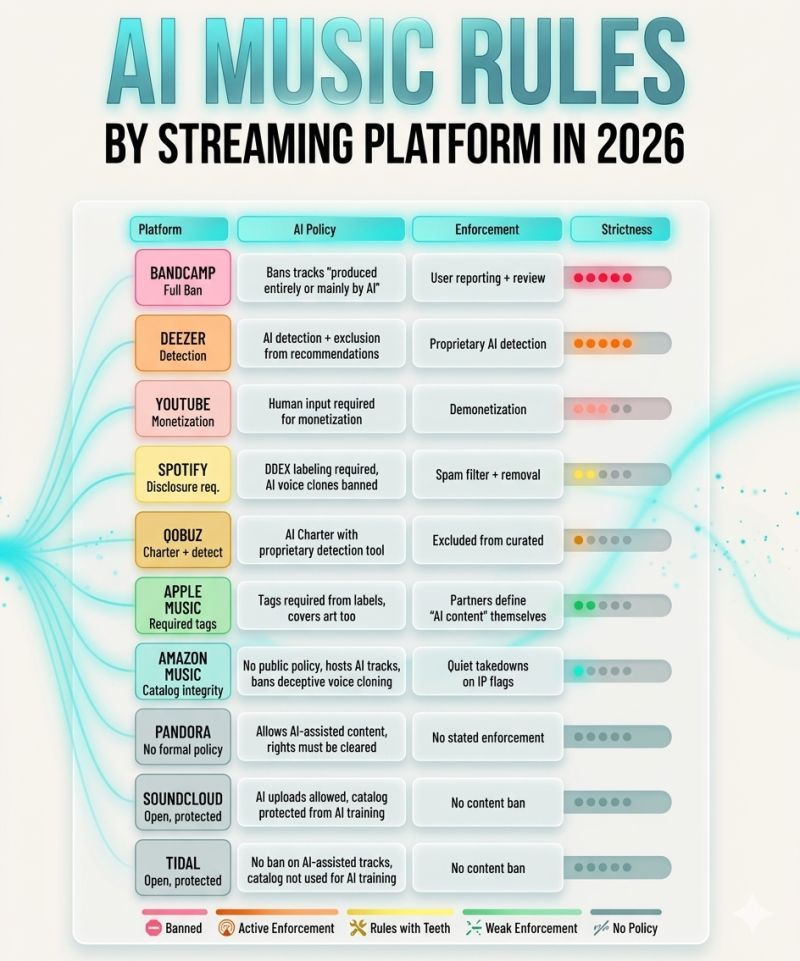
The need for clear AI rules is growing across streaming platforms. One of the analyzed sources suggests that major music streamers have established policies around AI-generated music, though the exact rules vary.
This matters because listeners need clarity about what they are hearing, artists want their work protected from misuse, and platforms need rules they can apply consistently.
The Reddit snippet in the source set also reflects a concern about AI bots claiming to be artists and collecting streams while producing fake content under an established artist’s name.
That is the core pressure on streaming platforms right now. The question is not only whether AI content exists, but whether it is labeled, whether it impersonates someone else, and whether the platform can preserve discovery and trust.
03What TIDAL allows and restricts
Based on the sources, TIDAL’s policy environment includes several important boundaries and expectations.
Training-data limits
One source states that TIDAL does not allow music uploaded to its platform to be used to train AI models.
Impersonation and deceptive releases
The most direct risk highlighted in the sources is impersonation. AI-generated or AI-assisted content can be used to mimic an existing artist, style, or identity in ways that confuse listeners and distort streaming metrics.
Disclosure expectations
Another source notes that major streaming platforms may require metadata disclosing whether a track was AI-generated or AI-assisted. While the analyzed sources do not provide a full TIDAL disclosure rulebook, they do suggest that transparency is becoming an important expectation across the market.
Artwork and default visuals
TIDAL’s terms add a useful nuance. If no artwork is uploaded, the platform may supply a default image or artwork, and that default may be AI generated. This creates a distinction between the track itself and the visual layer attached to it.
04How Tidal AI Policy affects creators, distributors, and reviewers
For creators, the policy environment means that uploads are not only about audio quality. They are also about provenance, identity, and how the platform might interpret supporting assets.
For distributors, the workflow challenge is practical. They need to know whether a track includes AI-assisted elements, whether the metadata is complete, and whether any part of the release could trigger an impersonation concern.
For reviewers, the job becomes a mix of policy interpretation and operational triage. A reviewer may need to look at:
the audio file,
the metadata,
the artwork,
and whether the release could be mistaken for another artist’s work.
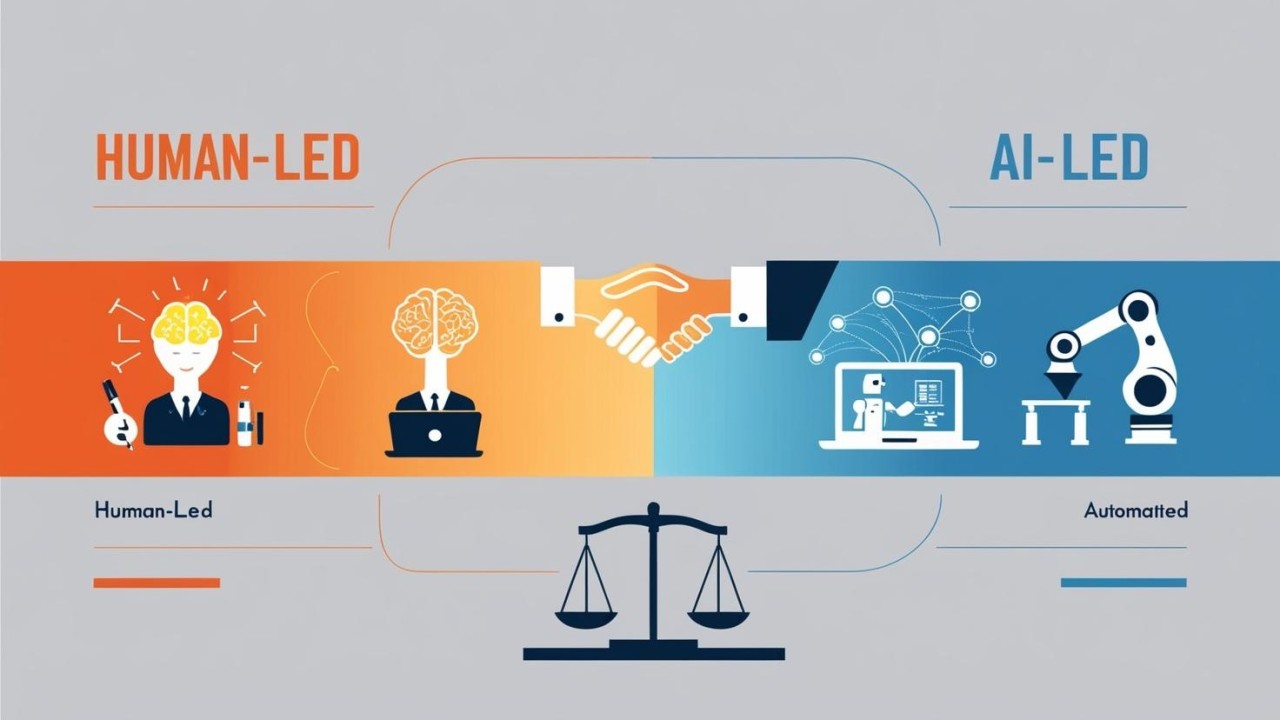
This is where human + AI collaboration can be useful. AI agents can flag missing artwork, unusual metadata patterns, or possible identity conflicts, while humans make the final judgment on ambiguous cases.
In a workspace like Nonilion, that division of labor is especially relevant. AI agents can help route uploads, surface policy risks, and prepare async follow-ups, while human reviewers focus on the edge cases where context and judgment matter most.
05Where the policy gets ambiguous
The sources point to a few areas where Tidal AI Policy is not fully black-and-white.
Default AI-generated artwork
If TIDAL supplies a default image or artwork and that default may be AI generated, teams need to decide how to treat that in their own governance workflows. Is it part of the release? Does it need disclosure? Does it matter if the artist never uploaded artwork in the first place?
Audio versus visuals versus metadata
A track can raise different issues depending on where AI appears. Audio may be AI-generated, metadata may be incomplete or misleading, and visuals may be AI-generated by default. These are not the same risk, even if they appear together in one release.
Edge cases around intent
The sources show that platforms are increasingly concerned with deceptive use, but intent can be hard to prove. A track might be AI-assisted without being deceptive. A default artwork might be AI generated without being central to the artist’s release strategy. That is why policy enforcement often becomes a workflow problem, not just a rules problem.
06How Tidal AI Policy compares with other streaming platforms by intent, not just restriction
The most useful comparison in the source set is not about who is strictest. It is about what each platform is trying to protect.
Some platforms reportedly allow AI tracks with a focus on catalog integrity and anti-deception measures. Others, like Bandcamp, are described as not allowing AI-generated music. The broader trend is that platforms are converging on governance goals even when their exact restrictions differ.
and making AI use more visible through metadata or labeling.
So when people ask, "What Are the AI Rules at Major Streaming Platforms?" the real answer is that the rules vary, but the intent is increasingly similar: keep the ecosystem trustworthy.
07What this means for AI offices like Nonilion: building human + AI review workflows that enforce policy without slowing collaboration
This is where the topic becomes directly relevant to AI offices. In a shared workspace like Nonilion, content governance cannot depend on scattered judgment calls. It needs a repeatable system where humans and AI agents work together.
A practical workflow might include:
AI agents scanning uploads for missing artwork, suspicious metadata, or possible impersonation signals,
human reviewers checking context and intent,
async follow-ups collecting missing disclosure or documentation,
and shared workspace coordination so decisions are visible across the team.
That kind of setup helps teams enforce policy without slowing collaboration. It also fits the reality of modern digital workspaces, where review is often distributed across people, tools, and time zones.
08How human reviewers and AI agents can work together to operationalize content governance at scale
The strongest use case for AI in governance is not replacement. It is triage.
AI agents can help with:
first-pass upload review,
metadata checks,
flagging potential impersonation risks,
and routing questionable items to the right reviewer.
Humans can then handle the decisions that require judgment:
whether a release is misleading,
whether a default artwork issue matters,
whether the metadata is sufficient,
and whether escalation is needed.
This human + AI model is especially useful when a team is handling many releases or coordinating across multiple stakeholders. It turns policy from a static document into an operational system.
09An operational checklist for teams
Teams dealing with AI-assisted or AI-generated content can use a simple governance checklist based on the source material:
Review the upload for AI-generated or AI-assisted signals.
Check whether artwork is provided or whether a default image may be applied.
Verify metadata for disclosure and completeness.
Screen for impersonation risk or deceptive similarity.
Escalate ambiguous cases to a human reviewer.
Document the decision so future reviews are consistent.
This is the kind of process that keeps policy enforcement consistent across a shared workspace.
10When AI policy becomes a workflow problem
A team likely needs a shared review system instead of ad hoc decisions when:
uploads are increasing faster than manual review capacity,
different reviewers are making different calls on similar content,
metadata and artwork are being handled inconsistently,
or the team cannot clearly explain why a release was approved or flagged.
At that point, policy is no longer just a legal or platform issue. It is a coordination issue. That is why AI offices matter: they create a place where humans and AI agents can coordinate review, document decisions, and keep work moving.
11Why trust and discovery depend on policy enforcement in modern digital workspaces
Streaming platforms are not the only environments affected by AI governance. Any digital workspace that handles content, identity, or approvals faces the same underlying challenge: if rules are unclear or inconsistently applied, trust erodes.
In music, that can mean fake artists, deceptive releases, and broken discovery signals. In an AI office, it can mean inconsistent approvals, poor documentation, and avoidable rework.
The common thread is integrity. Policy only matters if it can be enforced in a way that people can understand and use.
12This platform in practice: using AI agents, async follow-ups, and shared workspace coordination to review content consistently across teams
For this platform, the lesson from Tidal AI Policy is operational. AI agents can do the repetitive work of scanning, sorting, and flagging. Humans can focus on judgment, exceptions, and escalation. Together, they can create a shared review process that is faster than manual-only moderation and more reliable than ad hoc decision-making.
That is the practical future of AI offices: not just using AI to generate content, but using AI to help govern it responsibly.
13What teams should take away from Tidal AI Policy
The main takeaway is that Tidal AI Policy is part of a larger shift toward governance-minded streaming and content operations. The sources suggest a clear pattern: platforms want to stop deception, limit unauthorized AI training use, and make AI-related content more transparent.
For teams building workflows today, the lesson is simple. Treat AI policy as a shared operational system, not a one-time compliance note. That is how human reviewers and AI agents can work together without slowing down collaboration.
14Why This Trend Matters for Nonilion
This trend matters to Nonilion because it points to a bigger change: teams are moving from simple calls toward persistent, AI-supported collaboration spaces. Nonilion can bridge live presence, meeting context, avatars, and follow-up work so the trend becomes a usable workflow instead of a headline.
15Shareable Extracts
The trend is not just "Tidal AI Policy: What It Means for Music, Trust, and Human + AI Review Workflows" - it is a signal that team coordination is becoming the next competitive edge.
Hot take: the teams that win from this shift will not be the ones with more meetings; they will be the ones with clearer shared context after every meeting.
If tidal ai policy: what it means for music, trust, and human + ai review workflows keeps moving this fast, remote teams need a workspace where conversation, presence, and follow-up stay connected.
Tidal AI Policy: What It Means for Music, Trust, and Human + AI Review Workflows Tidal AI Policy has become part of a broader conversation about trust, attribution, and platform integrity.
The available sources suggest that TIDAL uses content guidelines and terms intended to support platform safety and content integrity.
16Social Hooks
Everyone is talking about Tidal AI Policy: What It Means for Music, Trust, and Human + AI Review Workflows. The overlooked part is what happens to team workflows after the headline fades.
The uncomfortable question behind Tidal AI Policy: What It Means for Music, Trust, and Human + AI Review Workflows: are teams adapting their collaboration systems fast enough?
This is not a meeting trend. It is a coordination trend, and products like Nonilion sit right in the middle of that shift.