Home/Blog/Mario Meets Pareto: Driving Optimal Strategy with Multi-Objective Optimization
AI-native teamwork
Mario Meets Pareto: Driving Optimal Strategy with Multi-Objective Optimization
Mario Meets Pareto: Driving Optimal Strategy with Multi-Objective Optimization In the vibrant, often chaotic world of Mario Kart 8, success isn't just about skillful driving; it's
11 MIN READ
06 Aug 2026
AI-native teamwork
Mario Meets Pareto: Driving Optimal Strategy with Multi-Objective Optimization
In the vibrant, often chaotic world of Mario Kart 8, success isn't just about skillful driving; it's also about strategic vehicle selection. This seemingly simple game provides a fascinating, real-world parallel to complex decision-making, especially when viewed through the lens of economic theory. The concept of "Mario Meets Pareto" – a deep dive into applying multi-objective optimization to game strategy – reveals profound insights into how data-driven analysis can uncover optimal choices in systems with myriad variables. Just as players seek the perfect kart build, organizations in today's dynamic landscape, facilitated by platforms like Nonilion, leverage sophisticated analytical methods to empower their AI agents and human teams in achieving superior outcomes.
01The Core Challenge: Navigating the Combinatorial Explosion in Mario Kart 8
At first glance, choosing your ride in Mario Kart 8 might seem straightforward. However, beneath the colorful exterior lies a complex system of interdependent choices. Players must select a driver, a kart body, tires, and a glider (Source 1). For each of these four elements, there are tens of options available, each possessing distinct statistics that significantly affect performance, such as speed, acceleration, weight, handling, and traction (Source 1).
Want your team to run this workflow with AI-native execution?
The sheer volume of potential combinations creates a
combinatorial explosion. A single choice in one category can drastically alter the effectiveness of choices in another, making brute-force evaluation impractical. This is exactly where multi-objective optimization becomes valuable: instead of asking, “What is the single best build?” we ask, “Which builds are best across several competing goals?”
02Why “Best” Depends on the Goal
In Mario Kart 8, there is no universally perfect setup. A build that excels on straightaway speed may struggle in tight turns. A setup with high acceleration can recover quickly after being hit, but may sacrifice top-end performance. Heavy characters often gain speed and weight advantages, while lighter characters may offer better handling and recovery.
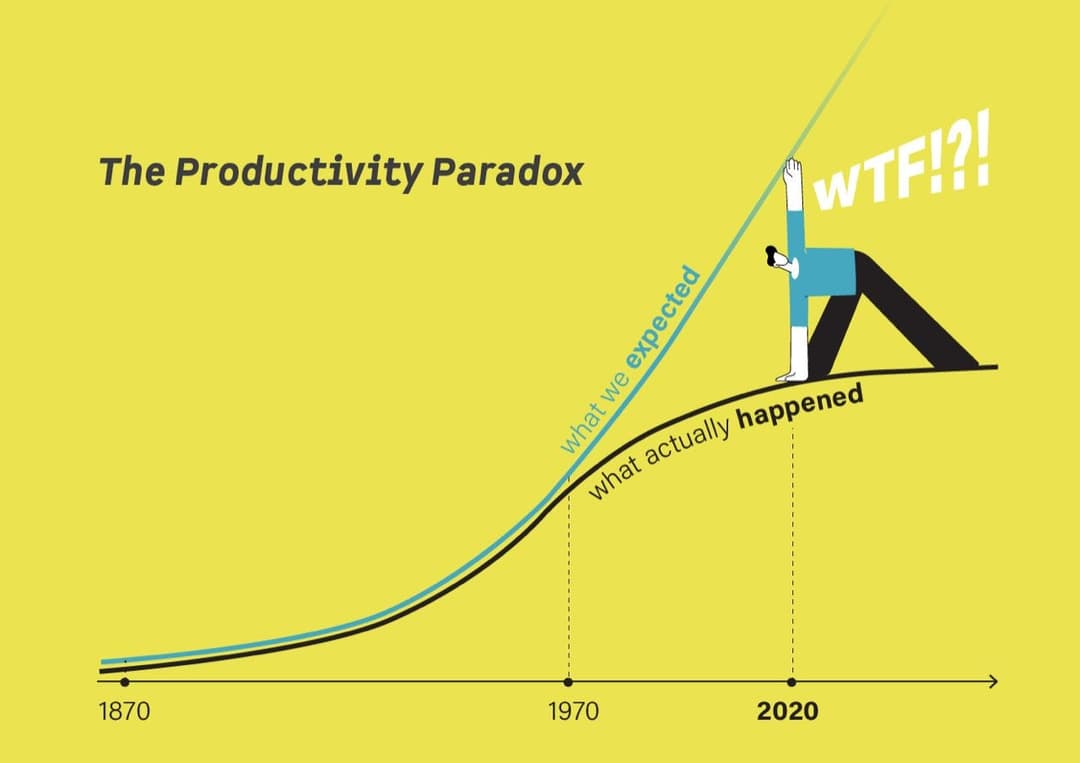
This tradeoff structure mirrors many real-world decisions. A company may want to maximize revenue, minimize cost, and improve customer satisfaction at the same time. An AI system may need to balance accuracy, latency, and interpretability. In each case, optimizing one metric too aggressively can weaken another.
That is the central insight of Pareto optimization: the goal is not necessarily to find one “winner,” but to identify the set of options where no other option is strictly better in every dimension. These are called Pareto-efficient solutions.
03Understanding the Pareto Frontier in Kart Terms
Imagine plotting every possible Mario Kart build on a graph. One axis might represent speed, another acceleration, and a third handling. A build on the Pareto frontier is one that cannot be improved in one category without sacrificing performance in at least one other category.
For example:
A heavy, high-speed build may dominate on long tracks with few sharp turns.
A lighter, more agile build may be superior on technical courses with frequent corners.
A balanced build may not be the best in any single category, but it can be the most reliable across a wider range of tracks.
The Pareto frontier helps players see the trade space more clearly. Instead of chasing a mythical “best” kart, they can choose a build that fits their preferred tracks, play style, and risk tolerance.
04Multi-Objective Optimization in Practice
Multi-objective optimization is the process of finding solutions that balance several goals simultaneously. In the Mario Kart context, those goals might include:
Maximizing speed
Maximizing acceleration
Maximizing handling
Minimizing vulnerability after collisions
Improving consistency across different track types
Because these goals often conflict, the problem is not about maximizing all of them at once. It is about understanding which combinations create the best overall compromise.
A common approach is to assign weights to each objective. For instance, a player who frequently races on wide, open tracks may prioritize speed over handling. Another player who struggles with item-heavy lobbies may value acceleration and recovery more highly. Weighted scoring can help narrow the field, but it still requires judgment about what matters most.
Another approach is to use Pareto ranking, where builds are grouped by dominance relationships. A build is considered dominated if another build is at least as good in every objective and better in one. The undominated builds form the frontier.
05From Game Strategy to Business Strategy
The appeal of Mario Kart as an analogy is that the optimization problem is intuitive, but the underlying logic is broadly applicable. Businesses face similar tradeoffs every day.
Consider a product recommendation engine. The team may want to:
increase click-through rate,
improve conversion rate,
reduce computational cost,
maintain fairness across user groups,
and keep recommendations fresh.
A model that maximizes clicks might over-recommend sensational content. A model that prioritizes fairness might reduce short-term conversion. A model that is highly accurate could also be expensive to run at scale. Multi-objective optimization allows teams to make these tradeoffs explicit rather than accidental.
This is where platforms like Nonilion can be especially useful. By supporting AI agents and analytical workflows that evaluate multiple criteria at once, organizations can move from intuition-based decisions to structured decision-making. Instead of relying on a single metric that hides complexity, teams can compare candidate solutions across the full landscape of objectives.
06Why Brute Force Fails
It may be tempting to think that the answer is simply to test every possible combination and pick the best one. But even in Mario Kart, the number of possible builds grows quickly. Once you account for drivers, bodies, tires, and gliders, the search space becomes large enough that manual comparison is inefficient.
In business settings, the problem is even more severe. A model configuration might involve dozens of parameters. A logistics strategy may depend on route, inventory, staffing, and delivery windows. An AI agent may need to consider cost, speed, reliability, and safety across thousands of scenarios.
Brute force is not just slow; it can also be misleading. If you optimize one metric at a time, you may end up with a solution that looks excellent on paper but performs poorly in the real world. Multi-objective optimization avoids this trap by evaluating the system as a whole.
07The Role of Constraints
Another important aspect of optimization is constraints. In Mario Kart, not every build is equally usable for every player. A setup that technically has great speed may feel unwieldy to someone who values tight control. Similarly, a business solution may be mathematically optimal but operationally impractical.
Constraints help define what “good” even means. Examples include:
minimum handling for technical tracks,
minimum acceleration for recovery after being hit,
maximum cost for a deployment budget,
minimum fairness thresholds for an AI model,
or latency limits for real-time systems.
Once constraints are introduced, the optimization problem becomes more realistic. The best solution is no longer the one with the highest score in isolation, but the one that performs well while staying within acceptable boundaries.
08Choosing the Right Build for the Right Track
One of the most practical lessons from Mario Kart is that context matters. A build that dominates on one track may underperform on another. This is a classic case for scenario-based optimization.
For example:
Wide, fast tracks reward speed and stability.
Curvy, technical tracks reward handling and acceleration.
Tracks with frequent hazards reward recovery and consistency.
Mixed track pools reward balanced builds that avoid major weaknesses.
This suggests a more sophisticated strategy than simply picking the highest-rated kart. Players can optimize for the expected environment rather than the abstract average. In business, the same principle applies: a solution should be selected based on the operating context, not just on a generic benchmark.
09The Human Side of Optimization
Even with advanced analytics, optimization is not purely mechanical. Preferences matter. Risk tolerance matters. Experience matters.
Two Mario Kart players can look at the same Pareto frontier and choose different builds for perfectly rational reasons. One may prefer a fast but unforgiving setup because they trust their driving. Another may choose a forgiving build that reduces the chance of mistakes. Neither choice is objectively wrong; each reflects a different utility function.
This is an important lesson for organizations adopting AI-driven decision support. A system can surface the Pareto-efficient options, but humans still need to decide which tradeoffs align with their goals. The value of optimization is not that it removes judgment; it makes judgment more informed.
10How AI Agents Can Help
AI agents are especially well suited to multi-objective environments because they can process large numbers of alternatives quickly. Instead of manually comparing every kart build or business configuration, an agent can evaluate candidates against a defined set of objectives and constraints.
This kind of workflow is powerful because it combines computational scale with strategic flexibility. Rather than locking into one answer, the system can present a ranked set of viable options. That gives teams room to explore tradeoffs before making a final decision.
11Beyond the Game: A Framework for Better Decisions
The Mario Kart example is memorable because it transforms an abstract mathematical concept into something tangible. But the deeper lesson is broader: better decisions come from understanding tradeoffs, not ignoring them.
Whether you are tuning a kart, deploying an AI model, or managing a business process, the same principles apply:
define your objectives clearly,
acknowledge that objectives may conflict,
identify the Pareto-efficient set,
and choose the solution that best fits your context.
That is the essence of “Mario Meets Pareto.” It is not about finding perfection. It is about finding balance, clarity, and strategic alignment in a world where every gain has a cost.
12Turning Tradeoffs into Advantage
The real power of multi-objective optimization is that it turns complexity into a competitive advantage. What once looked like a messy field of competing variables becomes a structured decision space. Instead of being overwhelmed by options, players and organizations can see which choices are genuinely better and which are simply different.
In Mario Kart, that might mean discovering that a slightly slower build actually wins more races because it handles better under pressure. In business, it might mean realizing that a model with marginally lower accuracy produces better outcomes because it is faster, cheaper, and easier to trust. These are the kinds of insights that only emerge when optimization is treated as a multi-dimensional problem.
And that is where the analogy lands so well: the road to victory is rarely a straight line. It is a series of informed tradeoffs, evaluated carefully, and chosen with purpose.
13Why This Trend Matters for Nonilion
This trend matters to Nonilion because it points to a bigger change: teams are moving from simple calls toward persistent, AI-supported collaboration spaces. Nonilion can bridge live presence, meeting context, avatars, and follow-up work so the trend becomes a usable workflow instead of a headline.
14Shareable Extracts
The trend is not just "Mario Meets Pareto: Driving Optimal Strategy with Multi-Objective Optimization" - it is a signal that team coordination is becoming the next competitive edge.
Hot take: the teams that win from this shift will not be the ones with more meetings; they will be the ones with clearer shared context after every meeting.
If mario meets pareto: driving optimal strategy with multi-objective optimization keeps moving this fast, remote teams need a workspace where conversation, presence, and follow-up stay connected.
Mario Meets Pareto: Driving Optimal Strategy with Multi-Objective Optimization In the vibrant, often chaotic world of Mario Kart 8, success isn't just about skillful driving; it's also about strategic vehicle selection.
This seemingly simple game provides a fascinating, real-world parallel to complex decision-making, especially when viewed through the lens of economic theory.
15Social Hooks
Everyone is talking about Mario Meets Pareto: Driving Optimal Strategy with Multi-Objective Optimization. The overlooked part is what happens to team workflows after the headline fades.
The uncomfortable question behind Mario Meets Pareto: Driving Optimal Strategy with Multi-Objective Optimization: are teams adapting their collaboration systems fast enough?
This is not a meeting trend. It is a coordination trend, and products like Nonilion sit right in the middle of that shift.