Home/Blog/The On-Brand AI Imperative: Why Brandfetch MCP is Critical for the Future of Work
human + AI workflows
The On-Brand AI Imperative: Why Brandfetch MCP is Critical for the Future of Work
The On-Brand AI Imperative: Why Brandfetch MCP is Critical for the Future of Work The rapid evolution of artificial intelligence is reshaping every facet of business, from content
12 MIN READ
06 Aug 2026
human + AI workflows
The On-Brand AI Imperative: Why Brandfetch MCP is Critical for the Future of Work
The rapid evolution of artificial intelligence is reshaping every facet of business, from content creation to customer interaction. Yet, as AI scales content and operations at unprecedented speeds, a critical challenge emerges: maintaining consistent brand identity. This is where Brandfetch MCP steps in, offering a vital bridge between the expansive capabilities of AI and the foundational principles of brand integrity. In an increasingly AI-driven world, where human and AI agents collaborate within virtual environments like Nonilion, ensuring every output is meticulously on-brand is not just an advantage—it's an imperative for sustained success.
01What is Brandfetch MCP? Bridging AI with Machine-Readable Brand Intelligence
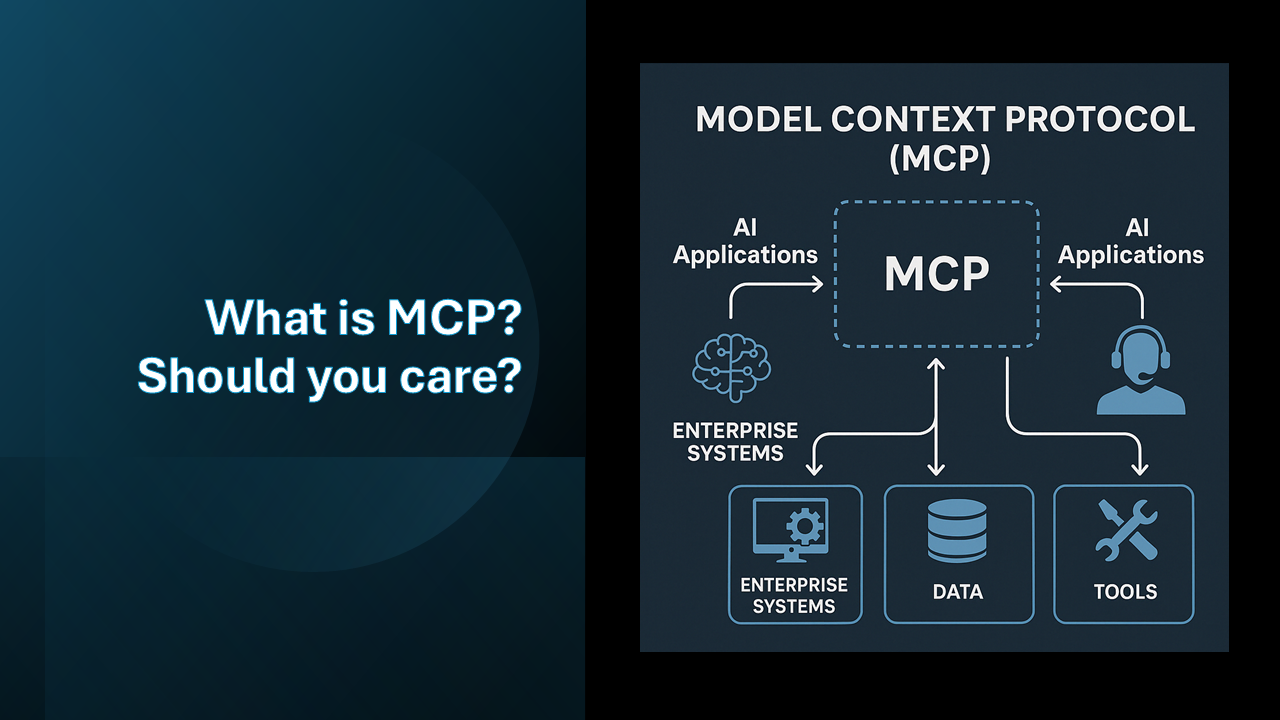
At its core, the Model Context Protocol (MCP) is an open standard designed to enable AI models and agents to interact with external tools, APIs, and services in a consistent and standardized way [Source 6]. This protocol abstracts the inherent complexities of custom integrations, providing a schema-based interface that simplifies tool access and extends the capabilities of AI agents with real-world data and services [Source 6]. When applied to brand data, this becomes profoundly powerful.
Want your team to run this workflow with AI-native execution?
Brandfetch itself is recognized as a leading brand data platform, providing instant access to essential brand assets such as logos, colors, fonts, and comprehensive company information for millions of organizations worldwide [Source 2, 8]. It positions itself as “the brand layer for the internet,” offering a centralized repository of vital brand intelligence [Source 5, 8]. The Brandfetch MCP server acts as a direct conduit, establishing a seamless connection between Large Language Model (LLM) applications and the extensive Brandfetch API [Source 1, 3].
This integration allows AI assistants and agents to directly search for brands and retrieve comprehensive brand information, including logos, colors, fonts, and company details [Source 1, 3, 5]. By implementing the Model Context Protocol, the server enables Brandfetch's rich brand data capabilities to be integrated into a wide array of LLM-powered applications, ensuring that AI can operate with an informed understanding of brand identity [Source 1]. This capability is foundational for any organization striving for consistency in its AI-driven outputs.
02The On-Brand AI Imperative: Why Machine-Readable Brand Intelligence Matters
The current landscape sees nearly all marketers leveraging AI in their daily workflows, yet the speed at which generative AI scales content often outpaces the ability of existing brand systems to support it [Source 7]. This disparity creates a significant structural issue: AI, by default, does not possess the nuanced understanding of a brand that a human does [Source 7]. Without explicit, machine-readable brand intelligence, AI operates in a vacuum, leading to outputs that are generic, off-brand, and ultimately undermine brand consistency. The critical question for businesses is not merely how AI can scale content production, but how it can achieve on-brand scale [Source 7].
This is precisely where the Brandfetch MCP becomes indispensable. It addresses the missing layer in AI-powered marketing by making brand intelligence—including detailed guidelines and assets—machine-readable [Source 7]. This capability is crucial for ensuring that AI outputs are not only accurate but also perfectly aligned with a brand's established identity. Without machine-readable brand intelligence, AI might generate content that, while technically correct, fails to capture the unique tone, visual style, or messaging nuances of a brand. This results in a
fragmented customer experience and erodes trust over time.
03How Brandfetch MCP Supports On-Brand Workflows
Brandfetch MCP is most valuable when it is embedded directly into the workflows where content is created, reviewed, and deployed. Instead of treating brand governance as a manual checkpoint at the end of production, it brings brand intelligence into the AI process from the start. That shift matters because the earlier a model understands a brand, the less likely it is to drift.
For example, an AI writing assistant can use Brandfetch MCP to retrieve a company’s official name, website, logo, and visual identity before drafting a landing page or email campaign. A design agent can pull approved color values and fonts before generating mockups. A sales enablement workflow can surface the correct brand description and company facts before building a proposal deck. In each case, the AI is no longer guessing. It is working from a reliable source of truth.
This has practical benefits across teams:
Marketing teams can accelerate campaign production without sacrificing consistency.
Design teams can reduce time spent correcting asset mismatches.
Sales teams can create polished, accurate collateral faster.
Operations teams can standardize brand usage across tools and channels.
AI product teams can build assistants that behave more like brand-aware collaborators than generic text generators.
In a platform like Nonilion, where human and AI agents coordinate work in shared virtual environments, this kind of structured brand access becomes especially powerful. Agents can retrieve the right brand data at the moment of action, making it far easier to keep outputs aligned across distributed workflows.
04What Brandfetch MCP Can Retrieve
The strength of Brandfetch MCP lies in the breadth of brand data it can expose to AI systems. Rather than relying on a single logo file or a static style guide, it can provide a richer brand context that supports both visual and textual consistency.
Typical data points include:
Official company name
Brand logos and variations
Primary and secondary colors
Typography and font information
Taglines and descriptions
Website and social profiles
Industry and company metadata
This matters because brand consistency is rarely about one element alone. A logo placed correctly but paired with the wrong tone of voice still feels off. A perfectly written product email that uses an outdated color palette can still weaken recognition. By giving AI access to multiple layers of brand identity, Brandfetch MCP helps systems make better decisions across the full content stack.
For instance, if an AI agent is generating a partner announcement, it can verify the partner’s official branding before assembling the final asset. If it is building a directory page, it can display accurate company logos and descriptions without requiring manual lookup. If it is drafting a social post, it can reference the brand’s preferred name and visual identity to stay aligned with the rest of the campaign.
05Why Standardization Matters for AI Agents
One of the most important advantages of MCP is standardization. AI systems often struggle not because they lack intelligence, but because they lack a consistent way to access external context. Every custom API integration adds complexity, maintenance overhead, and room for error. MCP reduces that friction by giving agents a common protocol for connecting to tools and data sources.
In the case of Brandfetch MCP, this means brand intelligence can be accessed in a predictable format across different AI applications. That consistency improves reliability in several ways:
Reduced integration complexity
Teams do not need to build one-off connectors for every assistant or workflow.
Better data quality
AI can pull from a centralized brand source rather than relying on outdated documents or manually copied assets.
Improved scalability
Once the protocol is in place, it can support many tools and agents without duplicating effort.
Lower risk of brand drift
Outputs are more likely to remain aligned when every agent uses the same source of truth.
For organizations deploying multiple AI agents, this standardization is more than a technical convenience. It is a governance mechanism. It helps ensure that brand-related decisions are consistent whether they are made by a marketing assistant, a support bot, or a content generation workflow.
06Real-World Use Cases for Brandfetch MCP
The practical applications of Brandfetch MCP extend far beyond simple logo retrieval. Its real value appears when it is used to support repeatable, high-volume brand tasks.
1. AI-powered content generation
A content team may use an AI assistant to generate blog headers, social graphics, or campaign copy. With Brandfetch MCP, the assistant can retrieve the correct brand name, colors, and visual assets before producing the final output. This reduces the need for manual correction and helps maintain a cohesive look and feel.
2. Automated sales collateral
Sales teams often need customized assets for prospects, partners, or events. An AI agent can use Brandfetch MCP to assemble branded one-pagers, proposal covers, or introductory slides that reflect both the company’s identity and the target account’s branding when co-marketing is involved.
3. Directory and marketplace experiences
Platforms that host many company profiles can use Brandfetch MCP to enrich listings with accurate logos, descriptions, and metadata. This creates a more professional user experience and reduces the burden on users to upload or verify assets manually.
4. Internal knowledge assistants
An internal AI assistant can answer questions like “What is the official brand color?” or “Which logo should be used for dark backgrounds?” when connected to Brandfetch MCP. This helps employees self-serve brand information without waiting on design or marketing teams.
5. Agentic workflows in virtual workspaces
In collaborative environments like Nonilion, AI agents may be tasked with preparing presentations, updating shared spaces, or creating customer-facing materials. Brandfetch MCP allows those agents to operate with brand awareness, making them more useful as autonomous collaborators.
07Brand Consistency as a Competitive Advantage
Brand consistency is often discussed as a design principle, but in AI-driven organizations it becomes a strategic advantage. When every touchpoint feels coherent, customers are more likely to recognize, trust, and remember the brand. That consistency also signals operational maturity.
AI can either strengthen or weaken that advantage. Without proper brand context, it can produce content at scale that feels disconnected, generic, or even contradictory. With Brandfetch MCP, however, AI becomes a force multiplier for brand integrity. It can help teams move faster while preserving the distinctive qualities that make a brand recognizable.
This is especially important in markets where speed is no longer enough. Many organizations can generate content quickly. Fewer can generate content quickly and keep it aligned across channels, teams, and formats. Brandfetch MCP helps close that gap by embedding brand intelligence directly into the AI layer.
08Implementing Brandfetch MCP in a Practical Stack
Adopting Brandfetch MCP does not require a complete overhaul of existing systems. In many cases, it can be introduced as a contextual layer that sits between AI agents and brand data. The key is to identify the workflows where brand accuracy matters most and connect those workflows to a reliable brand source.
A practical implementation might look like this:
An AI assistant receives a request to create a customer-facing asset.
Before generating the output, it queries Brandfetch MCP for the company’s brand data.
The assistant uses the retrieved logo, colors, and company description to shape the output.
The final result is reviewed or published with far less manual correction.
This pattern can be extended across many environments, from internal copilots to customer-facing automation. The more repeatable the workflow, the more value Brandfetch MCP can provide.
09The Future of Brand-Aware AI
As AI systems become more autonomous, the need for structured context will only increase. Models will not just write copy or generate images; they will make decisions, coordinate tasks, and represent brands in increasingly visible ways. In that future, brand intelligence cannot remain trapped in static PDFs or scattered design folders.
Brandfetch MCP points toward a more scalable model: one where brand data is accessible, standardized, and usable by machines in real time. That makes it possible to build AI systems that are not only productive, but also trustworthy stewards of brand identity.
For organizations navigating the future of work, this is a meaningful shift. The question is no longer whether AI can create content. It is whether AI can create content that truly belongs to the brand. Brandfetch MCP makes that possible.
This trend matters to Nonilion because it points to a bigger change: teams are moving from simple calls toward persistent, AI-supported collaboration spaces. Nonilion can bridge live presence, meeting context, avatars, and follow-up work so the trend becomes a usable workflow instead of a headline.
11Shareable Extracts
The trend is not just "The On-Brand AI Imperative: Why Brandfetch MCP is Critical for the Future of Work" - it is a signal that team coordination is becoming the next competitive edge.
Hot take: the teams that win from this shift will not be the ones with more meetings; they will be the ones with clearer shared context after every meeting.
If the on-brand ai imperative: why brandfetch mcp is critical for the future of work keeps moving this fast, remote teams need a workspace where conversation, presence, and follow-up stay connected.
The On-Brand AI Imperative: Why Brandfetch MCP is Critical for the Future of Work The rapid evolution of artificial intelligence is reshaping every facet of business, from content creation to customer interaction.
Yet, as AI scales content and operations at unprecedented speeds, a critical challenge emerges: maintaining consistent brand identity.
12Social Hooks
Everyone is talking about The On-Brand AI Imperative: Why Brandfetch MCP is Critical for the Future of Work. The overlooked part is what happens to team workflows after the headline fades.
The uncomfortable question behind The On-Brand AI Imperative: Why Brandfetch MCP is Critical for the Future of Work: are teams adapting their collaboration systems fast enough?
This is not a meeting trend. It is a coordination trend, and products like Nonilion sit right in the middle of that shift.