Home/Blog/The Unseen Standard Driving AI Evolution: Why OpenAI-Compatible APIs Are the New Frontier
human + AI workflows
The Unseen Standard Driving AI Evolution: Why OpenAI-Compatible APIs Are the New Frontier
The Unseen Standard Driving AI Evolution: Why OpenAI-Compatible APIs Are the New Frontier In the rapidly accelerating world of artificial intelligence, a quiet revolution is taking
13 MIN READ
18 Oct 2026
human + AI workflows
The Unseen Standard Driving AI Evolution: Why OpenAI-Compatible APIs Are the New Frontier
In the rapidly accelerating world of artificial intelligence, a quiet revolution is taking place: the rise of OpenAI-compatible APIs. This isn't just a technical detail; it's a foundational shift that is democratizing access to cutting-edge AI, streamlining development, and fundamentally reshaping how AI agents and humans collaborate within dynamic AI offices. For platforms like Nonilion, which facilitate seamless human + AI co-working, understanding and leveraging this compatibility is paramount to delivering robust and adaptable solutions.
01What Does "OpenAI-Compatible" Truly Mean?
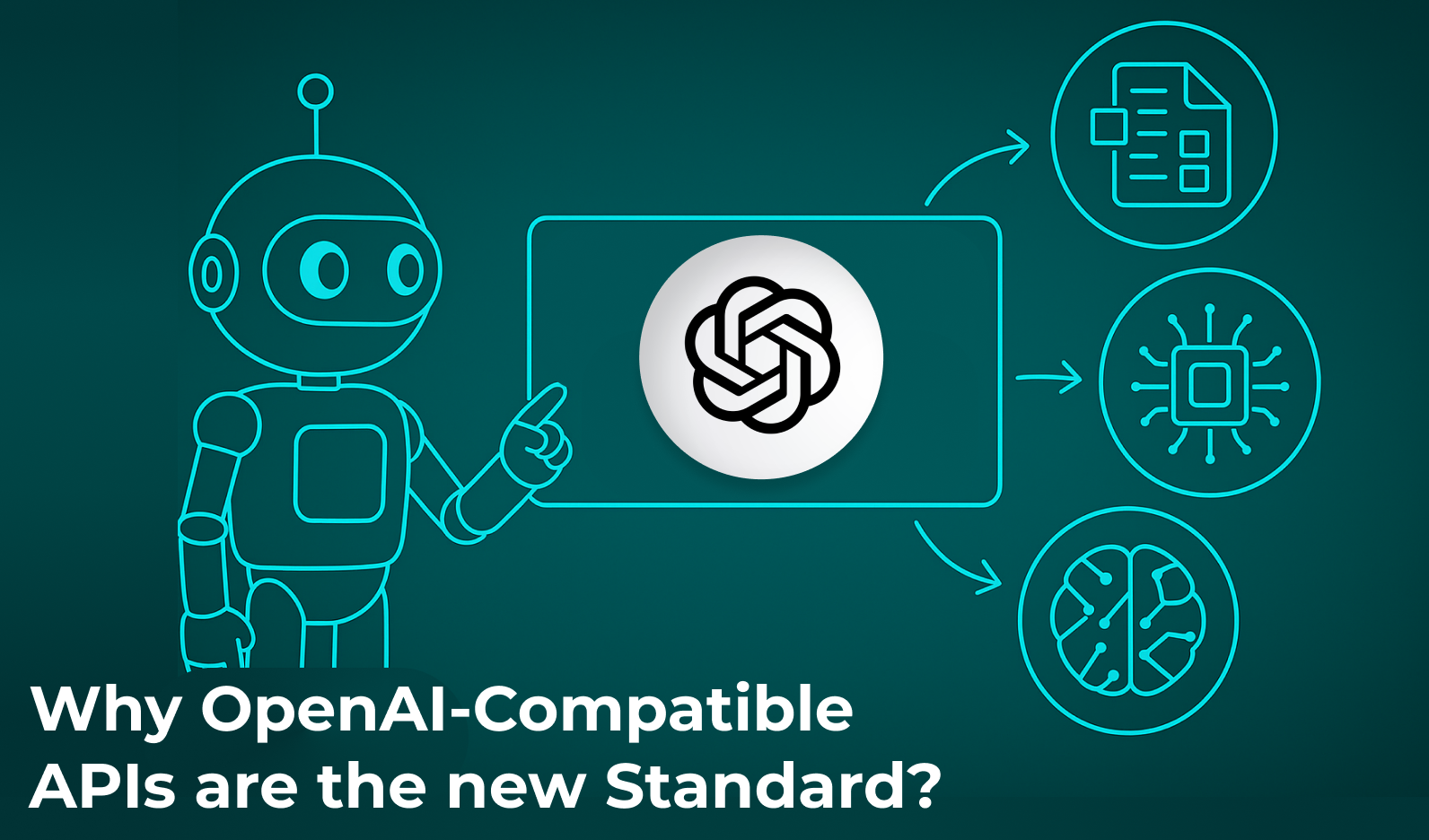
At its core, an API is deemed when it adheres to the same request and response structure as OpenAI's API, particularly its Chat Completions format (specifically ) (Source 8). This standardization extends beyond just chat, encompassing various model types including large language models (LLMs), reranking, text embedding, speech-to-text (STT), and text-to-speech (TTS) models (Source 5). It means that regardless of the underlying provider, developers can interact with different AI models using a familiar and consistent interface.
OpenAI-compatible
/v1/chat/completions
Want your team to run this workflow with AI-native execution?
This compatibility is a critical enabler for developers and organizations. It signifies that a diverse array of model providers can be accessed through a common gateway, reducing the learning curve and integration effort typically associated with adopting new AI technologies (Source 4, Source 5). Whether it's a major cloud provider or an open-source project, the goal is to allow developers to swap out the underlying AI engine without overhauling their entire application architecture.
The scope of OpenAI compatibility is broad, covering essential AI capabilities. Text generation models, for instance, often support the OpenAI Chat Completions API, while embedding models support the OpenAI Embeddings API (Source 3). This consistency allows for a unified approach to integrating advanced AI functions, from generating human-like text to creating vector representations for semantic search and retrieval. This standard is not just about mimicking an API; it's about establishing a universal language for AI interaction.
02The Genesis of a Standard: Why OpenAI-Compatible APIs Are the New Standard
The emergence of OpenAI-compatible APIs as a de facto standard is driven by several compelling strategic advantages that address key challenges in AI development and deployment. This format has rapidly become the default for good reason, fundamentally transforming how organizations approach AI integration (Source 8).
1. Simplifying Model Switching and Enhancing Flexibility
One of the most significant benefits of OpenAI compatibility is its ability to simplify model switching (Source 8). In a rapidly evolving AI landscape, new and improved models are released constantly. Developers using an OpenAI-compatible API can easily transition between different language model providers—whether it's Gemini models accessible via OpenAI libraries (Python and TypeScript/JavaScript) (Source 2) or various models available through Cloudflare Workers AI (Source 3)—by updating just a few lines of code (Source 2). This flexibility means that AI agents within a virtual office environment, like Nonilion, can be quickly reconfigured to utilize the best-performing or most cost-effective models for specific tasks, without requiring extensive refactoring of their core logic.
2. Improving Reliability with Multi-Provider Support
Reliance on a single AI provider introduces a single point of failure. OpenAI Compatible Providers enable multi-provider support, significantly enhancing the reliability and resilience of AI-powered applications (Source 8). By abstracting the underlying model, developers can implement failover mechanisms, automatically switching to an alternative provider if the primary one experiences downtime or capacity issues (Source 4, Source 3). This is crucial for mission-critical operations within an AI office, where uninterrupted service for AI agents and human collaborators is essential for maintaining productivity and workflow continuity.
3. Reducing Integration and Maintenance Costs
The standardized request and response structure dramatically reduces the integration and maintenance costs associated with AI development (Source 8). Instead of building custom integrations for each new AI model or provider, developers can leverage existing tools and SDKs designed for OpenAI's API (Source 3). This consistency minimizes the need for specialized knowledge across different platforms, streamlines onboarding for new developers, and simplifies ongoing maintenance. For organizations managing complex AI workflows, this cost reduction translates directly into more efficient resource allocation and faster time-to-market for new AI capabilities.
4. Enabling Cost Optimization and Strategic Flexibility
OpenAI compatibility empowers organizations to optimize costs by facilitating dynamic model selection based on price, performance, and specific task requirements (Source 8). An AI gateway, for example, can act as an LLM gateway, MCP gateway, and agent gateway, offering one OpenAI-compatible API for thousands of models with features like load balancing, semantic caching, and virtual keys (Source 4). This allows businesses to choose the most economical model for routine tasks while reserving premium models for more complex or critical operations. This level of strategic flexibility is invaluable in managing the operational expenses of an AI office, ensuring that computational resources are utilized efficiently.
03Practical Applications and Providers in the OpenAI-Compatible Ecosystem
The widespread adoption of the OpenAI-compatible standard has fostered a rich ecosystem of providers and tools, each offering unique strengths while adhering to the common API structure. This diversity allows developers to leverage specialized capabilities without sacrificing the benefits of standardization.
Diverse Providers and Their Offerings
Google AI (Gemini API): Gemini models are made accessible using existing OpenAI libraries (Python and TypeScript/JavaScript) and the REST API, requiring only minor code adjustments (Source 2). This demonstrates how even major competitors are embracing the standard to broaden access to their powerful models.
Cloudflare Workers AI: This platform offers OpenAI compatible API endpoints for both text generation (via Chat Completions API) and embedding models (via Embeddings API) (Source 3). Developers can easily call Workers AI by simply swapping the baseURL in the standard OpenAI JavaScript SDK (Source 3).
AI SDK: The OpenAI Compatible Provider package allows developers to use various language model providers that implement the OpenAI API (Source 1). This includes support for a wide range of capabilities such as basic image generation, image editing, embedding models, and completion models, along with options for custom query parameters and provider-specific configurations (Source 1).
Dify Marketplace Plugin: This plugin provides access to various OpenAI-API-compatible models, including LLMs, reranking, text embedding, speech-to-text (STT), and text-to-speech (TTS) (Source 5). It simplifies the process of adding models by allowing developers to configure core details like type, name, API key, and URL, alongside completion and context settings (Source 5).
Cline.bot: This platform leverages OpenAI-compatible providers to offer flexibility with a wider array of AI models, emphasizing general configuration and quickstart options (Source 6).
AI Gateways: Tools like Bifrost, an open-source, high-performance AI gateway, provide one OpenAI-compatible API for thousands of models, incorporating features like failover, load balancing, and semantic caching (Source 4). These gateways are crucial for managing complex multi-model deployments and optimizing performance for AI agents.
Supported Capabilities and Model Types
OpenAI compatibility extends across a comprehensive range of AI functionalities, ensuring that diverse application needs can be met through a unified interface:
Language Models (LLMs): Core text generation and chat capabilities, including advanced features like auto-completion and custom query parameters (Source 1, Source 3).
Embedding Models: For generating vector representations of text, essential for semantic search, recommendation systems, and data analysis (Source 1, Source 3, Source 5).
Image Models: Supporting basic image generation, image editing, and potentially video inputs, expanding the scope of visual AI applications (Source 1).
Speech-to-Text (STT) and Text-to-Speech (TTS): Enabling voice interfaces and accessibility features, crucial for interactive AI agents (Source 5).
Reranking Models: For optimizing search results and content relevance (Source 5).
This broad support means that developers can build sophisticated AI applications, from intelligent chatbots to advanced data analysis tools, all while benefiting from the consistency of the OpenAI-compatible standard.
04Navigating the Ecosystem: Setup and Configuration for OpenAI-Compatible Providers
Implementing OpenAI-compatible providers typically involves a straightforward setup process, designed to integrate seamlessly with existing development workflows. The emphasis is on ease of use and flexibility, allowing developers to quickly get their AI agents and applications running.
General Setup and Provider Instance
The fundamental setup involves configuring the provider instance to point to the desired OpenAI-compatible endpoint. This often means setting a base URL that directs API calls to the chosen provider, rather than OpenAI's default endpoint (Source 3). For example, with the OpenAI JavaScript SDK, developers can specify the Workers AI base URL, along with an API token and the model name (Source 3). Similarly, configuring an OpenAI-API-compatible model might involve providing its core details such as Type, Name, API Key, and URL (Source 5).
Key configuration parameters often include:
API Key: Authentication for accessing the provider's services (Source 5).
Base URL/Endpoint: The specific address for API requests (Source 3, Source 5).
Model Name/ID: Identifying the specific language model to be used for tasks (Source 1, Source 3, Source 5).
Custom Query Parameters: Allowing for fine-grained control over model behavior beyond standard options (Source 1).
Completion, Context, and Token Limits: Defining constraints for model responses and input sizes (Source 5).
Streaming and Vision Settings: Enabling real-time output and multimodal capabilities where supported (Source 5).
Working with Language Models and Other Capabilities
Once the provider instance is configured, interacting with language models and other capabilities becomes consistent. For example, using the AI SDK's OpenAI Compatible Providers package allows access to various models with supported capabilities, including options for customizing chat models, completion models, and embedding models (Source 1). This includes specifying model IDs for auto-completion and configuring provider-specific options (Source 1).
Developers can also handle more advanced scenarios, such as incorporating uploaded file references or video inputs into their requests, expanding the multimodal capabilities of their AI applications (Source 1). This streamlined approach to setup and configuration ensures that the power of diverse AI models can be harnessed efficiently, enabling rapid prototyping and deployment of AI solutions.
05The Strategic Advantage in the AI Office: Human + AI Collaboration with OpenAI Compatibility
The advent of OpenAI compatibility is not merely a technical convenience; it's a strategic imperative for the future of AI offices and the seamless integration of human and AI collaboration. In environments where AI agents are integral to daily operations, such as within Nonilion's virtual workspace, this standardization unlocks unprecedented levels of flexibility, efficiency, and innovation.
Empowering Agile AI Agents
In an AI office, agents are often specialized for tasks ranging from data analysis and content generation to customer support and workflow automation. OpenAI compatibility allows these agents to be remarkably agile. If a new, more performant, or more cost-effective language model becomes available from a different provider, an AI agent can switch to it with minimal disruption. This means Nonilion's AI agents can always leverage the best available AI models for meeting follow-ups, async execution, or complex workflow automation, ensuring they remain at the cutting edge without requiring a complete rebuild of their underlying architecture.
For instance, an AI agent tasked with summarizing large documents might initially use a model from one provider. If another OpenAI Compatible Provider offers a model that excels at summarization with better latency or lower cost, the agent's configuration can be updated quickly, preserving its core functionality while optimizing its performance (Source 8). This adaptability is crucial for maintaining competitive advantage and responding to the dynamic needs of human teams.
The consistency provided by OpenAI-compatible APIs directly benefits human + AI co-working. When human users interact with AI agents, they expect reliable, consistent, and high-quality responses. By enabling multi-provider support and simplifying model switching, OpenAI compatibility contributes to the overall reliability of AI services (Source 8). This means that whether an AI agent is assisting with team coordination, drafting communications, or analyzing data, the underlying AI model can be optimized for robustness, ensuring a smooth collaborative experience.
In a platform like this platform, where human and AI agents share a unified workspace, this compatibility facilitates seamless integration. Developers building on this platform can confidently integrate AI capabilities, knowing that their AI agents can leverage a broad spectrum of OpenAI Compatible Providers without creating integration silos. This fosters a more cohesive and efficient environment where AI agents act as true extensions of the human team, supporting complex decision-making and automating repetitive tasks with consistent performance.
Streamlining Development and Innovation
For developers operating within an AI office context, the standardized nature of OpenAI-compatible APIs significantly streamlines the development lifecycle (Source 8). The ability to use common SDKs and tools across different providers reduces the complexity of building and maintaining AI-powered features. This means that new AI-driven workflows, agent capabilities, or collaborative tools can be developed and deployed faster within platforms like this platform, accelerating innovation and responsiveness to user needs.
Furthermore, the reduced integration and maintenance costs free up valuable developer resources, allowing teams to focus on creating novel applications and enhancing the intelligence of their AI agents, rather than grappling with disparate API specifications (Source 8). This strategic advantage positions organizations to lead in the evolving landscape of human + AI collaboration, making the AI
06Why This Trend Matters for Nonilion
This trend matters to Nonilion because it points to a bigger change: teams are moving from simple calls toward persistent, AI-supported collaboration spaces. Nonilion can bridge live presence, meeting context, avatars, and follow-up work so the trend becomes a usable workflow instead of a headline.
07Shareable Extracts
The trend is not just "The Unseen Standard Driving AI Evolution: Why OpenAI-Compatible APIs Are the New Frontier" - it is a signal that team coordination is becoming the next competitive edge.
Hot take: the teams that win from this shift will not be the ones with more meetings; they will be the ones with clearer shared context after every meeting.
If the unseen standard driving ai evolution: why openai-compatible apis are the new frontier keeps moving this fast, remote teams need a workspace where conversation, presence, and follow-up stay connected.
The Unseen Standard Driving AI Evolution: Why OpenAI-Compatible APIs Are the New Frontier In the rapidly accelerating world of artificial intelligence, a quiet revolution is taking place: the rise of OpenAI-compatible APIs.
This isn't just a technical detail; it's a foundational shift that is democratizing access to cutting-edge AI, streamlining development, and fundamentally reshaping how AI agents and humans collaborate within dynamic AI offices.
08Social Hooks
Everyone is talking about The Unseen Standard Driving AI Evolution: Why OpenAI-Compatible APIs Are the New Frontier. The overlooked part is what happens to team workflows after the headline fades.
The uncomfortable question behind The Unseen Standard Driving AI Evolution: Why OpenAI-Compatible APIs Are the New Frontier: are teams adapting their collaboration systems fast enough?
This is not a meeting trend. It is a coordination trend, and products like Nonilion sit right in the middle of that shift.