Home/Blog/The Future is Shared: How Multiplayer Agent Harnesses Redefine Work in AI Offices
human + AI workflows
The Future is Shared: How Multiplayer Agent Harnesses Redefine Work in AI Offices
The Future is Shared: How Multiplayer Agent Harnesses Redefine Work in AI Offices In the rapidly evolving landscape of artificial intelligence, the concept of an AI agent capable o
10 MIN READ
03 Aug 2026
human + AI workflows
The Future is Shared: How Multiplayer Agent Harnesses Redefine Work in AI Offices
In the rapidly evolving landscape of artificial intelligence, the concept of an AI agent capable of performing complex tasks is becoming a reality. However, a raw language model on its own merely generates text; it requires robust infrastructure to transform into an effective, actionable agent. This infrastructure is known as an agent harness. As AI capabilities advance, the focus is shifting towards collaborative AI environments, leading to the emergence of the multiplayer agent harness for work, a pivotal innovation for the future of AI offices and human + AI collaboration. Platforms like Nonilion, designed for dynamic virtual office collaboration, are at the forefront of integrating such advanced systems to foster seamless interaction between human teams and sophisticated AI agents.
01
Decoding the Agent Harness: More Than Just a Model
An agent harness serves as the essential scaffolding that elevates a foundational language model into an agent capable of executing real-world tasks. Without this crucial infrastructure, a model's utility is limited to generating output; it cannot independently perform actions (Source 3, 5, 6). The harness is every component built around the model, enabling it to transition from a text generator to an active participant in workflows (Source 5). It provides the necessary mechanisms for an agent to interact with its environment, manage tasks, and learn from its experiences.
Want your team to run this workflow with AI-native execution?
The core components that make up an effective agent harness are diverse and critical for operational success. These include prompts that guide the model's initial responses, a suite of tools that the agent can invoke (like APIs or code execution environments), and context policies that manage the information available to the agent (Source 5, 6). Hooks act as enforcement layers, while sandboxes provide secure execution environments for code. Subagents can be orchestrated for complex tasks, and robust feedback loops, coupled with recovery paths, ensure the agent can learn from mistakes and self-correct (Source 5). This comprehensive infrastructure is what enables an agent to actually do things beyond simply generating text.
The necessity of an agent harness becomes clear when considering the limitations of raw large language models (LLMs). A standalone LLM cannot execute code, manage files, make API calls, maintain state across sessions, or autonomously recover from errors (Source 6). The gap between a model producing plausible output and an agent completing tangible work is entirely bridged by this underlying infrastructure (Source 6). Agent harnesses address common failure modes, such as context windows being exhausted mid-task, agents losing track of previous decisions, or making incorrect tool calls (Source 6). By engineering these components, the harness ensures that AI agents can operate reliably and effectively within complex operational environments, making it a foundational element for any AI-driven workflow.
02The Power of "Multiplayer": Collaborative AI for Modern Workflows
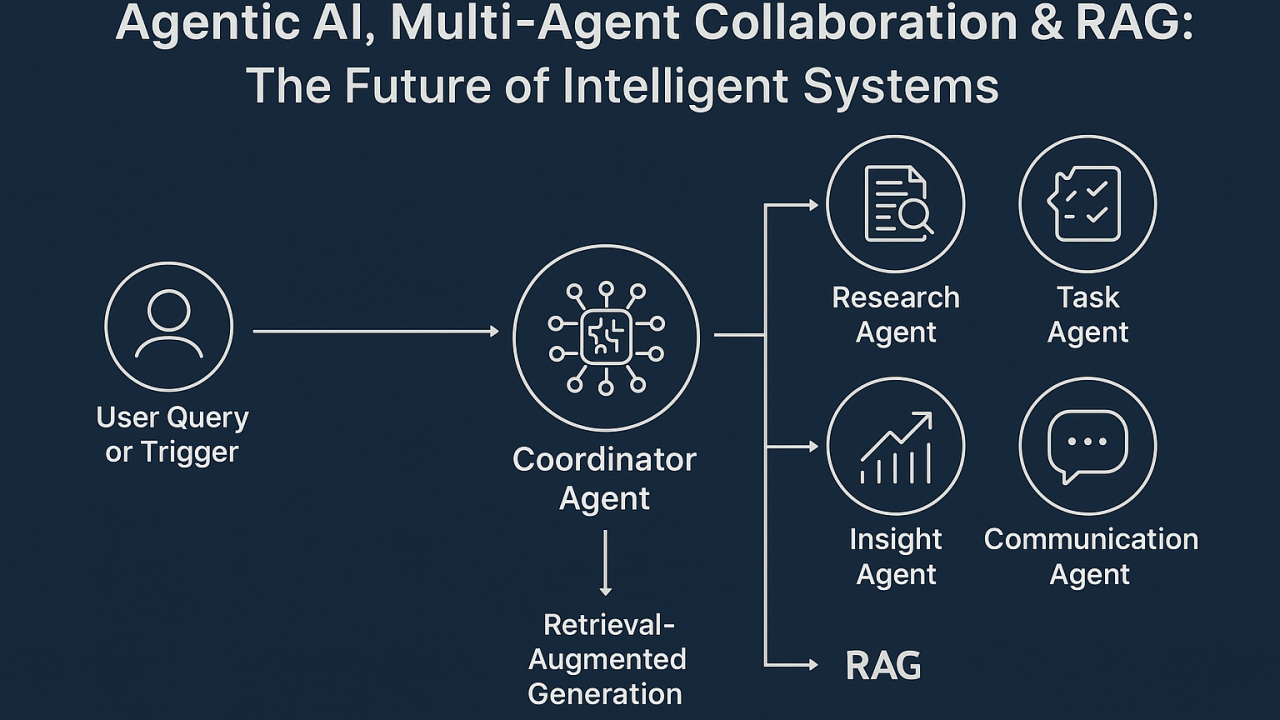
The evolution from single-agent harnesses to multiplayer agent harnesses for work represents a significant leap forward in AI-driven collaboration. A multiplayer agent harness is specifically designed to facilitate shared work environments where multiple AI agents, often alongside human collaborators, can operate cohesively (Source 1, 2, 4). This paradigm shift moves beyond individual AI assistants to create a collective intelligence that can tackle more complex, distributed tasks.
QM, short for Quartermaster, stands out as a prominent example of this innovation. Developed by Y Combinator, QM is an open-source multiplayer AI agent harness built for company work (Source 2, 4). Its design provides each employee, channel, or isolated workspace with its own scoped memory and execution environment (Source 2, 4). This architectural choice is crucial for managing the flow of information and preventing the AI output from overwhelming the team space, ensuring that agents can work asynchronously and contribute meaningfully without causing information overload (Source 1).
The problem that a multiplayer agent harness like QM solves, which a personal agent cannot, lies in its capacity for shared context and coordinated action (Source 4). While a personal agent might assist an individual, it lacks the inherent design for team-wide collaboration, shared state management, and the ability to contribute to a collective objective in a structured manner. Multiplayer harnesses enable a more integrated approach, where AI agents can contribute to shared projects, participate in team-wide discussions, and execute tasks that require broader organizational context. This capability is particularly vital in dynamic AI offices where multiple human and AI agents must interact seamlessly to achieve common goals. The ability of a multiplayer agent harness for work to manage diverse inputs and outputs across a team significantly enhances the overall operational efficiency and collaborative capacity of an organization.
03Engineering the Future: Principles of Agent Harness Development
Agent Harness Engineering treats the infrastructure surrounding an AI model as a critical artifact, subject to rigorous design and continuous improvement (Source 5). This engineering discipline is founded on the principle that every mistake an agent makes should lead to an engineered solution, ensuring the agent never repeats that specific error (Source 5). It's a continuous feedback loop where failures are not just corrected, but used to tighten the harness, making the agent more robust and reliable over time (Source 5).
Key aspects of effective agent harness development focus on creating durable, adaptable, and intelligent systems:
Durable State Management: Implementing mechanisms like filesystem and Git integration allows agents to maintain persistent memory and track changes, crucial for long-running tasks and preventing context rot (Source 5). This ensures that an agent can pick up where it left off, even after restarts or interruptions, by referencing a reliable, version-controlled state.
General-Purpose Tooling: Providing agents with access to tools like Bash and code execution environments transforms them into highly versatile problem-solvers (Source 5). This enables agents to perform a wide array of operations, from scripting to complex software development tasks, making them adaptable to diverse workflow requirements.
Sandboxes and Default Tooling: Secure sandboxed environments are essential for executing code and interacting with external systems safely (Source 5). Coupled with a carefully curated set of default tools, this ensures that agents can operate effectively without posing security risks or requiring extensive custom setup for every task.
Memory and Search for Continual Learning: To combat context rot—where an agent loses track of past information—harnesses incorporate advanced memory and search capabilities (Source 5). This allows agents to continually learn from new data, retrieve relevant past information, and maintain a coherent understanding of their ongoing tasks and objectives.
Long-Horizon Execution: For complex tasks requiring multiple steps, harnesses must support planning, verification, and iterative looping until a task is completed (Source 3, 5). This enables agents to break down large problems, execute sub-tasks, and verify progress, ensuring that even multi-stage projects are completed accurately and efficiently.
Hooks as an Enforcement Layer: Hooks provide a mechanism to enforce rules, validate outputs, or trigger specific actions at various stages of an agent's operation (Source 5). This layer is crucial for maintaining control over agent behavior, ensuring compliance with organizational policies, and integrating agents seamlessly into existing workflows.
It's important to distinguish between an agent framework and an agent harness. While frameworks provide a set of libraries and conventions for building agents, the harness is the actual infrastructure that turns a raw LLM into a production-ready agent (Source 6). The harness is where the practical engineering happens, addressing the four common failure modes that often hinder production agent deployment: context window exhaustion, out-of-sequence tool calls, hallucinated function names, and premature task completion (Source 6). By focusing on Agent Harness Engineering, organizations can build resilient, intelligent systems that consistently deliver value.
00Multiplayer Agent Harnesses in the AI Office: The Nonilion Advantage
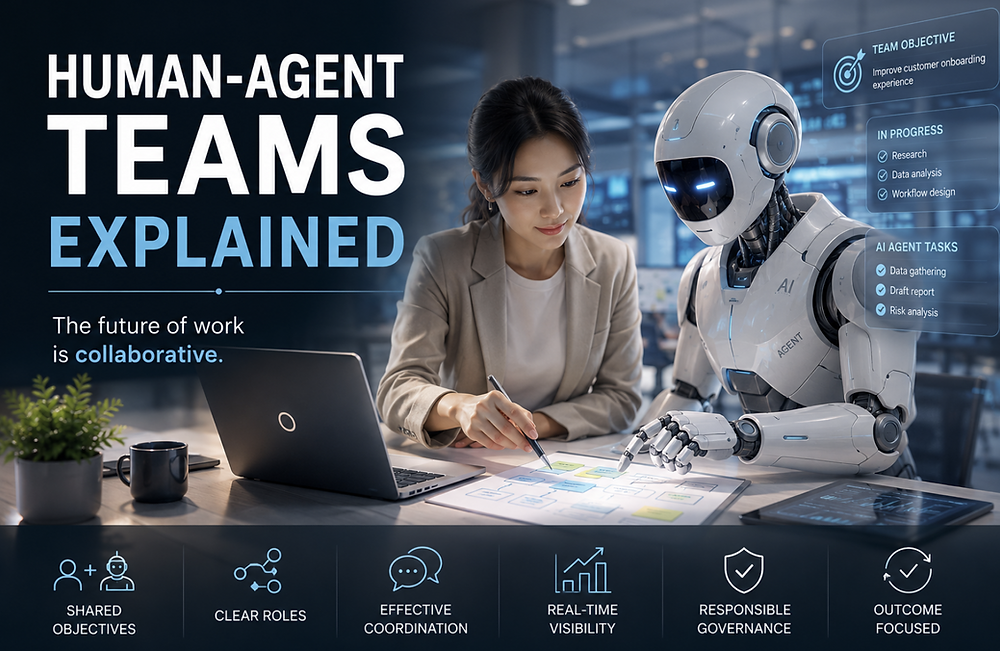
The integration of multiplayer agent harnesses for work is fundamentally reshaping the operational dynamics within modern AI offices. These advanced systems are not just enhancing individual productivity but are creating an entirely new paradigm for how teams—comprising both humans and AI agents—collaborate and achieve shared objectives. The future of work, particularly in environments rich with AI, hinges on the ability to orchestrate these diverse intelligences seamlessly.
In an AI office, the emphasis shifts from purely human-centric workflows to a more symbiotic human + AI collaboration. Multiplayer agent harnesses are instrumental in this transition, enabling AI agents to work alongside human colleagues without creating an overwhelming deluge of information or disrupting established team dynamics (Source 1). By providing isolated yet interconnected workspaces with scoped memory, these harnesses allow AI agents to contribute their specialized capabilities to collective projects while respecting the boundaries of individual and team focus (Source 2, 4). This careful balance ensures that AI contributions are additive and integrated, rather than intrusive.
This is where Nonilion provides a tangible advantage. As a platform designed for virtual office collaboration, Nonilion is uniquely positioned to leverage the power of multiplayer agent harnesses. Imagine AI agents, powered by such harnesses, seamlessly participating in virtual meetings, automatically generating summaries, identifying action items, and initiating follow-up tasks (Source 4). For instance, after a team discussion, an AI agent could, through its harness, asynchronously execute research tasks, draft initial reports, or even schedule subsequent meetings, all within the shared context of the Nonilion workspace. This level of workflow automation and async execution significantly boosts team coordination and overall productivity.
Nonilion's environment becomes a practical example of how human + AI co-working can thrive. By integrating a multiplayer agent harness for work, teams can delegate repetitive or data-intensive tasks to AI agents, freeing human talent for more strategic and creative endeavors. The harness ensures that these
05Why This Trend Matters for Nonilion
This trend matters to Nonilion because it points to a bigger change: teams are moving from simple calls toward persistent, AI-supported collaboration spaces. Nonilion can bridge live presence, meeting context, avatars, and follow-up work so the trend becomes a usable workflow instead of a headline.
06Shareable Extracts
The trend is not just "The Future is Shared: How Multiplayer Agent Harnesses Redefine Work in AI Offices" - it is a signal that team coordination is becoming the next competitive edge.
Hot take: the teams that win from this shift will not be the ones with more meetings; they will be the ones with clearer shared context after every meeting.
If the future is shared: how multiplayer agent harnesses redefine work in ai offices keeps moving this fast, remote teams need a workspace where conversation, presence, and follow-up stay connected.
The Future is Shared: How Multiplayer Agent Harnesses Redefine Work in AI Offices In the rapidly evolving landscape of artificial intelligence, the concept of an AI agent capable of performing complex tasks is becoming a reality.
However, a raw language model on its own merely generates text; it requires robust infrastructure to transform into an effective, actionable agent.
07Social Hooks
Everyone is talking about The Future is Shared: How Multiplayer Agent Harnesses Redefine Work in AI Offices. The overlooked part is what happens to team workflows after the headline fades.
The uncomfortable question behind The Future is Shared: How Multiplayer Agent Harnesses Redefine Work in AI Offices: are teams adapting their collaboration systems fast enough?
This is not a meeting trend. It is a coordination trend, and products like Nonilion sit right in the middle of that shift.