Home/Blog/OpenClaw: The Personal AI Assistant and the Dawn of Autonomous Agents
human + AI workflows
OpenClaw: The Personal AI Assistant and the Dawn of Autonomous Agents
Blog Outline: OpenClaw: The Personal AI Assistant and the Dawn of Collaborative Intelligence OpenClaw: The Personal AI Assistant and the Dawn of Autonomous Agents Introduction: The
12 MIN READ
13 Jun 2026
human + AI workflows
01Blog Outline: OpenClaw: The Personal AI Assistant and the Dawn of Collaborative Intelligence
OpenClaw: The Personal AI Assistant and the Dawn of Autonomous Agents
Introduction: The Rise of the Individual AI Co-Pilot
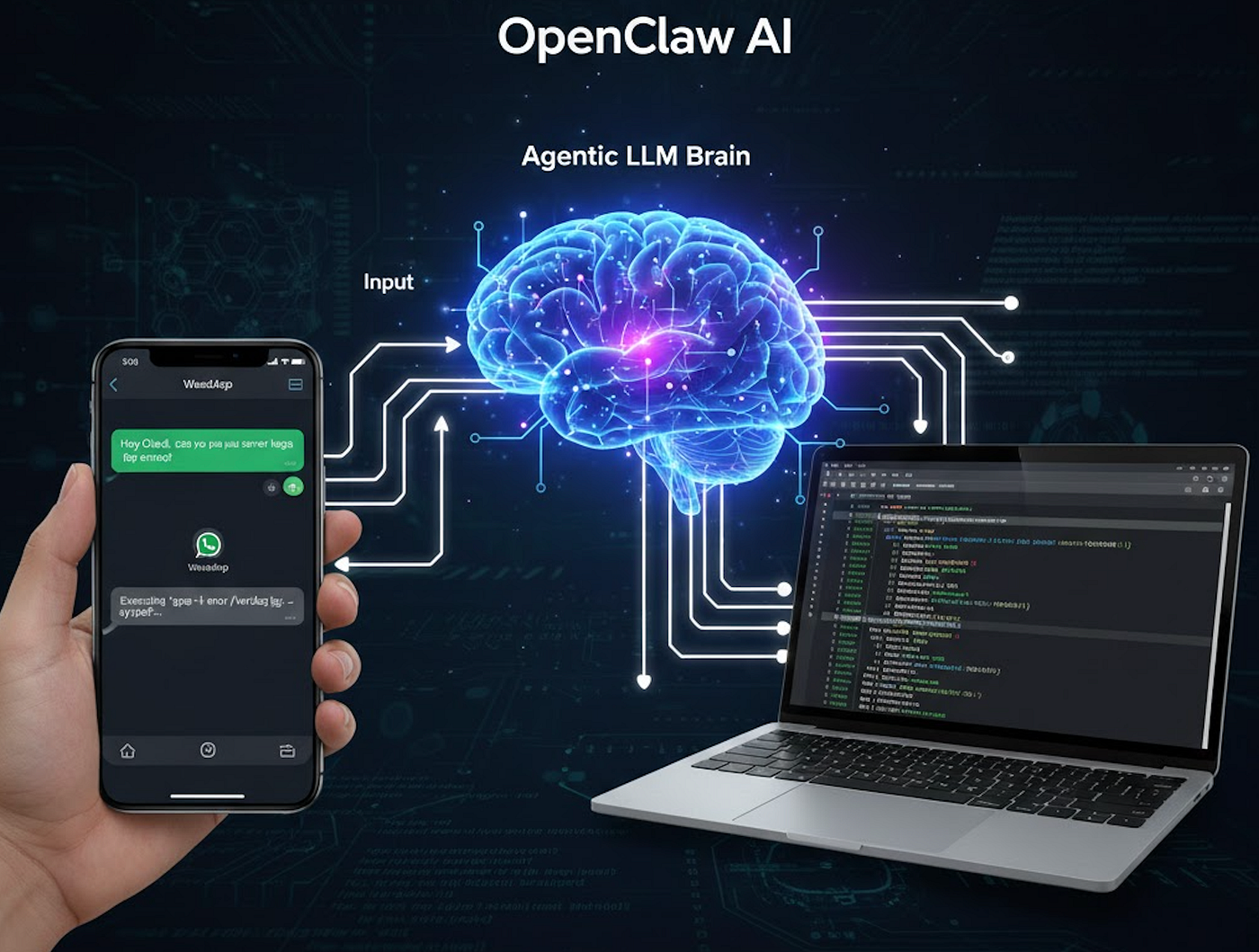
The demand for personal efficiency continues to grow, driving the emergence of sophisticated autonomous AI agents designed to streamline daily tasks. In this landscape, OpenClaw serves as an example: a free, open-source personal AI assistant that "actually does things." Its core value proposition lies in its ability to automate individual tasks—from managing an inbox and calendar to handling flight check-ins—all directly from familiar chat interfaces like WhatsApp or Telegram. OpenClaw emphasizes technical accessibility, being self-hosted and cross-platform, giving users control over their data and operations.
Want your team to run this workflow with AI-native execution?
While OpenClaw empowers individuals with enhanced efficiency, the next frontier isn't just about personal productivity – it's about transforming how entire teams collaborate. This is where the concept of an AI office, a virtual workspace designed for AI integration like Nonilion, steps in, turning individual AI assistance into a catalyst for collective success.
The "What" of OpenClaw: A Glimpse into Personal Autonomy
Defining the Personal AI Assistant
A personal AI assistant distinguishes itself by its user-centric control and direct task execution. Unlike general-purpose chatbots, these agents are designed to understand and act on behalf of an individual user, focusing on their specific needs and preferences.
Key Functionalities
OpenClaw demonstrates the practical application of personal autonomy through several key functionalities:
Email management: Capable of clearing inboxes, drafting replies, and organizing communications.
Calendar synchronization and scheduling: Managing appointments, setting reminders, and coordinating schedules.
Travel logistics: Handling tasks like flight check-ins and booking reminders.
Information retrieval and synthesis: Gathering and summarizing data for individual use.
Interface and Accessibility
A significant aspect of OpenClaw's design is its integration with existing chat applications such as WhatsApp and Telegram. This approach aims to meet users where they already are, facilitating interaction with the AI assistant without requiring a new dedicated application.
Self-Hosted Advantage
OpenClaw's self-hosted nature offers users enhanced privacy, greater control over their data, and the flexibility to customize the agent to their specific requirements. It runs on the user's own machine, supporting macOS, Linux, and Windows.
The "Why" of Personal Automation: Reclaiming Time and Focus
Combating Digital Overload
In an age of constant digital input, personal AI assistants like OpenClaw help individuals manage the deluge of information and micro-tasks that can lead to cognitive overload. By automating routine activities, they free up mental bandwidth.
Enhancing Individual Productivity
By handling repetitive and time-consuming administrative tasks, OpenClaw allows users to dedicate more cognitive resources to higher-value, creative, and strategic work. This shift can contribute to enhanced individual productivity.
The Promise of "Doing Things"
OpenClaw moves beyond chatbots that merely answer questions, evolving into agents that execute actions. This capability represents an evolution in AI utility, moving from passive interaction towards active task completion.
Empowerment through Automation
Ultimately, personal automation gives individuals more agency over their digital lives. It provides a means to regain control over their time and attention, fostering a more focused and less fragmented work experience.
The "How" OpenClaw Works: Under the Hood of a Personal Agent
LLMs as the Brain
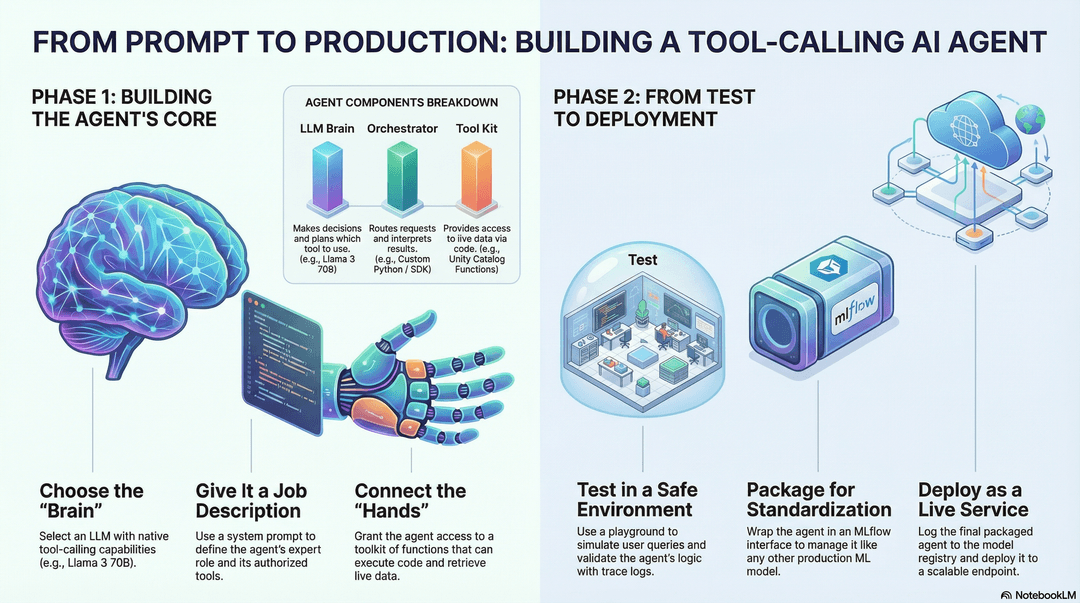
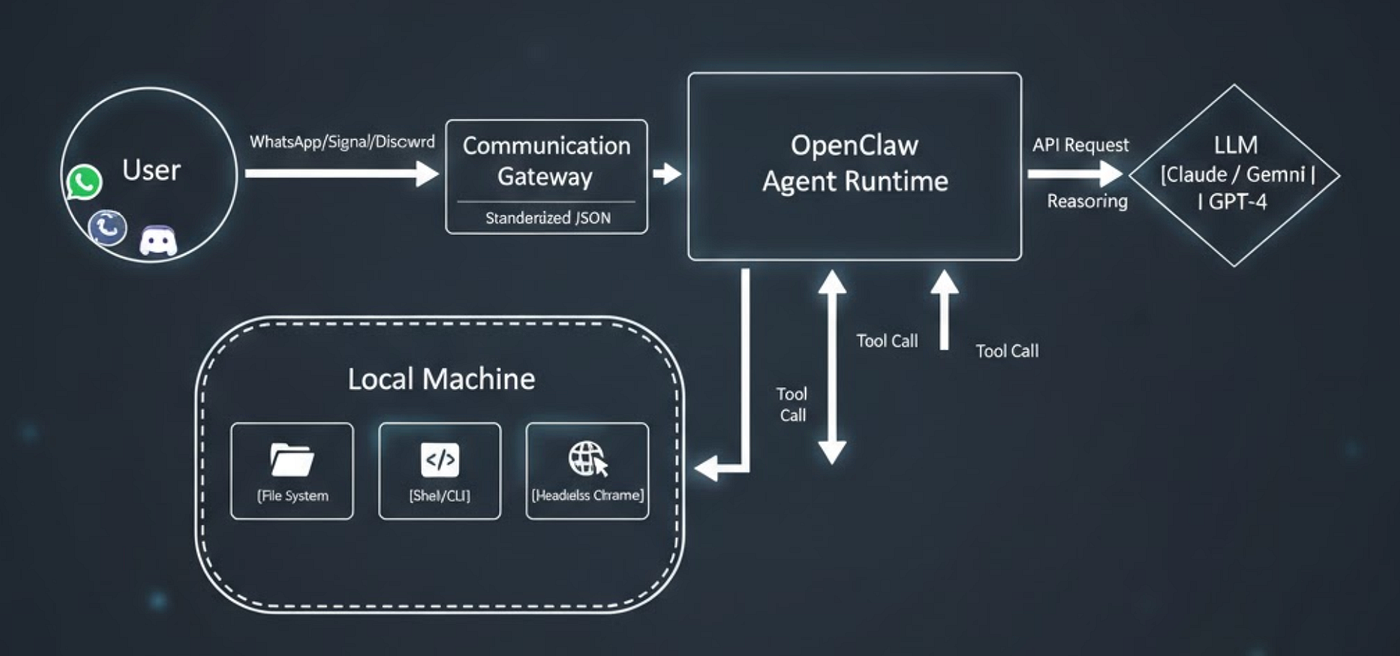
At its core, OpenClaw leverages large language models (LLMs) to understand user commands, interpret context, and plan task execution. These models enable the AI to process natural language and translate it into actionable steps.
Tool Use and API Integration
The ability for OpenClaw to "do things" stems from its tool use and API integration. This mechanism allows the AI to interact with external services and applications, such as email clients, calendar apps, and travel platforms, to perform requested tasks.
AI generated cover image
Open-Source Philosophy
OpenClaw's open-source nature fosters community-driven development, promoting transparency and continuous improvement. This collaborative approach can allow for iteration and an evolving feature set.
Local Execution
Running on the user's own device, OpenClaw benefits from speed and enhanced data security, as sensitive information does not necessarily need to be sent to external servers for processing.
02Beyond Personal Productivity: The Imperative for Collaborative AI in the AI Office
The "Personal" Limitation: Where Individual AI Agents Reach Their Boundary
While personal AI assistants like OpenClaw are powerful tools for individual efficiency, their inherent design presents limitations when scaling to team-based collaboration.
Lack of Shared Context
An individual AI assistant, by definition, lacks an an inherent understanding of broader team goals, shared projects, or collective organizational knowledge. Its operational scope is confined to the user it serves.
Coordination Challenges
Imagine a scenario where numerous individual OpenClaw instances attempt to coordinate a complex team project. The absence of a unified communication and action layer would quickly lead to fragmentation, miscommunication, and breakdowns in workflow.
No Unified Memory
Each agent's learning, actions, and insights remain siloed within its individual context. This prevents the accumulation of collective intelligence or the creation of a shared, evolving knowledge base that benefits the entire team.
The "Chat App" Constraint for Teams
While chat apps are effective for individual interaction with an AI, they often lack the structured environment needed for persistent team collaboration, complex workflow management, and the holistic oversight required for collective projects.
The "Why" for Teams: The Evolution from Personal Assistant to Team Co-Pilot
The challenges posed by individual AI agents highlight the necessity for a more integrated, collaborative approach to AI within an organizational context.
Addressing Collective Overload
Just as individuals face digital overwhelm, teams grapple with an overload of meetings, disparate tools, fragmented information, and constant communication streams. Collaborative AI can help manage this collective burden.
The Need for Shared Understanding
For teams to operate effectively, it's crucial that everyone, including integrated AI agents, operates from a shared understanding of project status, deadlines, and objectives. Collaborative AI provides the mechanisms for this shared context.
Scaling Automation
The ambition moves from automating one person's inbox to automating entire team workflows, project lifecycles, and cross-functional processes, potentially amplifying collective output.
The Human-AI Collaboration Gap
The goal is to create an environment where humans and AI agents can co-create and co-execute tasks, rather than simply delegating individual assignments. This involves AI as a contributing participant in team dynamics.
The "What" of Collaborative AI: Introducing the AI Office
Defining the AI Office
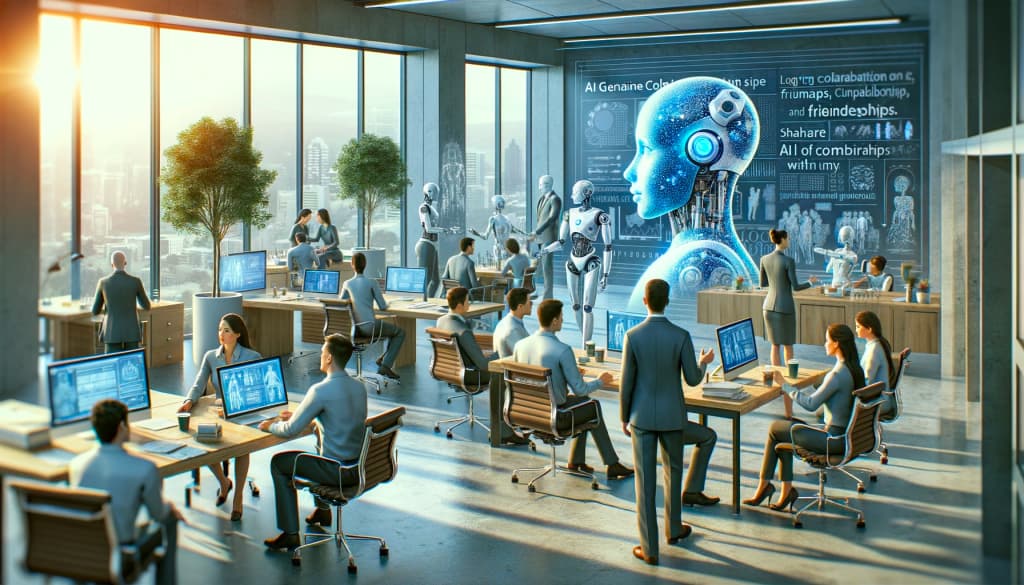
An AI office is a virtual workspace where AI agents can be integrated as active participants, rather than merely isolated tools. It's an environment designed to facilitate human and AI collaboration.
Shared Context and Persistent Memory
Within an AI office, AI agents can maintain a collective understanding of ongoing projects, team history, and organizational knowledge, aiming for continuity and informed decision-making across interactions.
Autonomous Agents for Team Goals
These AI agents are designed to plan, execute, and adapt tasks for the benefit of the entire team, supporting overarching team objectives.
Nonilion's Role: This is the domain of Nonilion, an AI office designed to facilitate human + AI collaboration. Unlike personal assistants that optimize individual output, Nonilion aims to provide a shared environment where AI agents can maintain persistent context across projects and assist in automating complex team workflows.
00From Individual Agents to Integrated AI Teams: The Nonilion Vision for the AI Office
The "How" of Human + AI Collaboration in a Shared Workspace
The transition from personal AI to collaborative AI necessitates a fundamental shift in how AI agents are integrated into the work environment.
Beyond Chat Interfaces
The focus moves from chat-based individual commands to a structured, dedicated virtual workspace designed for persistent team interaction and project management.
AI Agents as Team Members
In an AI office, AI agents can take on roles typically performed by humans, such as project coordinators, research assistants, or meeting facilitators, contributing actively to team processes.
Facilitating Asynchronous Execution
AI agents can bridge time zone gaps by executing tasks, summarizing progress, and preparing updates for team members across the globe, helping to maintain project momentum.
Building Collective Knowledge
AI agents can actively contribute to and query a shared, evolving knowledge base, helping to ensure institutional memory is captured, organized, and readily accessible to all team members, human and AI alike.
The "When" for Team-Wide Adoption: The Strategic Imperative
The adoption of collaborative AI can become strategically beneficial under specific conditions.
Complex Project Management
When projects involve multiple stakeholders, intricate dependencies, and dynamic requirements, collaborative AI can assist with the coordination and automation needed to navigate complexity efficiently.
Distributed Teams
For remote or hybrid teams, AI agents can provide continuity, coordination, and a sense of shared presence, helping to overcome geographical and temporal barriers.
Rapid Innovation Cycles
By offloading routine tasks, data synthesis, and preliminary research to AI, organizations can potentially accelerate their research, development, and deployment cycles.
Strategic Decision Support
AI agents can synthesize vast amounts of data from various sources to provide comprehensive insights, which can support more informed collective decisions for strategic initiatives.
The "Where" of the AI Office: Characteristics of a Collaborative AI Environment
An effective AI office aims to possess distinct characteristics that facilitate human and AI collaboration.
Persistent Digital Workspace
It is a continuous environment where projects, discussions, and AI agent activities are stored, organized, and accessible, aiming to provide a consistent reference for team endeavors.
Context-Aware AI
Agents within this environment are designed to process team interactions, project history, and preferences, allowing them to contribute relevantly.
Seamless Integration
The AI office aims to act as a unified operational hub, connecting various tools, data sources, and communication channels to support a more cohesive work experience.
Nonilion as the Blueprint:Nonilion aims to exemplify this blueprint for the AI office. Its AI agents are designed to assist with meeting workflows from scheduling to follow-ups, support asynchronous execution across time zones by summarizing discussions and initiating next steps, and contribute to a collective knowledge base that can grow with team interactions, thereby aiming to enhance team coordination and strategic output beyond what individual assistants alone can offer.
04The Future of Work: A Symphony of Human Ingenuity and AI Agents
Synthesizing the Vision: Human-AI Co-Creation
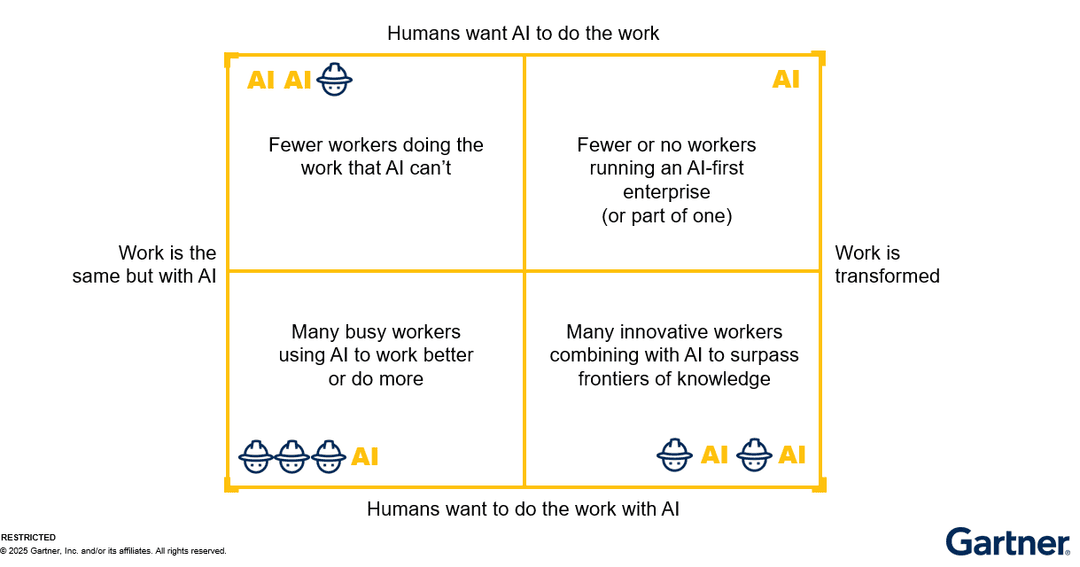
The future of work isn't about replacing humans with AI, but about augmenting human capabilities with intelligent agents. This vision emphasizes a synergistic relationship: humans provide creativity, critical thinking, and empathy, while AI provides tireless execution, complex data processing, and sophisticated pattern recognition. The evolution is from tools that merely assist to agents that can more deeply collaborate.
The "Why" This Future is Relevant: Adapting to Complexity
The increasing pace and complexity of the modern business environment suggest a need for advanced solutions that traditional methods alone may struggle to provide. AI offices can support organizations in becoming more agile, responsive, and innovative, potentially adapting to market changes more effectively. Furthermore, offering advanced collaborative environments can be a factor in attracting and retaining talent.
Conclusion: Elevating Work from Personal Tasks to Collective Achievements
The journey from individual empowerment offered by tools like OpenClaw to the potential of collaborative AI in the AI office marks an important evolution in how we approach work. While personal AI assistants are foundational in optimizing individual output, the broader impact lies in how AI can amplify collective human potential.
Ultimately, the goal of an AI office like [this platform](https://this platform.com/) is to enable a future where AI agents and humans can effectively co-work, fostering enhanced team coordination, supporting strategic execution, and exploring new avenues of innovation for the collective good.
05Why This Trend Matters for Nonilion
This trend matters to Nonilion because it points to a bigger change: teams are moving from simple calls toward persistent, AI-supported collaboration spaces. Nonilion can bridge live presence, meeting context, avatars, and follow-up work so the trend becomes a usable workflow instead of a headline.
06Shareable Extracts
The trend is not just "OpenClaw: The Personal AI Assistant and the Dawn of Autonomous Agents" - it is a signal that team coordination is becoming the next competitive edge.
Hot take: the teams that win from this shift will not be the ones with more meetings; they will be the ones with clearer shared context after every meeting.
If openclaw: the personal ai assistant and the dawn of autonomous agents keeps moving this fast, remote teams need a workspace where conversation, presence, and follow-up stay connected.
OpenClaw emphasizes technical accessibility, being self-hosted and cross-platform, giving users control over their data and operations.
While OpenClaw empowers individuals with enhanced efficiency, the next frontier isn't just about personal productivity – it's about transforming how entire teams collaborate.
07Social Hooks
Everyone is talking about OpenClaw: The Personal AI Assistant and the Dawn of Autonomous Agents. The overlooked part is what happens to team workflows after the headline fades.
The uncomfortable question behind OpenClaw: The Personal AI Assistant and the Dawn of Autonomous Agents: are teams adapting their collaboration systems fast enough?
This is not a meeting trend. It is a coordination trend, and products like Nonilion sit right in the middle of that shift.