Home/Blog/Minimus Container Images Are Now Free: A New Era for AI Trust and Enterprise Security
human + AI workflows
Minimus Container Images Are Now Free: A New Era for AI Trust and Enterprise Security
Minimus Container Images Are Now Free: Implications for AI Trust and Enterprise Security In the rapidly evolving landscape of artificial intelligence, trust is the unseen foundatio
11 MIN READ
24 Jun 2026
human + AI workflows
Minimus Container Images Are Now Free: Implications for AI Trust and Enterprise Security
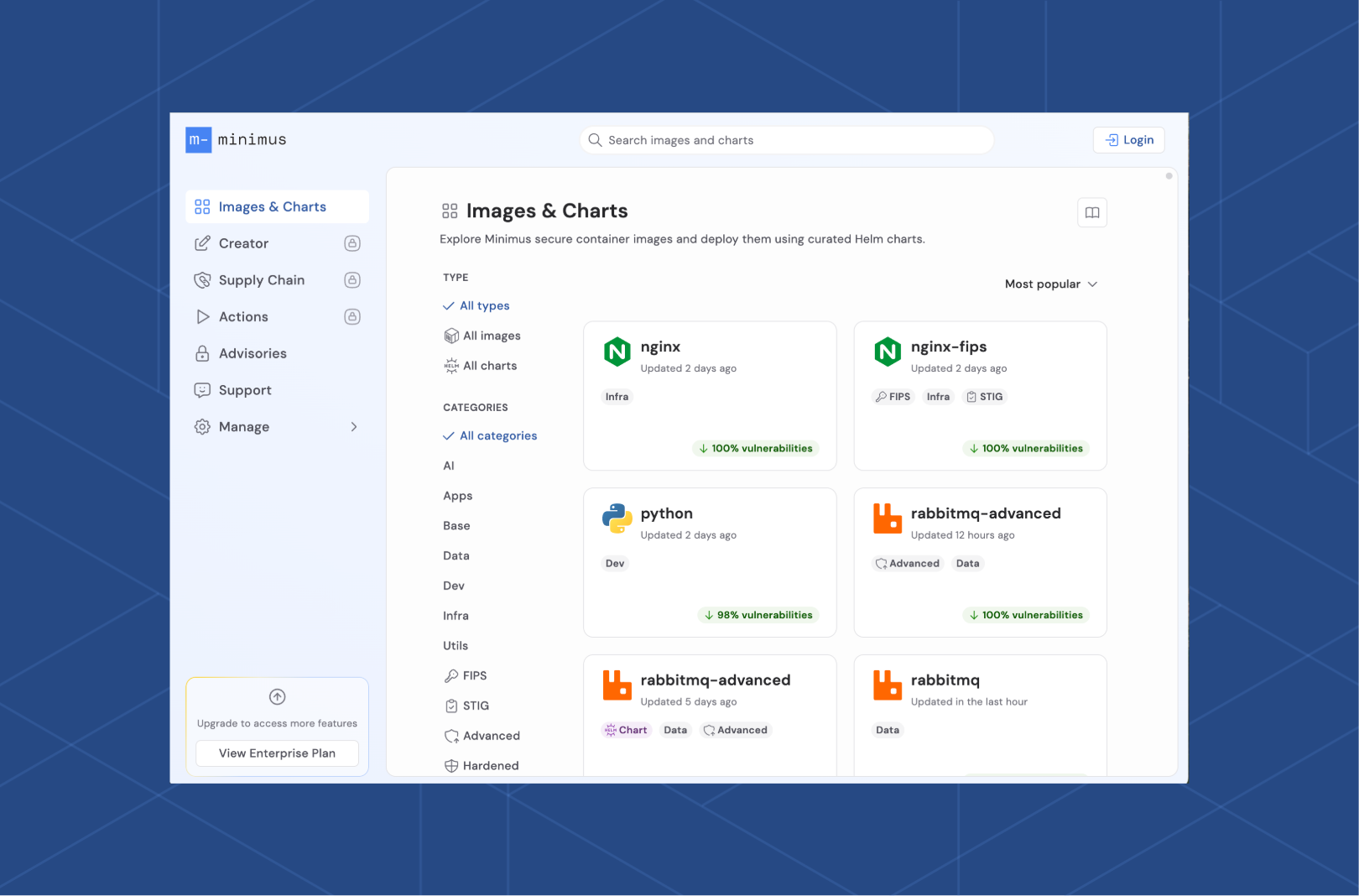
In the rapidly evolving landscape of artificial intelligence, trust is the unseen foundation upon which all innovation rests. For organizations like Nonilion, where human and AI agents collaborate in a shared virtual workspace, ensuring the integrity and reliability of every component is paramount. A significant development in this regard has recently emerged: Minimus container images are now free. This announcement represents a significant development, offering broader access to hardened, minimized container images that can help enhance security, streamline operations, and contribute to greater trust in AI systems.
The shift to containerized applications has brought unprecedented agility, but also new security challenges. Minimus aims to address these challenges by offering a solution that is now more broadly accessible.
Want your team to run this workflow with AI-native execution?
At its core, a minimized, hardened container image is a software package designed with security and efficiency in mind. Unlike traditional base images that often include a vast array of unnecessary components and libraries, Minimus delivers "distroless" images. These images contain only the essential components required to run a specific application, significantly reducing the attack surface.
Key characteristics include:
Near Zero CVEs: Minimus images are meticulously scanned and built to achieve a state of near-zero Common Vulnerabilities and Exposures (CVEs), offering a drastically reduced risk profile.
Daily Rebuilds: To combat new threats, these images are rebuilt daily, ensuring they incorporate the latest security patches and updates.
Reduced Size and Bloat: By stripping out non-essential elements, Minimus images are a fraction of the size of typical base images, leading to faster deployments and lower resource consumption.
Audit-Ready: Designed with compliance in mind, these images are audit-ready from the start, simplifying regulatory adherence.
The Impact of "Free" on Enterprise Security
The decision by Minimus to offer its hardened container images for free is a significant development. Historically, advanced container security solutions, particularly those offering minimized and near-zero CVE images, often came with a significant cost barrier. This created a disparity where smaller organizations or open-source projects might struggle to implement best-in-class security practices.
Increases Accessibility: It can help level the playing field, potentially allowing more organizations, regardless of budget, to adopt a stronger security posture.
Promotes Secure Defaults: It encourages the adoption of secure-by-default practices, contributing to a shift in perspective from security as an optional add-on to an inherent characteristic of software development. As noted by Minimus, hardened images shouldn't be an upsell; they should be the standard.
Accelerates Adoption: The removal of cost barriers is expected to accelerate the adoption of these secure images across the industry, raising the overall baseline of container security.
Addressing Common Pain Points: From Bloatware to CVE Overload
For many security and platform teams, managing container vulnerabilities is a relentless battle. Traditional images are often burdened with "bloatware"—unnecessary packages that expand the attack surface and generate a constant stream of CVE alerts. This "CVE overload" can overwhelm teams, making it difficult to prioritize and remediate critical vulnerabilities effectively.
Minimus aims to address these pain points:
Reduces Bloat: By providing only necessary components, it can significantly reduce the volume of potential vulnerabilities.
Reduces CVE Noise: With near-zero CVE images, teams can shift their focus from reactive patching of hundreds of minor issues to proactive threat intelligence and higher-level security architecture.
Simplifies Compliance: The inherent security and audit-readiness simplify the path to meeting stringent regulatory and industry compliance standards.
02The Strategic Value: Connecting Technical Security to AI Reliability
The implications of robust container security can extend beyond technical vulnerability management, potentially impacting the reliability and trustworthiness of AI systems.
Connecting Container Security to AI Agent Integrity
AI agents, whether facilitating virtual office collaboration, automating workflows, or providing intelligent insights, are increasingly deployed within containerized environments. The integrity of these agents is often linked to the security of their underlying infrastructure. A compromised container image can introduce backdoors, enable data exfiltration, or lead to unpredictable and potentially malicious AI behavior.
By using hardened images, organizations can:
Prevent Supply Chain Attacks: Reduce the risk of malicious code being injected into AI applications through compromised base images.
Support Predictable Behavior: Help provide a stable, secure execution environment, which can be critical for AI models that rely on consistent and untampered data and code.
Help Safeguard Sensitive Data: Contribute to protecting the data processed and generated by AI agents, which often includes proprietary information or personal data.
Building Trust in Human + AI Collaboration
For an AI office like Nonilion, where human and AI agents work side-by-side, trust is not merely a technical requirement but a core cultural value. If humans cannot trust the security and reliability of their AI counterparts, the potential for synergy diminishes. Secure container images contribute to this trust by:
Reducing Incidents: Fewer security incidents mean less disruption and more confidence in AI-driven processes.
Potentially Enhancing Transparency: A clear, auditable, and secure foundation can contribute to greater transparency into how AI agents operate.
Fostering Confidence: When the underlying infrastructure is demonstrably secure, it builds confidence in the outputs and actions of AI, allowing for deeper and more effective human-AI collaboration.
03For AI Offices Like Nonilion: Securing the Collaborative Workspace
Nonilion envisions a future where human and AI intelligence converge to create unprecedented productivity and innovation. This vision hinges on a secure and reliable technological backbone, making the availability of free hardened container images particularly relevant.
The this platform Vision: Seamless Human-AI Synergy
this platform is dedicated to crafting a virtual office where AI agents are not just tools, but integral collaborators. From automating meeting follow-ups and streamlining async execution to coordinating complex workflows and enhancing team communication, this platform's AI agents are designed to augment human capabilities. This seamless synergy demands an environment free from vulnerabilities that could undermine agent integrity or expose sensitive interactions.
Hardened Images as a Foundational Element for this platform's AI Agents
The free availability of Minimus's hardened images can provide a critical security layer for this platform's AI infrastructure. By deploying AI agents on these near-zero CVE images, this platform can:
Support Agent Integrity: Help ensure that the AI agents performing critical tasks, such as summarizing discussions or drafting action items, are running on a cleaner, more untampered foundation.
Help Protect Collaborative Data: Contribute to safeguarding the sensitive information exchanged during virtual meetings and project collaborations that this platform's AI agents process.
Contribute to Operational Uptime: Help minimize the risk of security breaches that could disrupt this platform's continuous workflow automation and team coordination, potentially contributing to uninterrupted human + AI co-working.
Streamlining DevSecOps for AI Development Teams
For this platform's AI development teams, integrating security from the outset is crucial. Minimus's offering can help simplify DevSecOps by:
Shifting Left: Enabling security to be baked into the very first layer of the application stack, reducing remediation efforts later in the development cycle.
Reducing Overhead: Alleviating the burden of extensive vulnerability scanning and patching for base images, allowing teams to focus on AI model development and innovation.
Accelerating Deployment: Providing secure, pre-hardened images that can be pulled and deployed quickly, accelerating the time-to-market for new AI features and services.
04Operationalizing Resilience: Agility in an AI-First World
In a world increasingly driven by AI, operational resilience can involve not just recovery, but also building systems that are designed for security and adaptability.
Proactive Security vs. Reactive Patching
The traditional model of security often involves a reactive cycle of identifying vulnerabilities and then scrambling to patch them. Minimus's approach, with its daily rebuilt, near-zero CVE images, can support a more proactive security stance.
By starting with a minimal and hardened foundation, organizations may be able to significantly reduce the number of vulnerabilities that reach production, potentially freeing up resources for strategic security initiatives rather than constant firefighting.
Enhancing Digital Transformation Through Secure Foundations
Digital transformation efforts, particularly those leveraging AI, often benefit from a robust and secure infrastructure. They can help reduce some of the risks associated with modern, distributed architectures, potentially making it safer to adopt new technologies and accelerate digital initiatives.
Enhancing AI Infrastructure Resilience for Evolving Threats
The threat landscape is constantly evolving, with new vulnerabilities and attack vectors emerging regularly. The continuous nature of Minimus updates, with images rebuilt daily, can help enhance the resilience of AI infrastructure. This ongoing maintenance can help ensure that AI applications remain more resilient against emerging threats and may reduce the need for extensive manual intervention.
05The Future of Work: How Secure AI Can Support Innovation and Trust
A Shifting Perspective: From Security as a Cost to Security as an Enabler
For too long, security has been perceived as a cost center or a bottleneck. By making advanced container security readily available and free, Minimus helps redefine security as an enabler of innovation. When developers and AI engineers can trust their underlying infrastructure, they are empowered to build, experiment, and deploy with greater speed and confidence, accelerating the pace of technological advancement.
this platform's Role in Shaping the Secure AI Office
As a leader in human-AI collaboration, this platform is actively shaping the secure AI office of the future. By strategically adopting technologies like Minimus's hardened container images, this platform not only fortifies its own operations but also contributes to demonstrating how AI-driven organizations can integrate foundational security into their core strategy. This commitment can help reinforce the trust essential for broader adoption of advanced AI capabilities.
The Path Forward: Embracing Secure Defaults for AI Development
The path forward for AI development can benefit from a widespread commitment to secure defaults. The free availability of hardened container images is a significant step in this direction, encouraging developers and enterprises to prioritize security from the very first line of code. This collective effort can be crucial in building an AI ecosystem that is not only intelligent and powerful but also more trustworthy and resilient.
06Conclusion: Supporting the Potential of AI with Foundational Security
The announcement that Minimus container images are now free can be a powerful catalyst for change in enterprise security and AI development. By providing accessible, high-quality hardened images, Minimus can empower organizations to help reduce their attack surface, streamline DevSecOps, and build a more resilient infrastructure. For AI offices like this platform, this means a stronger foundation for AI agent integrity, fostering deeper trust in human-AI collaboration and accelerating the journey towards seamless synergy. Embracing these secure defaults is not just about mitigating risk; it can help unlock the transformative potential of AI in a secure and trustworthy manner.
07Why This Trend Matters for Nonilion
This trend matters to Nonilion because it points to a bigger change: teams are moving from simple calls toward persistent, AI-supported collaboration spaces. Nonilion can bridge live presence, meeting context, avatars, and follow-up work so the trend becomes a usable workflow instead of a headline.
08Shareable Extracts
The trend is not just "Minimus Container Images Are Now Free: A New Era for AI Trust and Enterprise Security" - it is a signal that team coordination is becoming the next competitive edge.
Hot take: the teams that win from this shift will not be the ones with more meetings; they will be the ones with clearer shared context after every meeting.
If minimus container images are now free: a new era for ai trust and enterprise security keeps moving this fast, remote teams need a workspace where conversation, presence, and follow-up stay connected.
Minimus Container Images Are Now Free: Implications for AI Trust and Enterprise Security In the rapidly evolving landscape of artificial intelligence, trust is the unseen foundation upon which all innovation rests.
For organizations like $1, where human and AI agents collaborate in a shared virtual workspace, ensuring the integrity and reliability of every component is paramount.
09Social Hooks
Everyone is talking about Minimus Container Images Are Now Free: A New Era for AI Trust and Enterprise Security. The overlooked part is what happens to team workflows after the headline fades.
The uncomfortable question behind Minimus Container Images Are Now Free: A New Era for AI Trust and Enterprise Security: are teams adapting their collaboration systems fast enough?
This is not a meeting trend. It is a coordination trend, and products like Nonilion sit right in the middle of that shift.
Minimus Blog | Insights on Container Security, DevSecOps ...
www.minimus.io/blog
Author
This article on Minimus container images are now free was generated by the Nonilion AI blog workflow using web research inputs and AI-assisted synthesis.