



Developer Productivity
hermes-agent: What Developers Need to Know
Blog Post Outline: Hermes Agent — Exploring the Potential for Collaborative Intelligence in the AI Office I. Introduction: The Emergence of Self-Improving AI Agents The capabilitie
01Blog Post Outline: Hermes Agent — Exploring the Potential for Collaborative Intelligence in the AI Office
I. Introduction: The Emergence of Self-Improving AI Agents
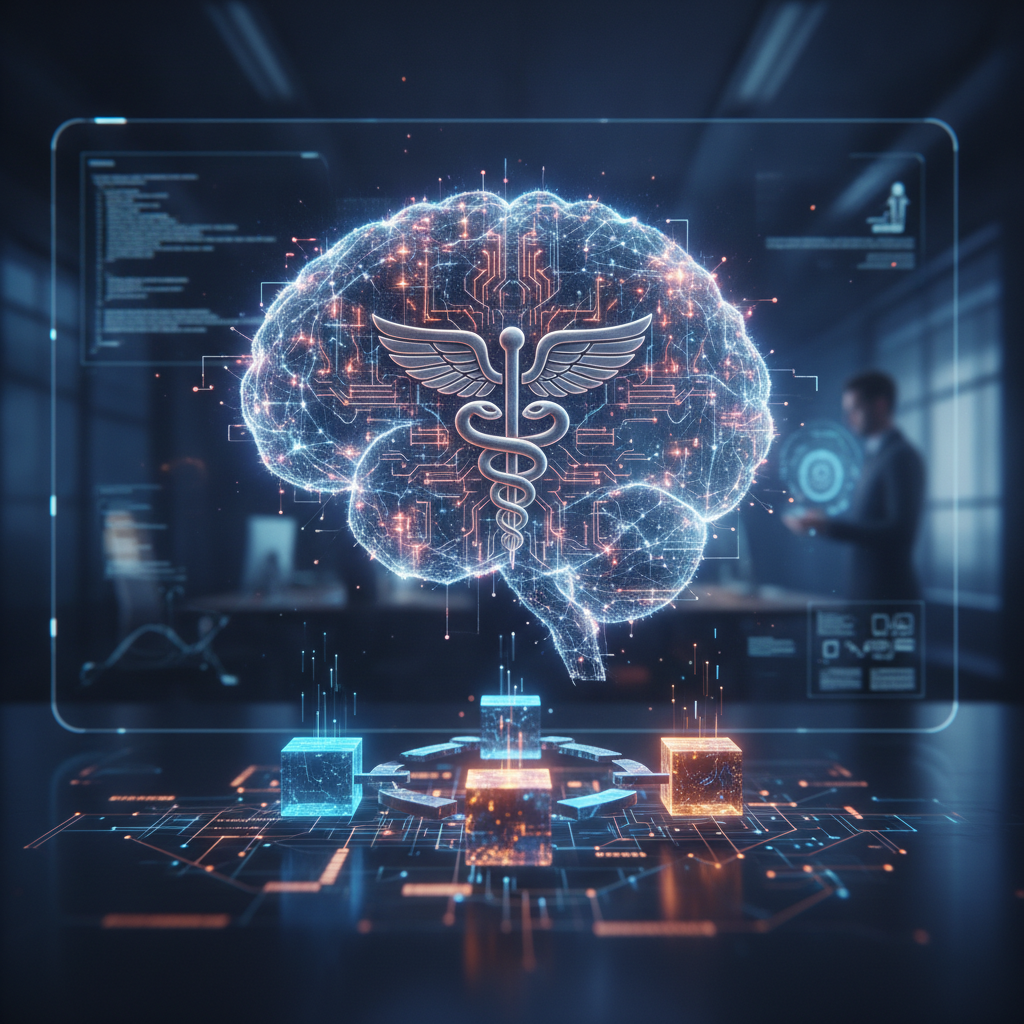
The capabilities of AI have rapidly evolved from tools to more sophisticated systems. We are seeing the development of autonomous, self-improving AI agents. These entities are designed to learn, adapt, and grow, potentially influencing our interaction with technology.
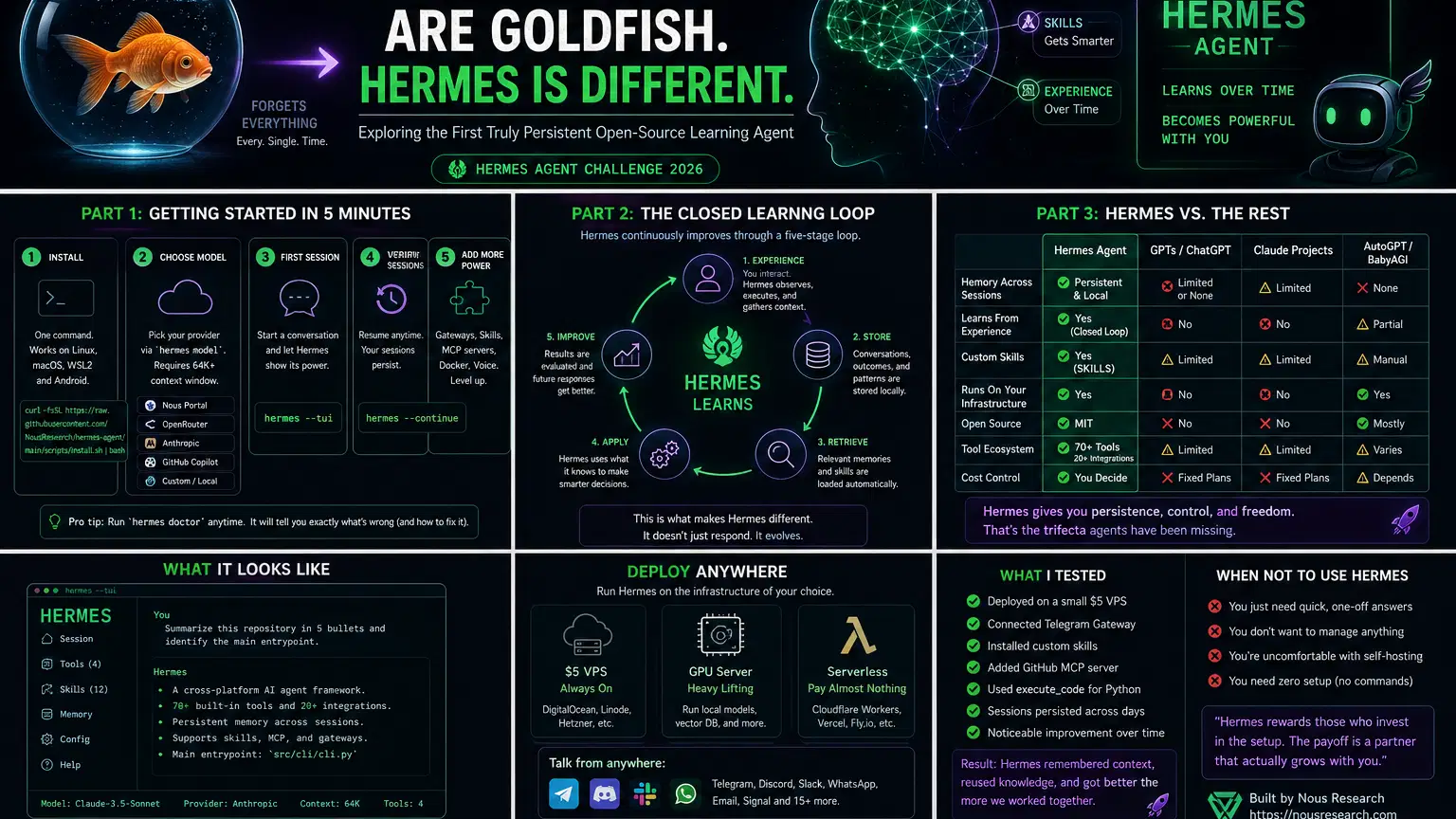
An example of this evolution is Hermes Agent by Nous Research. It is a notable example, featuring a built-in learning loop. This mechanism allows it to create skills from experience, refine them through continuous use, and persist knowledge across sessions. This means Hermes Agent doesn't just perform tasks; it learns how to perform them more effectively and remembers its solutions, contributing to a more personalized experience over time.
Want your team to run this workflow with AI-native execution?
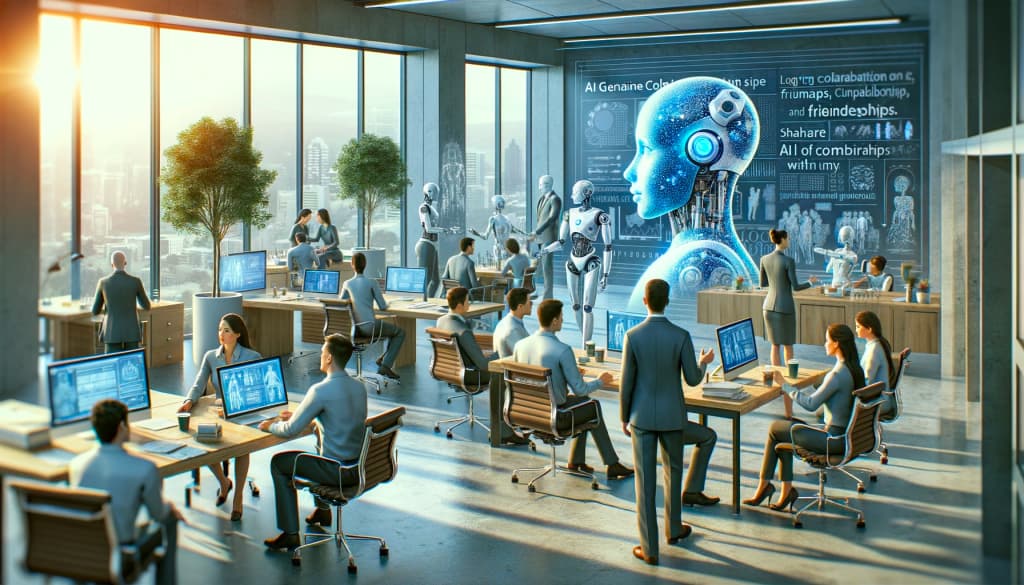
While Hermes Agent demonstrates significant potential for personal productivity, its emergence points to broader developments. It contributes to the development of AI agents that could influence collaborative environments. The ability of an AI to learn and improve independently is a powerful foundation. Imagine this self-improvement scaled and shared across an entire organization. This is the vision of the AI office, where platforms like Nonilion harness and amplify the learning capabilities of individual agents, transforming personal expertise into shared organizational intelligence.
II. Hermes Agent: A Deep Dive into Autonomous Learning and Personalization
What is Hermes Agent?
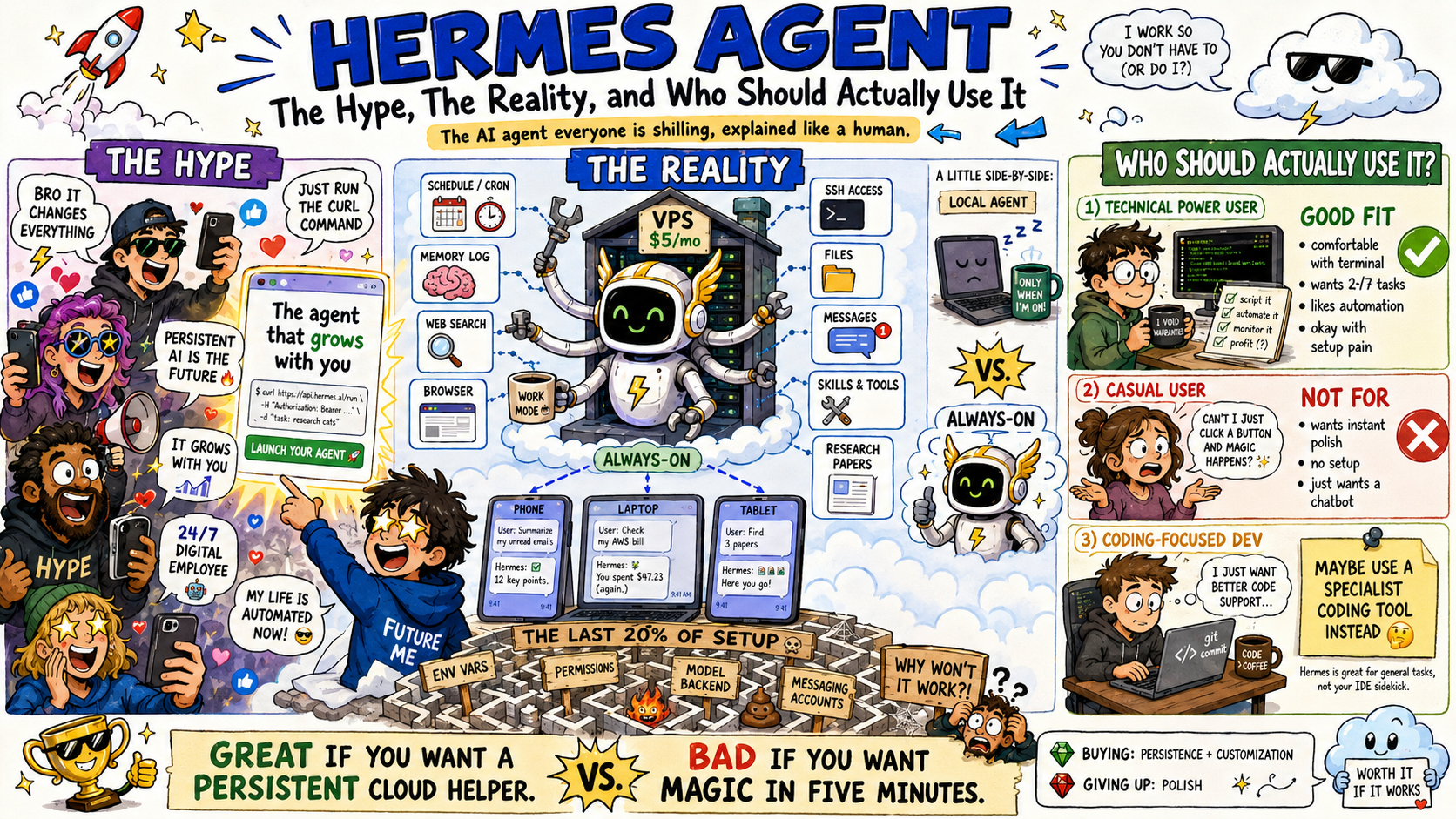
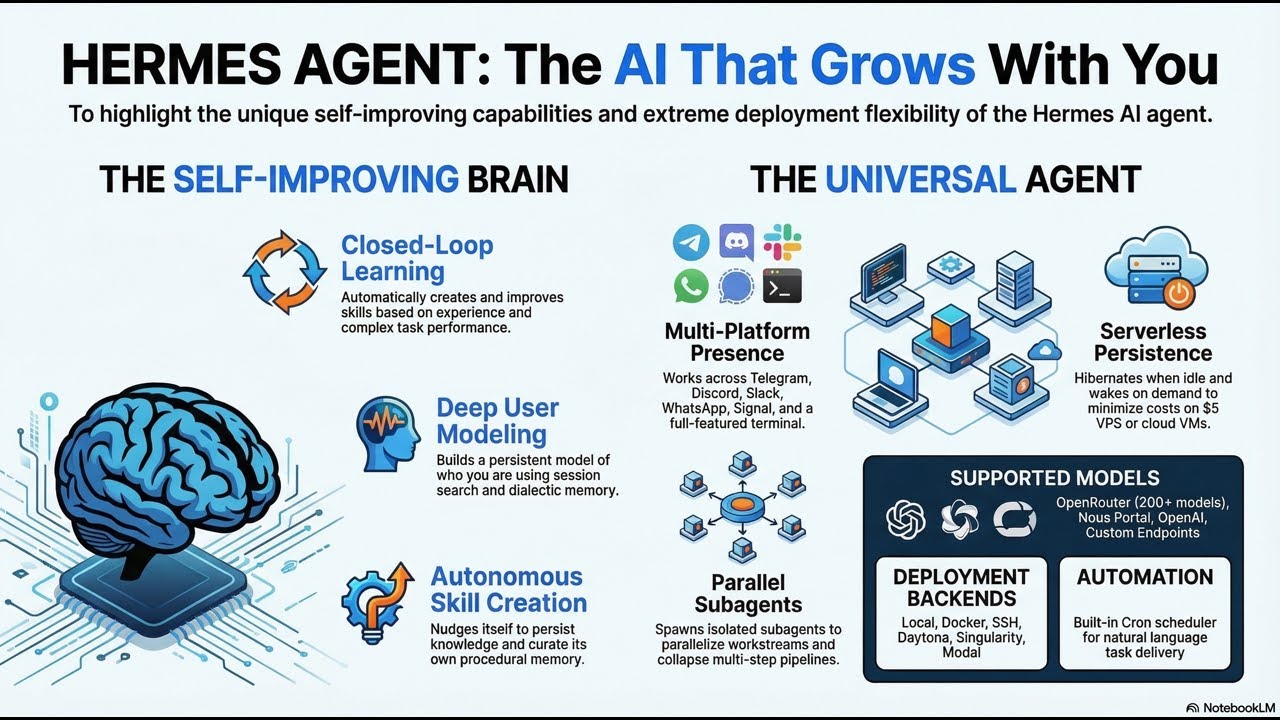
Hermes Agent is an open-source, autonomous AI agent designed by Nous Research that operates on your local server or cloud environment. It aims to offer a more independent and persistent digital assistant experience compared to some typical AI tools. Unlike a coding copilot tethered to an IDE or a chatbot wrapper around a single API, Hermes Agent is an entity that lives on your server, remembers what it learns, and aims to become more capable the longer it runs. Its key features include persistent memory, auto-generated skills, and multi-platform integration, allowing it to reach users wherever they are—be it Telegram, Discord, Slack, Email, or via a Command Line Interface (CLI). This integration aims to facilitate interaction across various communication channels, making it a versatile digital companion.
Why its "Learning Loop" is Notable:
A key aspect of Hermes Agent is its learning loop, which supports its self-improvement capabilities:
- Skill Creation from Experience: Hermes Agent doesn't just execute predefined commands. It can observe user interactions and problem-solving processes to build new capabilities or "skills" based on these experiences. If a user repeatedly performs a sequence of actions, Hermes can learn to automate that sequence, creating a new skill on the fly.
- Skill Improvement During Use: As Hermes Agent utilizes its newly acquired or existing skills, it can refine its methods. It learns from successes and failures, aiming to become more efficient, accurate, and contextually aware over time. This iterative refinement process is designed to support steady improvement in the agent's performance, adapting to the nuances of a user's specific demands.
- Knowledge Persistence: A critical aspect of its autonomy is its ability to persist knowledge. Hermes Agent remembers how it solved problems, the preferences it observed, and the specific context of past interactions. This stored knowledge contributes to a more personalized experience across sessions, allowing for increasingly personalized and effective assistance without needing to relearn basic information.
Impact on Individual Productivity:
This learning loop can have a significant impact on individual productivity:
- Personalized Automation: Hermes Agent adapts to unique workflows, automating repetitive tasks specific to an individual's needs. It aims to move beyond generic automation by adapting to a user's distinct operational patterns.
- Proactive Assistance: Based on its persistent memory and understanding of past tasks, it can suggest next steps, retrieve relevant information, or initiate processes.
- Digital Assistant: Hermes Agent is designed to be a highly capable assistant that aims to "grow with you." It can act as a digital assistant, aiming to offload cognitive load and amplify individual output in a deeply personalized manner.
III. Beyond Personal Silos: What Hermes Agent Means for the AI Office
Hermes Agent demonstrates aspects of individual AI autonomy. Its capacity for self-improvement and personalized assistance highlights the potential of intelligent agents. However, a question arises: how does this individual intelligence translate into an organizational context? The challenge lies in moving from isolated personal intelligence to a collective, shared intelligence that benefits an entire team or enterprise.
The Scaling Challenge:
In traditional work environments, even valuable individual learnings may remain confined within personal systems, private notes, or individual minds. An employee might develop an efficient method for a specific task, but that knowledge isn't easily shared, replicated, or leveraged by others. While Hermes Agent excels at "growing with you," the next frontier is enabling agents to "grow with your team."
The Promise of Collective Learning:
Imagine if the unique skills and persistent knowledge acquired by one Hermes-like agent could be shared, adapted, and leveraged by other agents across a team. If an agent learns a new data extraction technique, processes a specific type of customer query, or optimizes a reporting workflow, that insight shouldn't remain isolated. The promise of collective learning is that these individual breakthroughs can contribute to a common pool of knowledge and capabilities, contributing to organizational efficiency for the entire organization.
Addressing Knowledge Silos in Traditional Workflows:
Traditional workflows can be affected by knowledge silos, where valuable insights and efficiencies are not easily disseminated. This can lead to redundant effort, inconsistent processes, and a slower pace of innovation. The AI office aims to break down these silos by creating a shared environment where AI agents contribute to a common pool of knowledge and skills, making organizational learning a continuous, systemic process.
This is where Nonilion provides a crucial framework. Nonilion envisions an AI office where the self-improving capabilities demonstrated by agents like Hermes are integrated into a collaborative ecosystem. Here, agents don't just learn in isolation; their insights contribute to a collective knowledge base, enhancing across the entire organization. For instance, if an agent within learns a new data extraction technique for a specific client report, that skill can be instantly available to other agents within the environment, benefiting the whole team by standardizing and accelerating similar tasks. This transforms individual agent growth into a shared organizational asset.
IV. The Evolution to a Collaborative AI Office: Nonilion's Blueprint for Future Work
The future of AI in the workplace isn't just about powerful individual agents; it's about how these agents interact, collaborate, and learn from each other and humans within a structured environment. The potential of self-improving AI can be further realized when it moves beyond personal assistance to become a component of team-level collaboration and organizational intelligence.
The "Where" of AI Collaboration: The Dedicated AI Office:
An AI office can be envisioned as a dedicated digital workspace designed for seamless human-AI and AI-AI interaction. It can provide infrastructure for shared memory, dynamic task management, and collective skill development, aiming to coalesce individual agent capabilities into a unified force. This environment is where the learnings of individual agents are pooled, refined, and made accessible across the enterprise.
Nonilion as the Catalyst for Team-Level AI:
this platform is developing approaches for these next-generation AI offices, aiming to integrate the capabilities of agents like Hermes into collective organizational intelligence. this platform's platform provides the architecture for:
- Shared Memory & Skill Repositories: Within this platform's platform, the persistent memory and auto-generated skills of individual agents contribute to a central, organizational knowledge base. This means if one agent learns to handle a specific client request or optimize an internal process (e.g., generating meeting follow-ups from transcribed notes), that learning becomes accessible and applicable to other agents. This accelerates onboarding for new agents, aims to support consistent performance across tasks, and continuously enriches the organization's collective intelligence.
- Dynamic Task Delegation & Team Coordination: Human managers can assign projects to AI agent teams within the platform. The agents can be designed to break down tasks, delegate sub-tasks among themselves, and coordinate with humans, supporting efficient async execution and team coordination. This allows for parallel processing of complex workflows, ensuring that tasks are completed efficiently and intelligently, leveraging the best-suited agent for each component.
- True Human + AI Co-working: this platform aims to foster a symbiotic relationship where humans define objectives, provide strategic oversight, and handle nuanced decision-making, while AI agents handle the execution, data synthesis, and continuous learning. This can create a human + AI co-working environment, aiming to support organizational growth, potentially enabling teams to achieve new outcomes.
V. Implementing Collaborative AI: Practical Considerations for the Enterprise
The transition to a collaborative AI office, leveraging self-improving agents, involves careful consideration of several practical aspects to ensure successful and responsible deployment.
- Security and Data Governance: As persistent, learning agents handle sensitive organizational data, robust security protocols are important. This includes secure data storage, access controls, encryption, and regular audits. Clear data governance policies are essential to define how agents access, process, and store information, ensuring compliance with regulatory requirements and internal standards.
- Scalability and Management: Deploying, monitoring, and scaling a fleet of interconnected AI agents within an enterprise environment can present challenges. Organizations need strategies for efficient agent provisioning, performance monitoring, load balancing, and lifecycle management. Tools and platforms that offer centralized control and observability can be critical for maintaining a healthy and effective AI workforce.
- Integration with Existing Ecosystems: A collaborative AI office may need to integrate seamlessly with existing communication tools (e.g., Slack, Microsoft Teams), CRM systems (e.g., Salesforce), ERPs (e.g., SAP), and other enterprise software. This ensures that AI agents can access necessary data, trigger actions in other systems, and participate effectively in established workflows without creating new silos.
- Ethical Frameworks: The deployment of self-improving, collaborative AI systems raises ethical considerations. Addressing concerns around potential biases in agent learning, ensuring accountability for agent actions, promoting transparency in decision-making processes, and maintaining meaningful human oversight are important. Establishing clear ethical guidelines and review processes can be vital for building trust and ensuring responsible AI use.
VI. Conclusion: The Future is a Shared Intelligence
The journey from powerful, individually learning AI agents like Hermes to the collaborative, collective intelligence of an AI office represents a significant development in workplace productivity. The ability of an agent to observe, learn, and improve autonomously is a significant development. However, its potential can be realized when this individual intelligence is integrated into a larger, shared ecosystem.
While individual agent intelligence is transformative for personal productivity, its potential can be realized when it contributes to a shared, organizational intelligence. This allows for growth in efficiency, innovation, and adaptive capacity, moving beyond isolated gains to systemic advancements. Organizations can leverage a continuously learning knowledge base, ensure consistent application of best practices, and accelerate the pace of complex projects.
this platform is actively building the infrastructure for these virtual office collaboration spaces, ensuring that the self-improvement of AI agents translates into tangible, collective benefits for entire organizations. By fostering seamless human-AI partnership in a shared workspace, this platform is contributing to the evolution of work, where every learned skill and every solved problem contributes to a more capable enterprise.
02Why This Trend Matters for Nonilion
This trend matters to Nonilion because it points to a bigger change: teams are moving from simple calls toward persistent, AI-supported collaboration spaces. Nonilion can bridge live presence, meeting context, avatars, and follow-up work so the trend becomes a usable workflow instead of a headline.
03Shareable Extracts
- The trend is not just "hermes-agent: What Developers Need to Know" - it is a signal that team coordination is becoming the next competitive edge.
- Hot take: the teams that win from this shift will not be the ones with more meetings; they will be the ones with clearer shared context after every meeting.
- If hermes-agent: what developers need to know keeps moving this fast, remote teams need a workspace where conversation, presence, and follow-up stay connected.
- Blog Post Outline: Hermes Agent — Exploring the Potential for Collaborative Intelligence in the AI Office I.
- Introduction: The Emergence of Self-Improving AI Agents The capabilities of AI have rapidly evolved from tools to more sophisticated systems.
04Social Hooks
- Everyone is talking about hermes-agent: What Developers Need to Know. The overlooked part is what happens to team workflows after the headline fades.
- The uncomfortable question behind hermes-agent: What Developers Need to Know: are teams adapting their collaboration systems fast enough?
- This is not a meeting trend. It is a coordination trend, and products like Nonilion sit right in the middle of that shift.
05Sources and Author
Sources
-
NousResearch/hermes-agent: The agent that grows with you github.com/nousresearch/hermes-agent
-
Hermes Agent — The Agent That Grows With You | Nous ... hermes-agent.nousresearch.com
-
Has anyone here explored Hermes Agent by Nous ... www.reddit.com/r/LocalLLM/comments/1t47ec0/has_anyone_here_explored...
Author
This article on hermes-agent was generated by the Nonilion AI blog workflow using web research inputs and AI-assisted synthesis.