Home/Blog/Deno Is Joining Cloudflare: Charting the Future of Edge Computing and the AI-Native Web
human + AI workflows
Deno Is Joining Cloudflare: Charting the Future of Edge Computing and the AI-Native Web
Deno Is Joining Cloudflare: Charting the Future of Edge Computing and the AI-Native Web The convergence of Deno and Cloudflare marks a pivotal moment in the evolution of edge compu
9 MIN READ
09 Oct 2026
human + AI workflows
Deno Is Joining Cloudflare: Charting the Future of Edge Computing and the AI-Native Web
The convergence of Deno and Cloudflare marks a pivotal moment in the evolution of edge computing and the burgeoning AI-native web. This strategic alignment promises to reshape how developers build and deploy applications, fostering an environment of unprecedented speed and efficiency. For organizations like Nonilion, which pioneer human + AI collaboration in virtual office environments, these advancements are not merely technical upgrades but foundational shifts enabling more responsive AI agents and seamless team coordination.
01The Evolving Edge: Deno, Cloudflare, and the AI Frontier
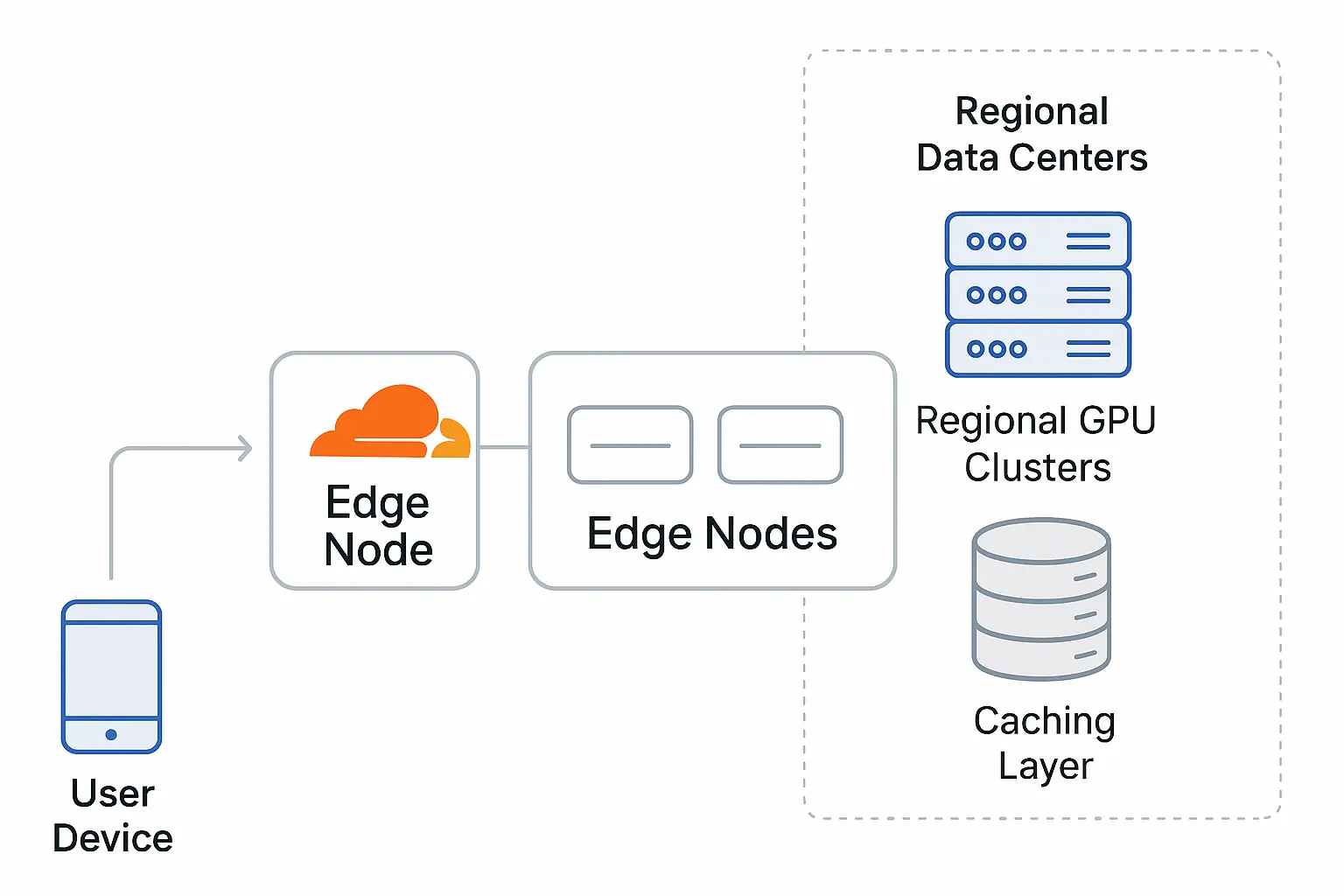
The landscape of edge computing, once a nascent frontier, is rapidly maturing, driven by the imperative for lower latency and distributed processing [1]. Cloudflare stands at the forefront of this evolution, offering Cloudflare Workers that allow JavaScript to run directly on its expansive edge network [4]. This capability is critical for applications demanding real-time responsiveness, as Cloudflare's numerous servers inherently lead to reduced latency for end-users [3]. The integration of Deno, a modern runtime for JavaScript and TypeScript, into this ecosystem further accelerates this trajectory. Developers can now deploy Deno functions directly to Cloudflare Workers, leveraging the strengths of both platforms to create highly performant and scalable edge applications [4]. This synergy is not just about faster code execution; it's about laying the groundwork for the AI-native web, where intelligent applications and agents operate with minimal delay, crucial for complex, interactive AI workflows.
Want your team to run this workflow with AI-native execution?
02Cloudflare's Strategic Moves: The VoidZero Acquisition and its Implications
Cloudflare's commitment to building the future of the AI-native web is further underscored by its acquisition of VoidZero [2]. VoidZero, an open source-first company, is recognized for its contributions to next-generation technologies [2]. This acquisition is far more than a routine corporate transaction; it represents a significant shift for JavaScript developers worldwide [5]. By bringing VoidZero into its fold, Cloudflare is integrating key open-source innovations that will undoubtedly enhance the capabilities of its connectivity cloud, particularly in the context of AI development [2, 5]. For developers working with Deno and Cloudflare Workers, this means access to a more robust, feature-rich platform designed to support the intricate demands of AI-driven applications. The strategic move positions Cloudflare to offer a more comprehensive and integrated environment for building the intelligent, distributed systems that define the AI-native future, directly impacting how AI agents can be deployed and managed at the edge.
03Deno's Role in the Unified Edge: Beyond Cloudflare Workers
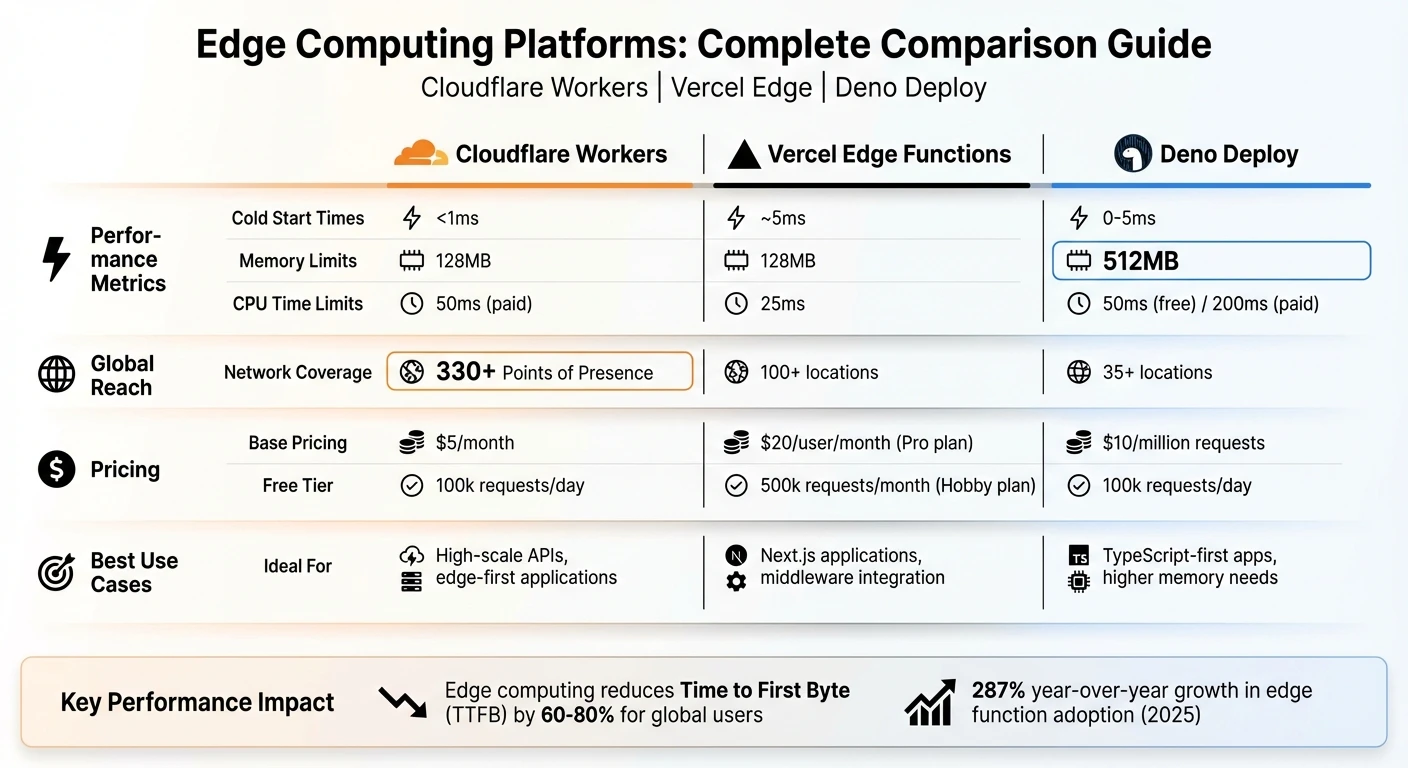
Deno's versatility extends its utility far beyond isolated deployments, making it a powerful component in a unified edge strategy. The JavaScript Registry (JSR) highlights Deno's compatibility across various runtimes, including Cloudflare Workers, Node.js, Bun, and traditional browsers [6]. This broad compatibility ensures that Deno-based projects can seamlessly integrate into diverse development environments, providing flexibility for developers. When considering deployment, the benefits of using Cloudflare Workers with Deno are clear: Cloudflare's extensive server infrastructure minimizes latency, delivering a superior user experience [3]. While a direct comparison between Cloudflare Workers and Deno Deploy reveals distinct advantages for specific use cases, the ability to deploy Deno functions as module workers on Cloudflare's edge network is a significant enabler for high-performance, distributed applications [4, 8]. This modular approach is particularly advantageous for the AI-native web, where individual AI agents or microservices can be deployed efficiently at the closest possible edge location, optimizing their responsiveness and operational efficiency. The package size of the code, rather than the deployment platform, dictates the overall footprint, allowing for lean, optimized deployments [3].
00The AI-Native Web and the Future of Work: A Nonilion Perspective
The advancements in edge computing, fueled by the synergy between Deno and Cloudflare, are profoundly impacting the operational models of AI offices and the very nature of human + AI collaboration. In a virtual office environment like Nonilion, where humans and AI agents work together in a shared workspace, the ability to execute code at the edge with minimal latency becomes a critical enabler. Imagine AI agents in Nonilion performing complex data analyses or real-time communication tasks; their responsiveness is directly tied to the underlying infrastructure. Edge computing ensures that these AI agents can process information and react faster, improving the efficiency of collaborative workflows and asynchronous execution. For example, a Nonilion AI agent tasked with summarizing a meeting or coordinating team activities can leverage Deno functions deployed on Cloudflare Workers to execute its tasks with near-instantaneous feedback, enhancing overall team coordination. This technological convergence supports a seamless, responsive environment essential for the next generation of AI-driven operations, allowing Nonilion to deliver on its promise of an integrated, highly efficient human + AI co-working experience.
05Navigating the Edge Computing Landscape: Key Considerations and Best Practices
As the edge computing landscape continues its rapid evolution towards 2025, understanding the nuances of platforms like Cloudflare Workers and Deno becomes paramount [1]. Developers must consider several factors when architecting their solutions. One crucial aspect is the impact of package size, which is determined by the application code itself, rather than being influenced by Deno Deploy or Cloudflare's infrastructure [3]. This means optimizing code and dependencies remains a key best practice for efficient edge deployments. When deploying Deno functions to Cloudflare Workers, it's important to note that primarily module workers can be deployed, which guides the architectural choices for developers [4]. The ongoing comparison between Cloudflare Workers and Deno Deploy highlights different strengths, with Cloudflare Workers offering the advantage of running JavaScript on Cloudflare's extensive edge network [4, 8]. For robust dependency management and versioning across these environments, platforms like JSR (the JavaScript Registry) play a vital role, ensuring that packages, including those related to Deno, are compatible across various runtimes like Node.js, Bun, and browsers, in addition to Cloudflare Workers [6, 7]. Strategic planning in these areas ensures that organizations can fully harness the power of the edge for their AI-native applications.
06Frequently Asked Questions about Deno and Cloudflare
What are the benefits of using Cloudflare Workers with Deno?
One significant benefit is reduced latency. Cloudflare operates a vast network of servers, allowing code to run closer to the end-user, which inherently decreases response times [3]. Additionally, Cloudflare Workers provide a robust edge environment for executing JavaScript, making them an ideal platform for deploying Deno functions [4].
Can Deno functions be deployed to Cloudflare Workers?
Yes, Deno functions can be deployed to Cloudflare Workers. Cloudflare Workers are designed to run JavaScript on Cloudflare's edge network, and a brief operational guide exists for deploying Deno functions as module workers to this environment [4].
How does Cloudflare's acquisition of VoidZero impact JavaScript developers?
Cloudflare's acquisition of VoidZero is considered a significant shift for JavaScript developers [5]. VoidZero, an open source-first company, contributes to Cloudflare's efforts to build the future of the AI-native web, suggesting enhanced tools and capabilities for JavaScript development within Cloudflare's ecosystem [2, 5].
07Conclusion: The Horizon of Collaborative Innovation
The journey of Deno joining Cloudflare represents a monumental step forward in the realm of edge computing and the AI-native web. The strategic acquisition of VoidZero further solidifies Cloudflare's position as a catalyst for innovation, particularly for JavaScript developers and the broader open-source community [2, 5]. This synergy between Deno's modern runtime capabilities and Cloudflare's global edge network is not just about technical efficiency; it's about enabling a new generation of intelligent, responsive applications that will define the future. For platforms like Nonilion, these developments are crucial, providing the high-performance, low-latency infrastructure necessary for AI agents and human teams to collaborate seamlessly in a virtual office, driving unprecedented levels of productivity and innovation. The horizon ahead promises a future where the edge is not just a location, but a core component of a truly collaborative and intelligent digital workspace.
08Why This Trend Matters for Nonilion
This trend matters to Nonilion because it points to a bigger change: teams are moving from simple calls toward persistent, AI-supported collaboration spaces. Nonilion can bridge live presence, meeting context, avatars, and follow-up work so the trend becomes a usable workflow instead of a headline.
09Shareable Extracts
The trend is not just "Deno Is Joining Cloudflare: Charting the Future of Edge Computing and the AI-Native Web" - it is a signal that team coordination is becoming the next competitive edge.
Hot take: the teams that win from this shift will not be the ones with more meetings; they will be the ones with clearer shared context after every meeting.
If deno is joining cloudflare: charting the future of edge computing and the ai-native web keeps moving this fast, remote teams need a workspace where conversation, presence, and follow-up stay connected.
Deno Is Joining Cloudflare: Charting the Future of Edge Computing and the AI-Native Web The convergence of Deno and Cloudflare marks a pivotal moment in the evolution of edge computing and the burgeoning AI-native web.
This strategic alignment promises to reshape how developers build and deploy applications, fostering an environment of unprecedented speed and efficiency.
10Social Hooks
Everyone is talking about Deno Is Joining Cloudflare: Charting the Future of Edge Computing and the AI-Native Web. The overlooked part is what happens to team workflows after the headline fades.
The uncomfortable question behind Deno Is Joining Cloudflare: Charting the Future of Edge Computing and the AI-Native Web: are teams adapting their collaboration systems fast enough?
This is not a meeting trend. It is a coordination trend, and products like Nonilion sit right in the middle of that shift.