Home/Blog/DeepSeek Open Sources Its Inference Engine: A Catalyst for the Future of AI
human + AI workflows
DeepSeek Open Sources Its Inference Engine: A Catalyst for the Future of AI
DeepSeek Open Sources Its Inference Engine: A Catalyst for the Future of AI The landscape of artificial intelligence is continually reshaped by pivotal moments of collaboration and
10 MIN READ
20 Oct 2026
human + AI workflows
DeepSeek Open Sources Its Inference Engine: A Catalyst for the Future of AI
The landscape of artificial intelligence is continually reshaped by pivotal moments of collaboration and transparency. One such moment is unfolding as DeepSeek just open-sourced its inference engine, a move that promises to accelerate innovation across the AI ecosystem. This decision underscores a growing trend towards open development, fostering a more accessible and dynamic environment for creating advanced AI solutions. For organizations like Nonilion, which champions seamless human + AI collaboration in a shared virtual workspace, such advancements are fundamental to empowering AI agents and enhancing overall team productivity.
01What is the DeepSeek Inference Engine and Why is Open-Sourcing Significant?
At the heart of every AI model lies an inference engine, the unseen computational powerhouse responsible for taking a trained model and applying it to new data to make predictions or generate outputs. It's the mechanism that brings AI to life, allowing models to perform tasks ranging from natural language understanding to complex problem-solving. DeepSeek's inference engine is a modified version based on vLLM, a widely recognized framework for efficient LLM serving. This foundation highlights DeepSeek's commitment to building upon robust existing open-source technologies while contributing its own innovations back to the community.
Want your team to run this workflow with AI-native execution?
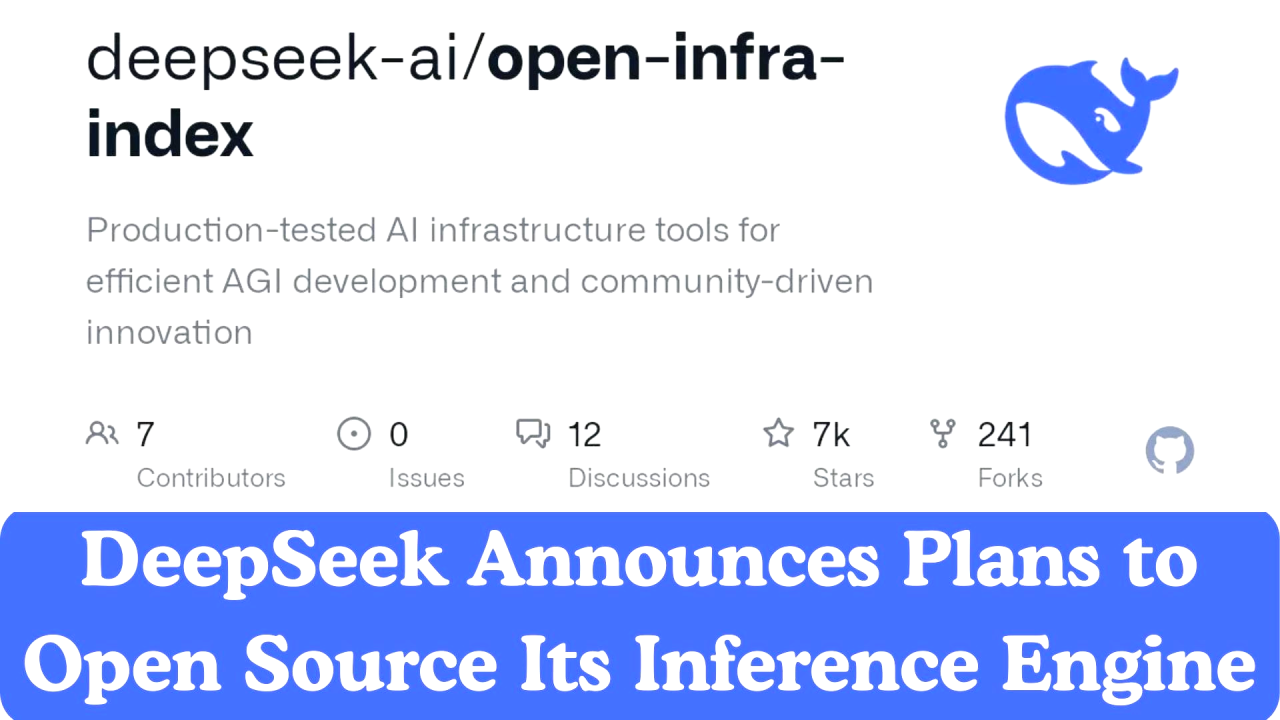
The significance of DeepSeek Open Sources Its Inference Engine cannot be overstated. By opening up this critical component, DeepSeek is directly addressing the growing demand for deploying powerful models like DeepSeek-V3 and DeepSeek-R1. This move is a strategic contribution, aiming to give back to the open-source community that has been instrumental in its progress towards Artificial General Intelligence (AGI). The act of open-sourcing fosters a collaborative environment where developers worldwide can inspect, utilize, and improve upon the engine, leading to faster iterations, enhanced performance, and broader accessibility of advanced AI capabilities. It democratizes access to the underlying technology that powers sophisticated AI, enabling more researchers and businesses to leverage cutting-edge models for their specific needs.
This transparency also allows for a deeper understanding of how these powerful models operate. In an AI office powered by human + AI collaboration, understanding the core components that drive AI agents is crucial. An open-source inference engine means greater clarity on performance bottlenecks, optimization opportunities, and security considerations, all of which are vital for integrating AI agents effectively into daily workflows and ensuring reliable async execution. The decision to open-source their inference engine is a testament to DeepSeek's belief in collective progress, recognizing that the fastest path to AGI involves shared knowledge and collaborative development.
02The Strategic Imperative: Why DeepSeek Embraced Open Source
DeepSeek's decision to open-source its inference engine is rooted in a deep appreciation for the open-source ecosystem and a strategic vision for its own growth. The company acknowledges that its training framework relies heavily on PyTorch, and its inference engine is built upon vLLM, both foundational open-source projects. This gratitude translates into a commitment to reciprocate, strengthening the very ecosystem that enabled its advancements. The path to open-sourcing the DeepSeek inference engine is not merely a technical undertaking but a philosophical one, reflecting a belief that shared infrastructure accelerates collective progress.
Beyond altruism, there are compelling strategic reasons why DeepSeek had to be open-source. To gain a significant foothold in global markets, particularly Western ones, open-sourcing models and core components like the inference engine becomes a powerful differentiator. In an era where AI models are increasingly becoming commoditized, the underlying infrastructure and the community built around it gain paramount importance. Open-source projects tend to win in infrastructure over the long term, fostering trust, encouraging adoption, and creating a vibrant developer community that contributes to continuous improvement and bug fixes. This collaborative spirit leads to more robust and reliable systems.
The positive response from the community to previous open-source libraries released by DeepSeek, sparking inspiring collaborations, productive discussions, and valuable bug fixes, further validated this approach. This feedback loop is invaluable; it allows for external scrutiny and contributions that internal teams might miss, ultimately leading to a superior product. By engaging with the broader AI community, DeepSeek positions itself at the forefront of innovation, leveraging collective intelligence to refine its technology and accelerate its ambitious goal of achieving AGI. This strategic move is about building an ecosystem, not just a product, recognizing that the future of AI is inherently collaborative.
03Architectural Foundations: How DeepSeek's Engine Stands Apart
While DeepSeek's inference engine is a modified version based on vLLM, it incorporates unique architectural considerations that set it apart. The foundational reliance on vLLM provides a strong starting point, known for its efficiency in serving large language models. However, DeepSeek has prepared to contribute its specific enhancements back to the community, indicating a tailored approach to optimize performance for its own sophisticated models. This suggests that while the base is familiar, the modifications are designed to push the boundaries of what's possible in AI inference.
Indeed, some observations suggest that DeepSeek deploys a different inference architecture compared to standard implementations. This indicates a focus on specific optimizations that might cater to the unique characteristics of DeepSeek's models, such as DeepSeek-V4. DeepSeek-V4, for instance, introduces groundbreaking technological innovations like Manifold-Constrained Hyper-Connections (mHC) for training stability at extreme scale, and a hybrid Compressed Sparse Attention (CSA) and Heavily Compressed Attention (HCA) system that significantly reduces inference FLOPs. The Engram Conditional Memory module, providing O(1) knowledge retrieval, further exemplifies the advanced architectural thinking within DeepSeek. These innovations require a highly optimized inference engine capable of handling their complexity and delivering performance efficiently.
Furthermore, DeepSeek-V4 is notable for running on Huawei Ascend 950PR chips, making it the first frontier-class AI model built entirely on Chinese domestic semiconductor infrastructure. This hardware-software co-design approach implies that the DeepSeek inference engine is likely optimized not just for general-purpose GPUs but potentially for specific accelerator architectures, maximizing throughput and minimizing latency. The combination of a vLLM base with DeepSeek's proprietary modifications, designed to support cutting-edge models and specific hardware, positions its inference engine as a significant contribution to the open-source AI landscape, showcasing how specialized architectural decisions can lead to superior performance and efficiency in the deployment of advanced AI.
04The Ripple Effect: Open-Source Inference Engines and the Evolving AI Office
The open-sourcing of sophisticated components like the DeepSeek inference engine creates a profound ripple effect, particularly for the evolving concept of the AI office and the capabilities of AI agents within it. As advanced AI models become more accessible and efficient to deploy, the potential for AI agents to take on more complex tasks, collaborate seamlessly with humans, and automate intricate workflows expands dramatically. This shift necessitates a robust and flexible digital infrastructure, the very foundation of an effective virtual AI office.
In a human + AI collaboration environment like Nonilion, the performance of AI agents is paramount. An open-source inference engine means that developers can fine-tune and optimize the underlying technology that powers these agents, ensuring they execute tasks with greater speed and accuracy. This directly translates to enhanced workflow automation, where AI agents can process information, generate reports, or manage schedules more efficiently. For instance, an AI agent tasked with summarizing meeting follow-ups or coordinating team activities benefits immensely from a highly optimized inference engine, enabling real-time responses and reducing computational overhead.
The transparency and collaborative nature inherent in The Path to Open-Sourcing the DeepSeek Inference Engine also empower teams to build and deploy sophisticated AI agents faster. With access to the codebase, organizations can customize the engine to suit specific enterprise needs, integrate it with existing systems, and ensure compatibility with diverse hardware. This flexibility is crucial for team coordination and async execution in a hybrid or fully remote AI office, where AI agents act as indispensable team members. Nonilion, by providing a shared workspace where humans and AI agents co-exist and collaborate, is uniquely positioned to leverage these open-source advancements. It allows for the integration of highly performant AI agents, powered by engines like DeepSeek's, into a unified platform, facilitating seamless interaction, knowledge sharing, and collective problem-solving. The future of work in the AI office hinges on such open-source contributions, enabling a new era of productivity and innovation through human + AI co-working.
05Navigating the Path to Contribution: The Challenges and the Future
DeepSeek's journey to open-source its inference engine was a carefully considered process, acknowledging both the immense benefits and the inherent challenges. Initially, the company considered open-sourcing its full internal inference engine, a testament to its commitment to transparency. However, this ambition was tempered by several identified challenges, suggesting complexities in disentangling proprietary optimizations, ensuring maintainability, and addressing potential security implications within a complete internal system. This pragmatic approach led to the decision to open-source the DeepSeek-Inference-Engine codebase only, focusing on the core components that would provide the most value to the community while managing internal complexities.
This nuanced strategy highlights the ongoing evolution of open-source contributions in the AI space. It's not always about releasing everything, but about making strategic contributions that are both valuable and sustainable for the wider community. The
06Why This Trend Matters for Nonilion
This trend matters to Nonilion because it points to a bigger change: teams are moving from simple calls toward persistent, AI-supported collaboration spaces. Nonilion can bridge live presence, meeting context, avatars, and follow-up work so the trend becomes a usable workflow instead of a headline.
07Shareable Extracts
The trend is not just "DeepSeek Open Sources Its Inference Engine: A Catalyst for the Future of AI" - it is a signal that team coordination is becoming the next competitive edge.
Hot take: the teams that win from this shift will not be the ones with more meetings; they will be the ones with clearer shared context after every meeting.
If deepseek open sources its inference engine: a catalyst for the future of ai keeps moving this fast, remote teams need a workspace where conversation, presence, and follow-up stay connected.
DeepSeek Open Sources Its Inference Engine: A Catalyst for the Future of AI The landscape of artificial intelligence is continually reshaped by pivotal moments of collaboration and transparency.
One such moment is unfolding as DeepSeek just open-sourced its inference engine, a move that promises to accelerate innovation across the AI ecosystem.
08Social Hooks
Everyone is talking about DeepSeek Open Sources Its Inference Engine: A Catalyst for the Future of AI. The overlooked part is what happens to team workflows after the headline fades.
The uncomfortable question behind DeepSeek Open Sources Its Inference Engine: A Catalyst for the Future of AI: are teams adapting their collaboration systems fast enough?
This is not a meeting trend. It is a coordination trend, and products like Nonilion sit right in the middle of that shift.
This article on DeepSeek just open-sourced its inference engine was generated by the Nonilion AI blog workflow using web research inputs and AI-assisted synthesis.