

Developer Productivity
claw-code: What Developers Need to Know
The Unseen Architecture: What Claw Code Teaches Us About Building Tomorrow's Collaborative AI Agents Introduction: Peering Beneath the Surface of AI Autonomy While the AI world oft
01The Unseen Architecture: What Claw Code Teaches Us About Building Tomorrow's Collaborative AI Agents
Introduction: Peering Beneath the Surface of AI Autonomy
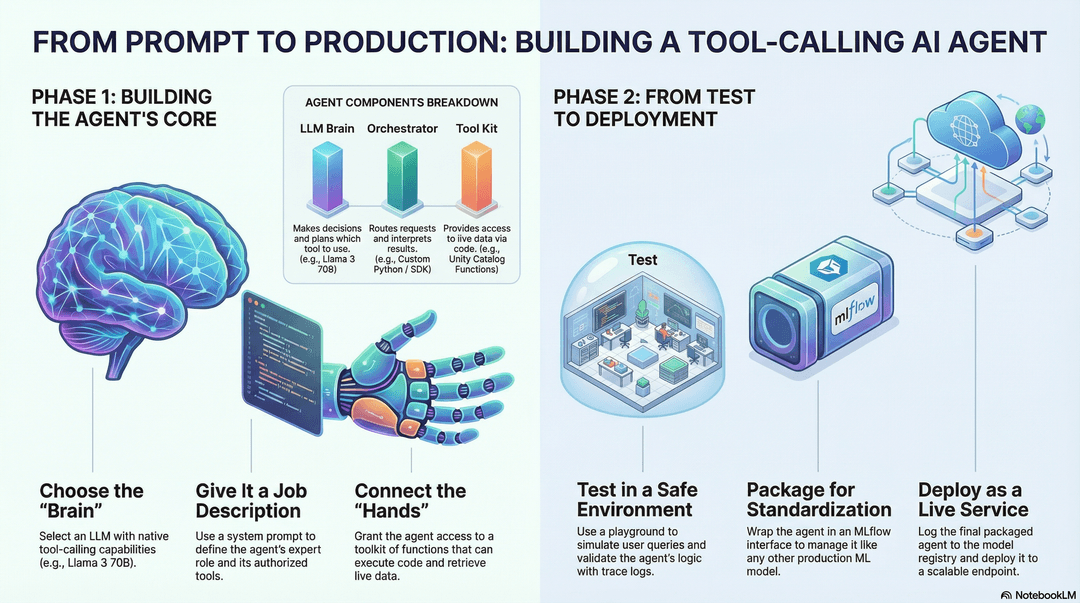
While the AI world often marvels at large language models' capabilities, the underlying architecture – often called an "agent harness" – plays a crucial role in orchestrating their intelligence. This harness helps transform raw intelligence into reliable, actionable outcomes, enabling agents to move beyond mere conversational prowess to execute complex tasks.
Introducing Claw Code – an open-source AI coding agent framework, built in Rust and Python. It is presented by its creators as a "clean-room rewrite" of core agent harness architectural concepts, aiming to provide a public blueprint for agent design. This project highlights principles of robust agent harness design, made publicly available for scrutiny and learning.
Want your team to run this workflow with AI-native execution?
The principles demonstrated by projects like Claw Code can extend beyond coding agents. They offer insights into foundational principles that contribute to complex, reliable AI agents. Understanding how agent harnesses work provides valuable insights into structures that can underpin effective autonomous behavior. These architectural insights are not merely theoretical; they inform the approach platforms like Nonilion take in building the future of work. At Nonilion, applying robust agent architectures is crucial for creating AI agents that can integrate into human workflows, manage complex projects, and drive productivity in a shared AI office environment.
Beyond Code Generation: Deconstructing the Agent Harness
What is an Agent Harness? The Orchestrator of Intelligence
At its core, an "agent harness" is the structural framework that enables an AI agent to perceive its environment, reason through problems, plan a course of action, execute those actions, and adapt to new information. It's akin to the operating system for an agent's intelligence, providing the necessary infrastructure to move beyond simple, one-off API calls. Unlike a single prompt, a robust harness provides state management, memory, tool integration, and decision-making loops, allowing agents to maintain context and pursue multi-step objectives.
Claw Code's Blueprint: A Case Study in Robust Execution
Claw Code, an open-source project built in Rust and Python, can serve as an example of an agent harness architecture. It exemplifies modularity and a focus on core functions: managing execution flow, handling intermediate states, and aiming for consistent behavior. While the specifics of its Rust/Python implementation are technical, the principles it exemplifies – structured control, clear execution paths, and state persistence – are widely applicable to many advanced AI agent designs.
Why It Matters: Reliability, Context, and Error Handling
A strong agent harness is fundamental for the reliability of AI agents. It provides structured control that prevents agents from falling into repetitive loops or generating irrelevant outputs, often referred to as "hallucinating" in less controlled environments. Furthermore, the harness plays a crucial role in context management, enabling the agent to maintain conversational or task context across multiple steps and interactions, which is vital for sustained engagement in complex projects.
Perhaps most importantly, a well-designed harness anticipates failures and implements robust error handling and recovery strategies. It logs issues, identifies potential bottlenecks, and can even initiate corrective actions, making agents far more resilient in dynamic and unpredictable environments. This capacity for self-correction and consistent performance is what transforms a novel AI into a dependable collaborator.
The Modular Mind: Tool Systems and Adaptability
The Power of Tool Integration: Extending Agent Capabilities
AI agents can significantly extend their capabilities not just from their core intelligence, but from their ability to integrate with and utilize external tools. These tools can range from APIs and databases to web browsers and internal enterprise systems. By leveraging a diverse set of tools, agents transcend the role of mere conversationalists, becoming active participants in workflows, capable of performing real-world actions like retrieving data, sending emails, or updating project management software.
Claw Code's Tool System: A Model for Structured Expansion
Claw Code explicitly highlights its "Tool System" as a key architectural component, alongside a "Plugin-Based Tool System" within its core capabilities. This design choice underscores the importance of a structured approach to extending agent functionality. The benefits are manifold: clear interfaces for tool development, easy addition or removal of capabilities as needs evolve, and standardized interaction protocols that streamline the agent's ability to learn and apply new skills without requiring fundamental re-engineering of its core logic. This modularity allows for an agent to grow its capabilities organically and efficiently.
Implications for General-Purpose Agents: Adapting to Diverse Tasks and Environments
For general-purpose agents, a modular tool system can offer significant flexibility. Agents can pivot between vastly different tasks – from data analysis and report generation to scheduling meetings and content creation – simply by swapping or adding relevant tools. This adaptability makes them invaluable in dynamic work environments. Furthermore, such a system promotes scalability, allowing organizations to grow an agent's capabilities without creating monolithic, brittle systems that are difficult to maintain or expand. Finally, modular tools enhance security and control, as granular access permissions can be applied to specific tools, and agent actions can be more easily audited, ensuring responsible and compliant operation.
From Isolated Tasks to Integrated Workflows: The AI Office Paradigm
The Challenge of AI Integration in the Workplace: Beyond Single-Task Bots
The modern workplace increasingly grapples with the limitations of siloed AI tools. While individual bots might excel at specific, isolated tasks, they often fail to communicate effectively with each other or understand the broader context of an organizational workflow. This fragmentation prevents true AI integration, limiting the potential for AI agents to participate in complex, multi-step projects that span teams and departments.
How Robust Agent Architectures Enable True Collaboration
This is where robust agent architectures, exemplified by projects like Claw Code, become critical. Agents built on strong harnesses can facilitate seamless handoffs, accurately passing information and tasks not only between human colleagues but also between other AI agents. Their contextual awareness, maintained through internal state and access to shared knowledge bases, allows them to understand their role within a larger project, rather than just responding to a single prompt. This enables proactive problem-solving, where agents can identify bottlenecks, suggest solutions, and even initiate corrective actions based on their robust internal logic, transforming them into more capable collaborative partners.
Nonilion's Vision: The Architecture of a Shared AI Office
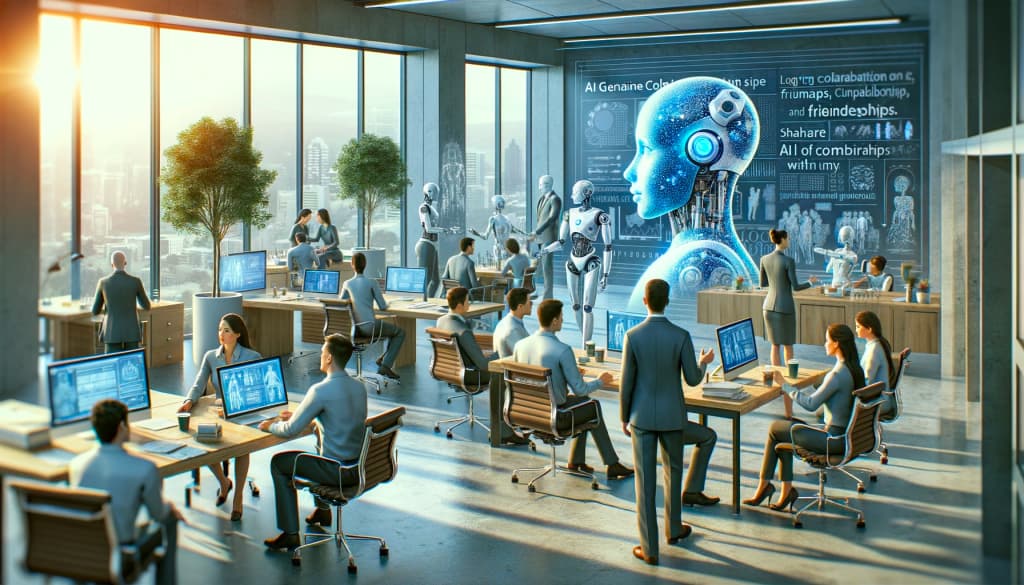
This is where Nonilion's commitment to these architectural principles comes to life. Nonilion doesn't just offer AI tools; it provides a shared AI office where agents are integral, reliable partners. By leveraging robust agent architectures, Nonilion enables a new paradigm of human + AI co-working. Practical examples of how Nonilion applies these principles include:
- Managing Complex Workflows: Automating multi-stage processes from initial ideation to final execution, ensuring smooth transitions and consistent progress.
- Facilitating Async Execution: Agents handle tasks autonomously in the background, updating teams on progress, and ensuring continuity even when human colleagues are offline, driving efficiency in asynchronous work environments.
- Enhancing Human-AI Co-working: Agents act as intelligent assistants for meeting follow-ups, synthesizing discussions, assigning tasks, and ensuring team coordination, allowing humans to focus on higher-level strategic work and creative problem-solving.
The Future of Agentic AI: Reliability, Trust, and Scalability
Building Trust in Autonomous Agents: Why Robust Architecture is Foundational
Trust in AI is paramount, and it stems directly from predictability and reliability. A well-engineered agent harness provides this by minimizing unexpected behavior and ensuring consistent, verifiable performance. This architectural integrity is not just a technical detail; it's an ethical imperative, driving the design of agents that are transparent in their actions and accountable for their outcomes. Without a robust foundation, the promise of autonomous agents risks being undermined by erratic or unreliable behavior.
Scalability of Agent Operations: Managing Increasing Complexity
As organizations deploy more AI agents for increasingly critical tasks, the underlying architecture must be capable of scaling. Modular, robust designs, like those exemplified by Claw Code, are essential for managing a growing fleet of interconnected agents. This scalability ensures that as the complexity and volume of agent-driven tasks increase, the system remains performant, manageable, and stable, allowing for seamless expansion of AI capabilities across the enterprise.
Ethical Considerations: Transparency in Agent Design
The 'clean-room rewrite' approach, as described for Claw Code, highlights the importance of understanding and scrutinizing AI agent internals. This design philosophy underscores the value of transparency in agent architecture. Openness in architecture can foster community scrutiny, encourage collective intelligence around best practices, and contribute to building more responsible and trustworthy AI systems that can be understood and vetted by a broader audience.
Navigating the New Frontier: Strategic Takeaways for Businesses
Investing in Architectural Foundations: Prioritizing Robust Design Over Quick Fixes
For tech leaders, product managers, and decision-makers, the lesson from Claw Code is clear: the 'black box' approach to AI agents is unsustainable for long-term success. Investing in well-architected, transparent, and maintainable systems is crucial. The value lies not just in the surface-level output of an AI, but in the underlying structure that enables that output to be reliable, consistent, and adaptable. Prioritizing robust design over quick fixes will be key to unlocking the full potential of AI agents.
Fostering Human-AI Synergy: Designing Agents for Collaboration
A key goal for advanced AI agents is to augment human capabilities rather than replace them. Agent architecture can be designed with human-AI interaction points, clear feedback loops, and shared control in mind. This can foster a collaborative environment where agents act as intelligent team members, enhancing human capabilities rather than merely automating tasks. The focus can be on synergy, aiming to create a workspace where humans and AI agents work together seamlessly.
The Nonilion Advantage: Building the Collaborative Future
By deeply understanding and applying these core architectural strengths, [this platform](https://this platform.com/) aims for its AI agents to be integral, reliable partners in the virtual workspace. This focus on robust, collaborative design can drive efficiency in critical areas like meeting follow-ups, async execution, and overall team coordination, contributing to the vision of an AI office today. [this platform](https://this platform.com/)'s commitment to thoughtful and robust agent design contributes to building integrated and productive AI-powered offices.
Conclusion: The Enduring Lesson of Claw Code
Claw Code, presented as a clean-room rewrite of agent harness architectural concepts, stands as an example of well-engineered agent architecture. It offers a public view into internal workings that can contribute to capable AI agents. Its principles — robust harnesses, modular tool systems, and clear execution frameworks — can inform the design of AI agents, enabling more sophisticated human-AI collaboration. This architectural foresight and commitment to building reliable, collaborative AI agents is what helps platforms like [this platform](https://this platform.com/) deliver integrated and productive AI-powered offices, where thoughtful and robust agent design contributes to the future of work.
02Why This Trend Matters for Nonilion
This trend matters to Nonilion because it points to a bigger change: teams are moving from simple calls toward persistent, AI-supported collaboration spaces. Nonilion can bridge live presence, meeting context, avatars, and follow-up work so the trend becomes a usable workflow instead of a headline.
03Shareable Extracts
- The trend is not just "claw-code: What Developers Need to Know" - it is a signal that team coordination is becoming the next competitive edge.
- Hot take: the teams that win from this shift will not be the ones with more meetings; they will be the ones with clearer shared context after every meeting.
- If claw-code: what developers need to know keeps moving this fast, remote teams need a workspace where conversation, presence, and follow-up stay connected.
- This harness helps transform raw intelligence into reliable, actionable outcomes, enabling agents to move beyond mere conversational prowess to execute complex tasks.
- Introducing Claw Code – an open-source AI coding agent framework, built in Rust and Python.
04Social Hooks
- Everyone is talking about claw-code: What Developers Need to Know. The overlooked part is what happens to team workflows after the headline fades.
- The uncomfortable question behind claw-code: What Developers Need to Know: are teams adapting their collaboration systems fast enough?
- This is not a meeting trend. It is a coordination trend, and products like Nonilion sit right in the middle of that shift.
05Sources and Author
Sources
-
ultraworkers/claw-code: An agent-managed ... github.com/ultraworkers/claw-code
-
Claw Code — Open-Source AI Coding Agent Framework ... claw-code.codes
-
Claw Code vs Claude Code (2026): Open-Source GitHub ... www.eigent.ai/blog/claw-code
-
Claw‑Code: Clean Rewrite of Claude's Harness (with legal ...
Author
This article on claw-code was generated by the Nonilion AI blog workflow using web research inputs and AI-assisted synthesis.