Home/Blog/AOS Community Edition: the open agent operating system for AI offices
human + AI workflows
AOS Community Edition: the open agent operating system for AI offices
AOS Community Edition: an open agent operating system for AI offices AOS Community Edition is described in the analyzed sources as an open agent operating system for people who wan
13 MIN READ
28 Jul 2026
human + AI workflows
AOS Community Edition: an open agent operating system for AI offices
AOS Community Edition is described in the analyzed sources as an open agent operating system for people who want an inspectable, composable environment for agents. That framing is useful because agentic work is not only about a single model answering prompts; it can also involve coordinated systems, shared workspaces, and human oversight. For teams building AI offices, a central question is how agent work can be understood, governed, and composed into reliable workflows.
In that context, AOS Community Edition can be read as a useful lens for thinking about how virtual office collaboration may move from isolated agent tasks to coordinated async execution across research, drafting, approvals, and follow-ups.
01What AOS Community Edition is, based on the analyzed sources
Want your team to run this workflow with AI-native execution?
The sources describe AOS Community Edition as an open agent operating system. The core idea appears to be inspectability and composability: teams can see how the environment is structured and build on it rather than treating agent behavior as a black box.
That is a shift from the usual “agent demo” mindset. Instead of asking only what an agent can do, AOS Community Edition asks how agents fit into a broader operating environment.
From the available source material, a few themes stand out:
It is open and community-oriented.
It is meant for building inspectable and composable agent environments.
It exposes a command boundary through the aos command.
It is positioned as a workspace and runtime foundation for agentic work.
The GitHub repository structure reinforces this framing with headings such as “Workspace layout,” “Install,” “Command boundary,” “Build on AOS,” and “Import an existing runtime.” That suggests an operating-system-style approach rather than a narrow app layer.
For Nonilion-style AI offices, that distinction matters. A shared workspace for humans and agents needs more than a chat interface; it needs a structure that can support coordination, execution, and review.
02Why inspectability and composability matter for agentic work
Inspectability is important because agentic work affects decisions, handoffs, and trust. If a team cannot see how an agent environment is organized, it becomes harder to govern, debug, or improve.
Composability matters because work is often multi-step. Research can feed drafting, drafting can feed review, and review can feed follow-up, with different human or agent roles involved along the way.
The analyzed sources point to several practical implications:
Visibility: teams can understand the environment rather than relying on hidden behavior.
Coordination: multiple agents can operate as part of a larger system.
Reuse: environments and runtimes can be built on or imported into.
Governance: open systems are easier to reason about than sealed ones.
This is where the office metaphor becomes useful. In a traditional office, you would not want every employee to work in a sealed room with no shared process. You would want clear roles, visible handoffs, and a common workspace. AOS Community Edition points in that direction for AI.
For teams like Nonilion, that means agent work can be treated as part of office operations: visible, reviewable, and coordinated with human judgment rather than replacing it.
03How AOS Community Edition changes the way teams build and run AI agents
AOS Community Edition changes the conversation from “deploy an agent” to “operate an agent environment.” That is a subtle but important difference.
The sources describe AOS as a control plane for orchestrating multi-agent AI teams and as a modular operating system for AI agents. Taken together, those descriptions suggest a stack designed for coordination, not just execution.
In practical terms, that can change how teams think about agentic work:
From prompt to process: work becomes a repeatable workflow rather than a one-off interaction.
From isolated agent to team system: agents can be orchestrated as part of a larger operation.
From hidden logic to inspectable structure: the environment itself becomes easier to understand.
From ad hoc use to shared workspace: humans and agents can coordinate in one place.
The sources also mention security, governance, and resource metering in the broader Unicity AOS framing, along with WASM-based isolation. While those specifics are not expanded in detail for the Community Edition pages, they reinforce the broader direction: agent environments should be manageable, bounded, and operationally serious.
That matters for AI offices because the real challenge is not simply getting an agent to produce output. It is making sure the output can move through a team’s workflow with enough visibility for people to trust it.
04The office metaphor: from runtime to shared workspace
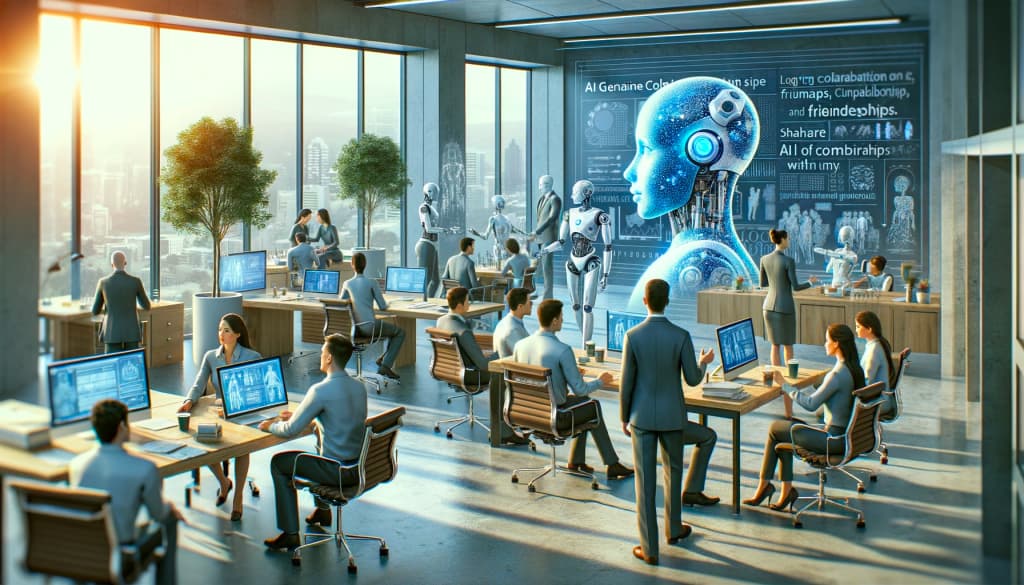
The office metaphor makes AOS easier to understand because it maps technical structure to human collaboration. A runtime is where the work happens, but a workspace is where work is coordinated.
In an AI office, the difference looks like this:
A runtime runs tasks.
A workspace organizes people, agents, and handoffs.
A shared office makes the work legible to everyone involved.
AOS Community Edition, based on the source material, fits naturally into the “shared workspace” idea because it is described as inspectable and composable. That means it can support a model where agents are not hidden background processes but active collaborators inside a coordinated environment.
This is especially relevant for human + AI collaboration. When humans and agents share a workspace, the office needs clear boundaries, visible command surfaces, and predictable ways to build on existing work. The repository headings around workspace layout and command boundary point in that direction.
For Nonilion, this metaphor is useful because it frames AI offices as operational spaces rather than experimental sandboxes. That makes it easier to think about async work, meeting follow-ups, and cross-functional coordination as shared office functions.
AI offices need more than isolated automation. They need a way to coordinate research, drafting, review, and follow-up across humans and agents without losing context.
Based on the analyzed sources, AOS Community Edition is relevant because it offers an open, inspectable foundation for that kind of coordination. In an AI office like this platform, that could support workflows where agents prepare work for humans, humans approve or redirect it, and the system keeps the process legible.
A practical AI office lens highlights three tensions:
Speed versus oversight: faster execution should not remove human review.
Automation versus coordination: work must still fit team processes.
Flexibility versus governance: teams need adaptability without losing control.
AOS Community Edition appears aligned with those tensions because it is framed around composability and inspectability rather than secrecy. That makes it a better conceptual fit for offices where AI agents are collaborators, not invisible shortcuts.
This platform is a useful example here because it represents the kind of shared workspace where humans and AI agents can split responsibilities: agents can handle structured async work, while people handle judgment, approvals, and exceptions.
06How humans and agents split work in an AI office
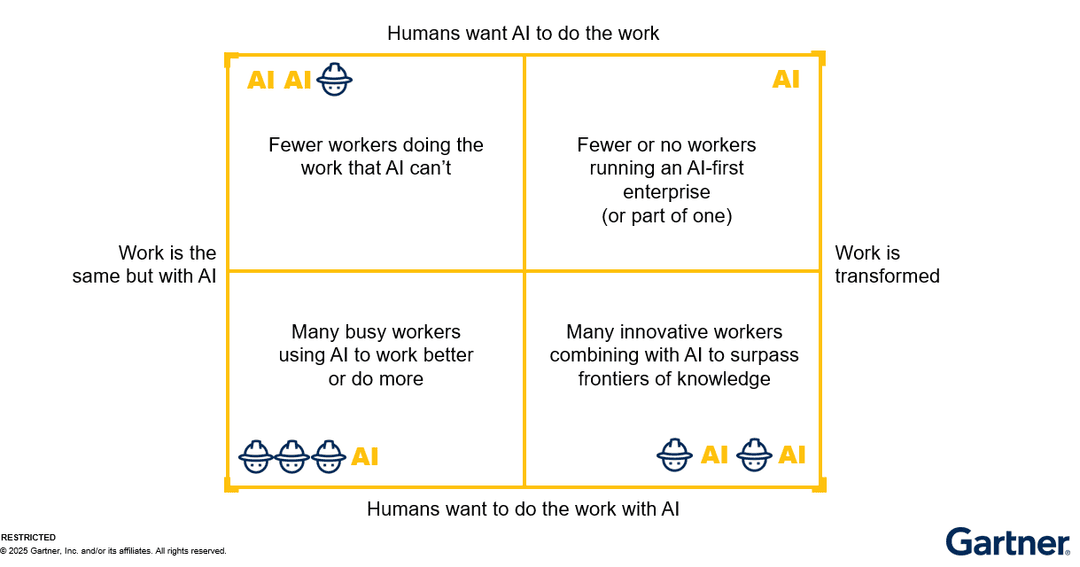
The most effective AI offices will not ask agents to do everything. They will split work according to what each side does best.
A practical division of labor looks like this:
Humans define goals, review outputs, make decisions, and handle ambiguity.
Agents gather information, draft content, organize tasks, and execute repeatable steps.
The workspace preserves visibility, context, and handoff structure.
This is where AOS Community Edition fits well conceptually. An open agent operating system is most valuable when it supports a clear command boundary and a composable environment. That allows humans to supervise the system without micromanaging every action.
In a this platform-style office, that can translate into:
research briefs prepared by agents,
draft responses assembled for human review,
approval steps that stay visible,
follow-ups queued and tracked asynchronously.
The key point is not that agents replace office work. The key point is that they can absorb structured work so humans can focus on higher-value decisions and coordination.
07Where AOS Community Edition fits in real workflows
The strongest use case for an open agent operating system is not abstract orchestration. It is practical workflow support.
Based on the source descriptions, AOS Community Edition is a fit for workflows that need inspectable coordination across multiple steps. That includes:
Research: agents can gather and organize information.
Drafting: agents can assemble first-pass content or summaries.
Approvals: humans can review outputs before action.
Follow-ups: agents can help queue and track next steps.
This is where the office metaphor becomes operational. In a shared workspace, work does not end when a draft is created. It moves through review, revision, and execution. AOS Community Edition is relevant because it is framed as an environment where those steps can be connected rather than scattered.
For teams using AI offices, the value is in reducing coordination overhead. Instead of bouncing between disconnected tools, the team can work in a system designed for agentic collaboration.
08When an open agent operating system makes sense, and when it does not
An open agent operating system makes sense when a team values transparency, composition, and shared control.
It is especially useful when:
multiple agents need to work together,
humans need to inspect what is happening,
workflows require repeatable handoffs,
governance and coordination matter.
It may be less useful when a team only needs a simple, single-purpose automation or a lightweight demo. If the problem is tiny, a full operating-system approach may add more structure than necessary.
That tradeoff is important. Open systems are not automatically better for every use case. They are better when the work itself is complex enough to justify the overhead of coordination.
For an AI office like this platform, that means choosing AOS Community Edition when the team needs a shared workspace for ongoing collaboration, not just a one-off agent task.
09Practical adoption questions: governance, visibility, and coordination overhead
Teams evaluating an open agent operating system should ask practical questions before adoption.
A useful checklist includes:
Can we inspect the environment?
Can we understand the command boundary?
Can multiple agents be composed into a workflow?
Can humans review and redirect work easily?
Does the system reduce, rather than increase, coordination overhead?
These questions matter because agent systems can become complex quickly. Without governance and visibility, automation can create more confusion than value.
The source material suggests that AOS Community Edition is trying to address exactly that problem by making the agent environment open, inspectable, and composable. That makes it strategically interesting for teams building AI offices where accountability is part of the product, not an afterthought.
10How AOS Community Edition compares with closed or opaque agent stacks
The main contrast is not feature-by-feature; it is operational philosophy.
Closed or opaque stacks may be easier to start with, but they often make it harder to inspect how work is structured. AOS Community Edition, by contrast, is explicitly described as open and inspectable.
That difference affects how teams operate:
Closed stack: faster to adopt, harder to audit.
Open stack: easier to inspect, easier to compose.
Opaque agent flow: convenient at first, risky at scale.
Inspectable agent environment: better for shared office workflows.
For AI offices, the open model is attractive because it supports human oversight. If the goal is human + AI co-working in one shared workspace, transparency is not a nice-to-have. It is part of the operating model.
11The future of AI offices: from isolated agents to coordinated virtual teams
The sources around AOS point toward a broader future: agent systems are moving from isolated capabilities to coordinated teams. The control-plane language, the multi-agent orchestration framing, and the emphasis on inspectable environments all suggest that the unit of value is becoming the team, not the individual agent.
That future has clear implications for AI offices:
work becomes more async,
handoffs become more structured,
coordination becomes more visible,
humans spend more time on oversight and judgment.
In that model, this platform fits as a practical example of a shared workspace where humans and agents can coordinate work rather than merely exchange prompts. The office becomes a place where AI agents help execute repeatable tasks, while people keep the system aligned with business context and team intent.
12Key takeaways
AOS Community Edition is best understood as an open agent operating system for inspectable, composable agent environments. Based on the analyzed sources, its value is not just in running agents, but in helping teams coordinate them inside a visible workspace.
For AI offices, that means a shift from isolated automation to shared operations. For this platform, it offers a useful lens for thinking about how humans and AI agents can split work across research, drafting, approvals, and follow-ups in one coordinated environment.
13Why This Trend Matters for Nonilion
This trend matters to Nonilion because it points to a bigger change: teams are moving from simple calls toward persistent, AI-supported collaboration spaces. Nonilion can bridge live presence, meeting context, avatars, and follow-up work so the trend becomes a usable workflow instead of a headline.
14Shareable Extracts
The trend is not just "AOS Community Edition: the open agent operating system for AI offices" - it is a signal that team coordination is becoming the next competitive edge.
Hot take: the teams that win from this shift will not be the ones with more meetings; they will be the ones with clearer shared context after every meeting.
If aos community edition: the open agent operating system for ai offices keeps moving this fast, remote teams need a workspace where conversation, presence, and follow-up stay connected.
AOS Community Edition: an open agent operating system for AI offices AOS Community Edition is described in the analyzed sources as an open agent operating system for people who want an inspectable, composable environment for agents.
That framing is useful because agentic work is not only about a single model answering prompts; it can also involve coordinated systems, shared workspaces, and human oversight.
15Social Hooks
Everyone is talking about AOS Community Edition: the open agent operating system for AI offices. The overlooked part is what happens to team workflows after the headline fades.
The uncomfortable question behind AOS Community Edition: the open agent operating system for AI offices: are teams adapting their collaboration systems fast enough?
This is not a meeting trend. It is a coordination trend, and products like Nonilion sit right in the middle of that shift.
This article on AOS Community Edition: the open agent operating system. was generated by the Nonilion AI blog workflow using web research inputs and AI-assisted synthesis.