Home/Blog/OpenCode: Orchestrating the Future of Development in the AI Office
Developer Productivity
OpenCode: Orchestrating the Future of Development in the AI Office
OpenCode: Exploring the Role of Open-Source Agents in the AI Office I. Introduction: The Rise of Open-Source AI Agents and Evolving Workflows The landscape of software development
15 MIN READ
12 Jun 2026
Developer Productivity
OpenCode: Exploring the Role of Open-Source Agents in the AI Office
I. Introduction: The Rise of Open-Source AI Agents and Evolving Workflows
The landscape of software development is experiencing significant changes, influenced by the growing capabilities of artificial intelligence. What began with the promise of automating routine tasks has progressed, with AI agents increasingly able to handle specialized functions within the development lifecycle. This evolution is particularly notable in coding, where AI is becoming a practical assistant.
Contributing to this shift is , an open-source AI coding agent that has gained attention and adoption. Its community-driven nature offers versatility across various development environments—from the terminal to integrated development environments (IDEs) and desktop applications. OpenCode’s model-agnostic approach, allowing connection to a wide array of large language models like Claude, GPT, Gemini, and custom alternatives, provides developers with choice and control. It can be a valuable tool for enhancing individual productivity and streamlining workflows.
OpenCode
While OpenCode can augment individual developer productivity, the broader potential in AI-driven development may extend beyond isolated tools. It could lie in the intricate orchestration of specialized agents within a collaborative ecosystem. This vision points towards the AI office—a concept that moves beyond disparate AI utilities towards integrated environments where humans and AI agents might collaborate. This vision aims for a partnership that could amplify collective intelligence and output.
It is in this context that Nonilion emerges as a platform exploring this next frontier. Nonilion provides a virtual workspace designed for the AI office, where specialized AI agents—such as a coding assistant inspired by OpenCode—can be integrated, managed, and collaborated with. This platform aims to facilitate interaction not only between humans and agents but also among various agents themselves, seeking to transform individual productivity into holistic, cross-functional team output.
This article will explore how OpenCode, as an example of open-source AI development, contributes to individual coding and offers insights into the architecture and potential of AI agents within a collaborative AI office framework. We will delve into how such agents can foster human + AI collaboration, contributing to new approaches in development.
II. What is OpenCode? A Deep Dive into the Open-Source AI Coding Agent
Defining OpenCode:
OpenCode is an open-source AI agent engineered to assist developers in writing, debugging, and refining code across a spectrum of environments. Its core functionality enables it to operate directly within the terminal, integrate with popular IDEs, and function as a standalone desktop application. This flexibility allows developers to leverage its capabilities regardless of their preferred workflow.
Key features that contribute to OpenCode's utility include:
LSP Enablement: It leverages Language Server Protocol (LSP) to provide intelligent code completion, diagnostics, and navigation, aiming to mirror the capabilities of advanced IDEs.
Automatic LSP Loading: OpenCode is designed to intelligently detect and load the appropriate LSPs for the project at hand, aiming to minimize manual configuration and setup time.
Model Agnosticism: A cornerstone of its design, OpenCode allows users to connect to a diverse range of large language models, including proprietary options like Claude, GPT, and Gemini, as well as custom or locally hosted models. This freedom of choice can be important for developers concerned with cost, performance, or data privacy.
Privacy-First Design: Given its open-source nature, OpenCode is built with an emphasis on privacy, allowing developers to maintain control over their code and data, which can be an advantage over closed, proprietary systems.
The project shows significant community engagement. With over 160,000 GitHub stars, more than 900 contributors, and over 13,000 commits, OpenCode demonstrates active development and community interest.
Benefits for Individual Developers:
For the individual developer, OpenCode can offer tangible advantages:
Enhanced Productivity: It can help accelerate tasks such as code generation, refactoring existing codebases, and identifying and resolving bugs, potentially allowing developers to focus on more complex logical challenges.
Accessibility: Its compatibility across diverse development setups—from command-line interfaces to graphical desktop applications—can make AI assistance accessible to a broader user base.
Flexibility: The choice of models and integration into existing workflows means developers may not have to overhaul their entire setup to incorporate AI assistance.
Empowerment: By providing an open-source, customizable tool, OpenCode can empower developers, giving them greater control over their AI tools and potentially mitigating reliance on proprietary solutions.
The Open-Source Advantage:
The open-source nature of OpenCode offers several benefits:
Transparency and Trust: For AI tools that interact directly with sensitive intellectual property like source code, transparency is important. Open-source code allows for scrutiny, audits, and verification, which can foster trust.
Community-Driven Innovation: A global community of developers can contribute to OpenCode, potentially leading to rapid iteration, feature enhancements, and bug fixes. This collective intelligence can help ensure the project remains responsive to developer needs.
Customization and Extensibility: Developers are not limited to out-of-box functionality. They can adapt, extend, and even fork OpenCode to tailor it to their specific requirements, fostering a personalized development experience.
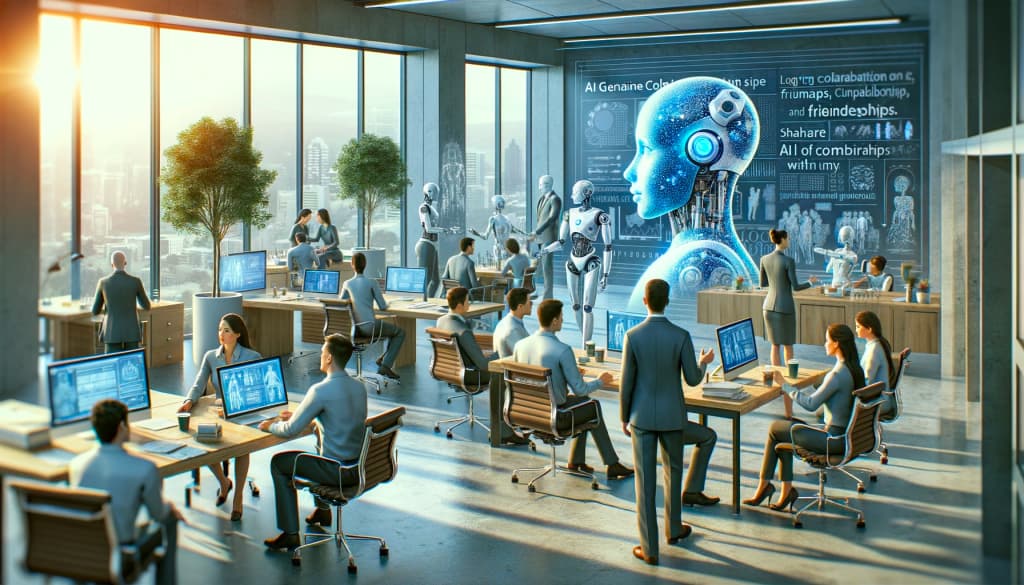
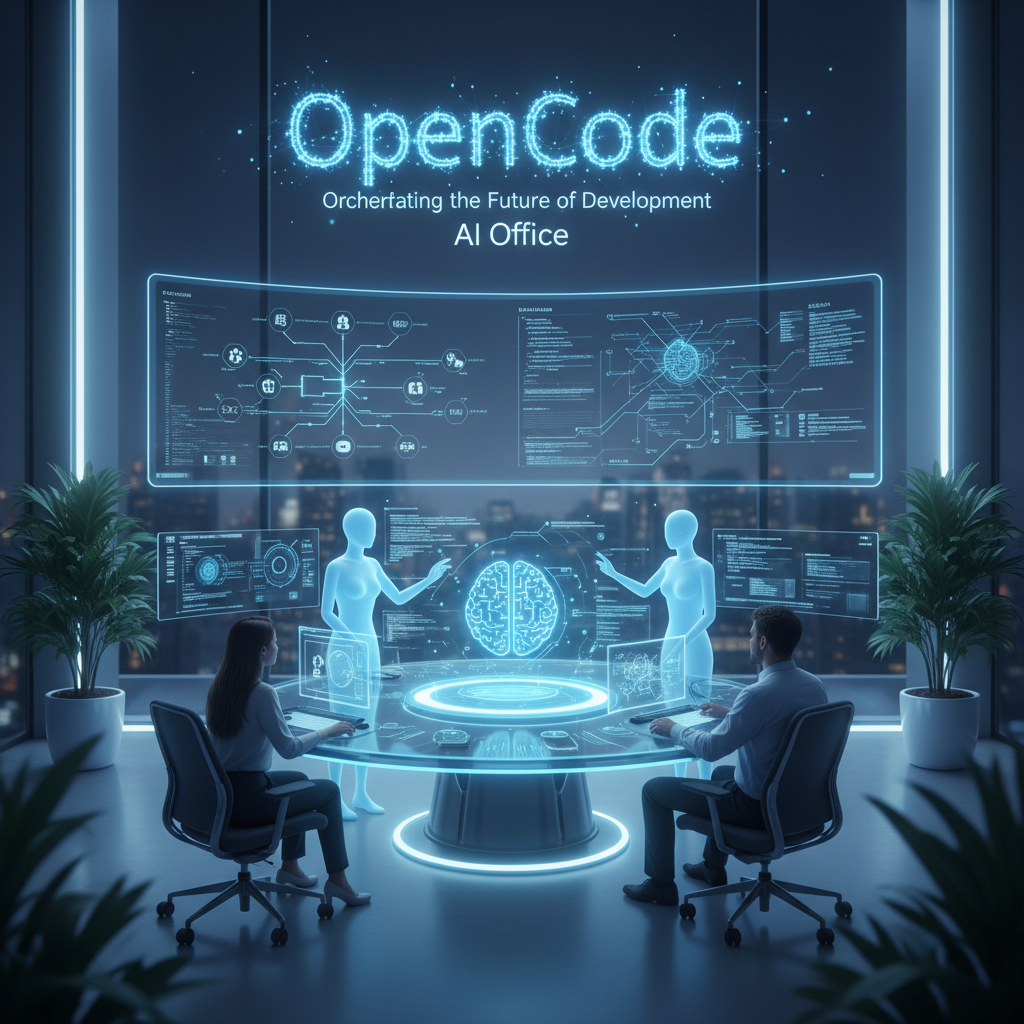
AI generated cover image
Acknowledging Challenges:
While OpenCode offers advantages, community discussions, particularly on platforms like Reddit and Hacker News, occasionally highlight common evolutionary challenges. Some users have noted potential complexity in its extensive feature set, resource usage (e.g., memory consumption for a TUI), or occasional bugs. These are characteristic aspects for powerful, community-driven projects that aim to offer broad functionality, and they are typically addressed through ongoing development and community feedback.
III. The "Why" Beyond Individual Productivity: From Solo Agent to Collective Intelligence
While the individual capabilities of AI agents like OpenCode are valuable, modern software development is often a collaborative endeavor. The limitations of isolated AI tools can become apparent when scaled to team environments.
The Limitations of Isolated Tools:
Siloed Knowledge: An AI agent optimized for a single developer's context might not seamlessly share insights, learned patterns, or project-specific context with other team members or their respective agents. This could lead to inconsistencies and duplicated effort.
Integration Friction: As teams adopt multiple specialized AI agents—one for coding, another for design, a third for testing—managing these disparate tools, each with its own interface, configuration, and workflow, can introduce operational overhead.
Lack of Holistic View: Individual agents, by design, often focus on specific tasks. They may lack the broader project context, cross-functional awareness, or strategic understanding needed to contribute effectively to complex, multi-faceted initiatives that span across an organization.
The Evolving Demand for AI in Teams:
The contemporary demand for AI in the enterprise is shifting towards AI as a potential collaborative partner.
Shift from Tools to Potential Teammates: Organizations are increasingly looking for AI not just to perform tasks, but to participate in workflows, communicate, and contribute as integrated members of a team.
Cross-Functional Workflows: The benefits of AI can extend beyond just coders. Product managers might leverage AI for market analysis, designers for generating mockups, QA for automated testing, and operations for infrastructure management. The challenge is to connect these disparate AI contributions into a cohesive whole.
Scalability: The goal is to leverage AI at an organizational level, not just on a per-developer or per-department basis. This may require systems that can scale AI capabilities and insights across an entire enterprise.
The Strategic Imperative:
The future of work may demand AI systems that can communicate, coordinate, and contribute within a shared operational framework. This strategic imperative is driving the need for an "AI office" concept—a unified environment where specialized agents, like OpenCode, can transcend their individual capabilities and contribute to a collective intelligence, fostering human + AI collaboration.
IV. What Open Source AI Coding Agents Mean for the AI Office
The concept of the AI office represents a rethinking of how work is conducted. It envisions a virtual, intelligent environment where humans and diverse AI agents might co-exist, collaborate, and be orchestrated to achieve shared organizational goals. Within this framework, open-source AI coding agents like OpenCode could play a transformative role.
Integrating Specialized Agents like OpenCode:
From Assistant to Potential Collaborator: An OpenCode-like agent, when integrated into an AI office platform, such as Nonilion, could transform from a personal coding assistant into a team member. It might receive high-level requirements from a project manager AI, collaborate with a testing AI on integration checks, and report progress directly to a human lead or a project management AI. This could elevate its role beyond mere task execution to active participation in project cycles.
Workflow Automation and Async Execution: Imagine an OpenCode-like agent within Nonilion being tasked with a feature implementation. It could autonomously receive detailed specifications, generate code, propose pull requests, and even respond to feedback from a code review AI, all executed asynchronously within the shared virtual workspace. This capability could streamline development cycles, potentially reducing bottlenecks and freeing human developers to concentrate on higher-level architectural decisions, strategic planning, or creative problem-solving.
Knowledge Sharing and Contextual Awareness: In Nonilion's virtual workspace, an AI coding agent would not operate in a vacuum. It could gain access to contextual information—project documentation, design specifications, previous conversations, and architectural blueprints. This deep contextual awareness could help ensure that its output is not only technically sound but also strategically aligned with team objectives and project standards, potentially reducing rework and improving consistency across the codebase.
Human + AI Co-working: The AI office aims to foster a dynamic environment for human + AI co-working. A human developer might initiate a complex coding task, then delegate iterative refinement, boilerplate generation, or routine debugging to an OpenCode-like agent within this platform. This could allow the human to focus their intellectual capital on critical architectural decisions, innovative solutions, or complex problem-solving, while the AI handles aspects of code generation and optimization. The AI could provide robust support, and the human could offer strategic oversight and creative refinement, aiming to create a powerful synergy.
The Open Source Advantage in the AI Office:
The open-source nature of agents like OpenCode is particularly advantageous within the AI office paradigm:
Flexibility and Adaptability: Open-source agents can provide the modularity and transparency necessary to build a customizable and evolving AI office. Organizations can adapt these agents to their unique technology stacks, compliance requirements, and operational workflows.
Security and Audibility: For enterprise environments where AI handles sensitive data and critical processes, the ability to inspect, audit, and secure the underlying code of an AI agent is paramount. Open-source agents offer this level of transparency, fostering trust and enabling robust security protocols.
Community-Driven Enhancements: The collective intelligence of the open-source community continually improves the capabilities, robustness, and efficiency of these agents. This means that an AI office built on open-source components can benefit from a global network of innovation, helping its tools remain current.
V. How this platform Enables Human + AI Collaboration with Open-Source Agents
this platform’s core value proposition lies not merely in hosting AI agents, but in its sophisticated ability to orchestrate their interactions within a unified AI office. This orchestration is key to transforming individual agent capabilities into collective team intelligence.
Orchestration as the Core:
this platform provides the intelligent framework for managing the complex interplay between diverse AI agents and human team members. It aims to create a seamless flow of information, tasks, and collaboration that maximizes efficiency and innovation.
Unified Interface for Diverse Agents:
Within this platform’s virtual workspace, users experience a single, intuitive interface to manage, monitor, and interact with a multitude of specialized AI agents. This can include coding agents inspired by OpenCode, alongside agents focused on design, testing, project management, data analysis, and more. This aims to eliminate the friction of switching between disparate tools, centralizing all AI interactions.
Seamless Information Flow:
A critical function of this platform is ensuring that data, context, and tasks flow effortlessly and intelligently between human team members and different AI agents. By breaking down information silos, this platform aims to ensure that an OpenCode-like agent has access to the latest project specifications from a product management AI, design mockups from a design AI, and testing requirements from a QA AI. This contextual awareness is vital for generating relevant and accurate output.
Dynamic Task Assignment:
this platform facilitates the intelligent distribution of tasks, assigning them to the most appropriate human or AI agent based on their capabilities, current workload, and project priorities. For instance, a complex coding problem might be initially handled by a human, with iterative refinements or boilerplate code generation dynamically assigned to an OpenCode-like agent. This aims to optimize resource allocation, accelerate project timelines, and ensure that every task is handled by the most efficient entity.
Meeting Follow-ups and Async Execution:
One of this platform's powerful features for workflow automation involves its ability to leverage AI agents for meeting follow-ups. An AI agent can "attend" virtual meetings, synthesize key decisions, action items, and then autonomously assign follow-up coding tasks to an OpenCode-like agent. This aims to ensure that decisions are translated into actions without manual intervention, driving project momentum through async execution and freeing human participants from tedious transcription and task delegation.
The Blueprint for the Future of Work:
this platform provides a comprehensive framework for organizations to build their own intelligent, adaptive AI offices. It is designed to maximize the strengths of human + AI collaboration, aiming to ensure that the power of specialized AI agents is fully unleashed. By creating a cohesive virtual workspace for team coordination and workflow automation, this platform enables organizations to navigate the complexities of modern development with enhanced efficiency and agility, contributing to the practical realities of an AI-driven future.
VI. Conclusion: The Open-Source Contribution to a Collaborative AI Future
OpenCode exemplifies the potential of open-source AI in empowering individual developers. Its community-driven nature, flexibility, and privacy-first approach have established it as a valuable tool, demonstrating how AI can enhance personal coding productivity. It has shown how AI can serve as a partner in software creation.
However, the broader impact of AI extends beyond individual capability. The next phase of this evolution may involve the intelligent integration and orchestration of these agents within a collaborative ecosystem. This shift towards systemic intelligence defines the AI office—a future where AI agents contribute to a collective output, working in concert with humans.
this platform stands as a practical example of this vision, providing the AI office where specialized agents, like an OpenCode-inspired coding assistant, can be integrated into a virtual workspace for collaborative human + AI co-working. This platform aims to enable workflow automation and team coordination, driving new approaches to work by allowing humans and AI to complement each other's strengths within a shared, intelligent environment.
The open-source movement, exemplified by projects like OpenCode, is about building foundational blocks for a transparent, adaptable, and collaborative future. It contributes to a new era where intelligence, both human and artificial, can be shared, amplified, and orchestrated to achieve outcomes in various workplaces.
01Why This Trend Matters for Nonilion
This trend matters to Nonilion because it points to a bigger change: teams are moving from simple calls toward persistent, AI-supported collaboration spaces. Nonilion can bridge live presence, meeting context, avatars, and follow-up work so the trend becomes a usable workflow instead of a headline.
02Shareable Extracts
The trend is not just "OpenCode: Orchestrating the Future of Development in the AI Office" - it is a signal that team coordination is becoming the next competitive edge.
Hot take: the teams that win from this shift will not be the ones with more meetings; they will be the ones with clearer shared context after every meeting.
If opencode: orchestrating the future of development in the ai office keeps moving this fast, remote teams need a workspace where conversation, presence, and follow-up stay connected.
Introduction: The Rise of Open-Source AI Agents and Evolving Workflows The landscape of software development is experiencing significant changes, influenced by the growing capabilities of artificial intelligence.
What began with the promise of automating routine tasks has progressed, with AI agents increasingly able to handle specialized functions within the development lifecycle.
03Social Hooks
Everyone is talking about OpenCode: Orchestrating the Future of Development in the AI Office. The overlooked part is what happens to team workflows after the headline fades.
The uncomfortable question behind OpenCode: Orchestrating the Future of Development in the AI Office: are teams adapting their collaboration systems fast enough?
This is not a meeting trend. It is a coordination trend, and products like Nonilion sit right in the middle of that shift.
04Sources and Author
Sources
OpenCode | The open source AI coding agent
opencode.ai