Home/Blog/Articos MCP: Unlocking Contextual Intelligence and Action for AI Agents
human + AI workflows
Articos MCP: Unlocking Contextual Intelligence and Action for AI Agents
Articos MCP: Unlocking Contextual Intelligence and Action for AI Agents The landscape of artificial intelligence is rapidly evolving beyond mere information retrieval to intelligen
13 MIN READ
13 Oct 2026
human + AI workflows
Articos MCP: Unlocking Contextual Intelligence and Action for AI Agents
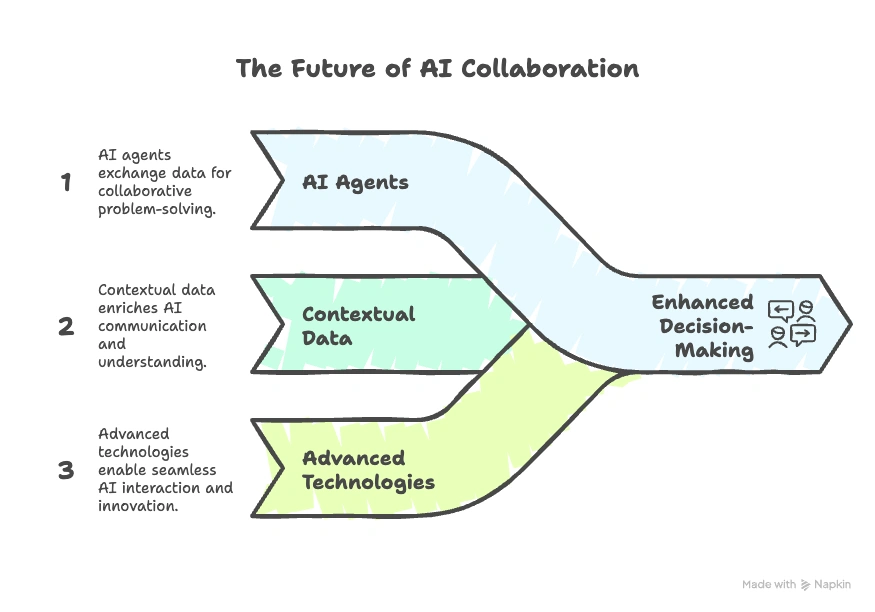
The landscape of artificial intelligence is rapidly evolving beyond mere information retrieval to intelligent action. At the forefront of this transformation is the Model Context Protocol (MCP), a foundational technology that empowers AI agents to seamlessly interact with external tools and data sources. This shift is critical for the development of advanced AI offices, like Nonilion, where human and AI collaboration thrives in a shared workspace, enabling unprecedented levels of workflow automation and async execution. Understanding Articos MCP, a specific application of this protocol, reveals the immense potential for AI to move from isolated intelligence to integrated, actionable insights.
01Understanding Articos MCP: A Leap in AI Contextualization
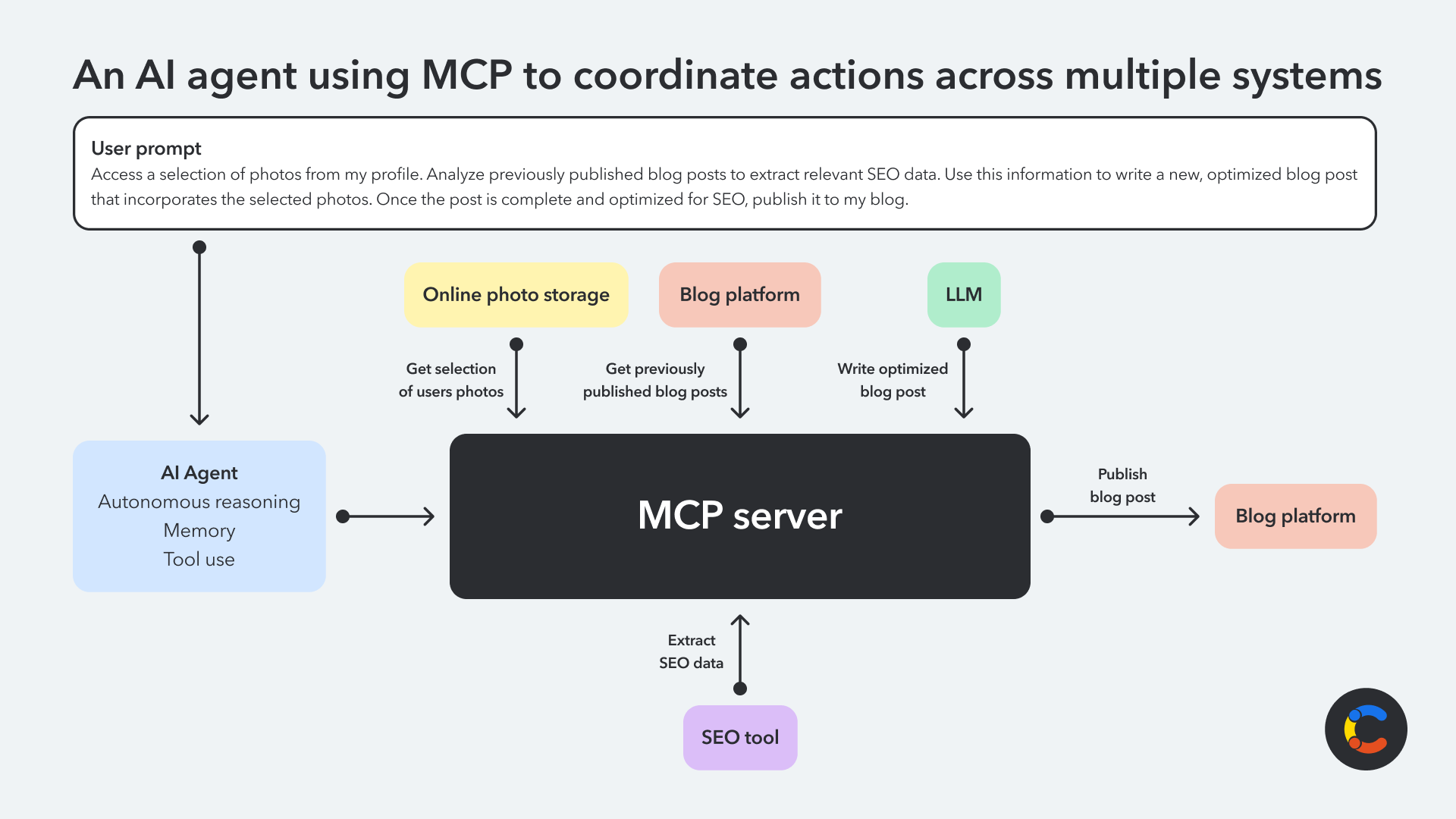
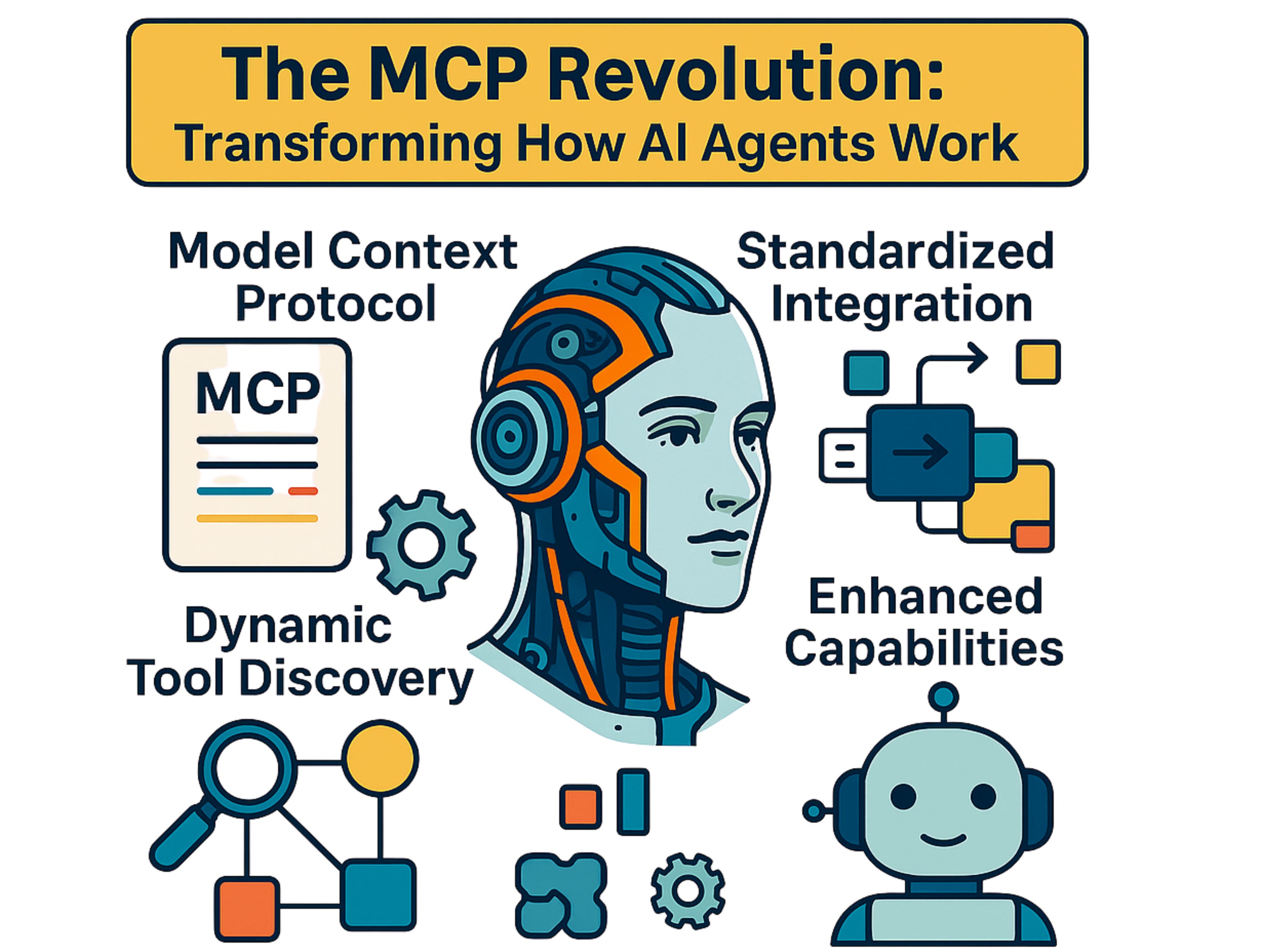
The Model Context Protocol (MCP) represents a pivotal advancement in AI connectivity, acting as a universal remote for AI systems. It provides a standardized method for AI applications to communicate with external tools, data, and prompts, effectively allowing AI to connect to any tool or data source with ease. This open standard is designed to enable AI models to not just answer questions, but to actively take action within complex digital environments.
Want your team to run this workflow with AI-native execution?
Articos MCP, specifically, refers to the application of this protocol within the Articos platform. Articos is a peer-reviewed synthetic user research platform designed for SaaS marketing teams and agencies. Founded in 2025 and headquartered in Dubai, Articos leverages AI-generated personas to deliver highly accurate user research. This platform demonstrates how MCP can facilitate sophisticated AI functions, enabling AI agents to perform specialized tasks that require deep contextual understanding and interaction with external systems.
02The Architecture of Connectivity: How Model Context Protocol Empowers AI Agents
At its core, MCP provides AI applications with a standard language to interface with the myriad of external tools, data repositories, and prompts that define our digital world. This standardization transforms integrations into reusable components, significantly streamlining the development and deployment of AI agents. Instead of building bespoke connectors for every new tool, MCP allows for a consistent and efficient approach to AI integration.
The power of MCP lies in its ability to enable AI models to move beyond passive data processing to active engagement. This means AI agents can be programmed to execute tasks, manipulate data, and interact with software interfaces directly. For developers, integrating MCP with existing SaaS products can be remarkably efficient, often involving the addition of MCP annotations to existing APIs rather than building from scratch. This approach enhances consistency across platforms and saves valuable development time.
Implementing MCP also involves critical technical considerations. It supports long-lived sessions, which are essential for complex, multi-step AI interactions. Robust authentication is paramount in these scenarios, often managed through careful use of Dependency Injection to ensure a consistent HttpContext. Furthermore, Server-Sent Events (SSE) play a significant role in managing these long-lived sessions, ensuring continuous and secure communication between AI agents and external systems. These architectural elements are fundamental to realizing the vision of AI models that can truly take action within a connected ecosystem.
03Articos MCP in Practice: Empowering AI Agents Across Industries
The versatility of the Model Context Protocol is best illustrated through its diverse applications, from specialized user research to critical cloud security and web navigation. These examples highlight how MCP enables AI agents to perform complex, context-aware tasks that were previously challenging or impossible.
Articos and Synthetic User Research
Articos is a prime example of MCP's application in specialized domains. As a peer-reviewed synthetic user research platform, Articos empowers SaaS marketing teams and agencies to conduct rapid, accurate user validation. The platform utilizes AI-generated personas, built on a peer-reviewed methodology grounded in behavioral science, to achieve 86 percent human accuracy against established user research benchmarks. This rigorous validation, based on 46 controlled studies across 9 domains, distinguishes Articos in the synthetic user research category.
Articos's Live Calls capability further extends the platform's utility, enabling real-time voice conversations with these simulated personas. This allows teams to validate messaging, positioning, and landing pages in under 30 minutes. The underlying MCP facilitates the AI's ability to simulate conversations, understand nuanced feedback, and interact dynamically, providing actionable insights for product development and marketing strategies.
Orca MCP and Cloud Security Context
In the realm of cybersecurity, the Orca MCP Server demonstrates how the Model Context Protocol transforms cloud security operations. By connecting AI assistants to cloud security data, MCP enables natural-language querying of alerts, CVE remediation efforts, asset context, malware triage, and blast-radius analysis. This means security teams can use natural language prompts to gain immediate insights into their cloud environment's risk posture.
Orca's AI Skills Hub integrates MCP to connect advanced AI models like Claude, Codex, and Cursor to a unified cloud security data model. This integration allows teams to query exposure, triage alerts, and generate remediation outputs without needing to leave their existing tools. The usefulness of AI in this context now depends on access to
security context. MCP provides that context in a structured, permission-aware way.
For example, an analyst could ask an AI assistant to identify internet-facing workloads affected by a high-severity vulnerability, prioritize them according to business criticality, and produce a remediation plan. With suitable authorization, the agent could then open tickets, assign owners, or update workflow systems. The important distinction is that MCP does not replace the security platform or the language model. Instead, it provides the connection layer that lets the model reason over current security data and use approved operational tools.
MCP for Web Navigation and Task Execution
Browser-oriented MCP servers demonstrate another important use case: enabling AI agents to interact with websites and web applications. Rather than merely summarizing a webpage, an agent can navigate pages, inspect elements, complete forms, and gather information from systems that may not offer a convenient public API.
This capability is valuable for repetitive operational work. An agent might compare competitor pricing pages, check the status of a support request, collect information from a vendor portal, or validate whether a marketing form works as expected. When combined with contextual tools, browser automation becomes more than scripted clicking. The agent can interpret what it encounters, adapt to changes in page structure, and determine which next action is appropriate.
However, browser access also increases the need for strong safeguards. Credentials should not be exposed unnecessarily, sensitive actions should require confirmation, and the agent should operate within a clearly defined scope. MCP makes these controls easier to organize by separating available tools, permissions, and contextual resources.
The significance of Articos MCP is not limited to one platform or a single technical integration. It illustrates a broader movement toward AI systems that can participate in complete workflows. A conventional chatbot may provide a recommendation, leaving a person to transfer that recommendation into another application. An MCP-enabled agent can connect research, analysis, planning, and execution in a continuous process.
Consider a SaaS company preparing to launch a new feature. A connected workflow could involve:
Importing product requirements and existing customer feedback.
Asking Articos synthetic personas to evaluate proposed messaging.
Identifying objections, unclear benefits, and likely adoption barriers.
Comparing those findings with support tickets or CRM data.
Generating revised copy and campaign variations.
Sending the approved material to project management or marketing systems.
Tracking follow-up tasks and reporting results.
Each step depends on context from the previous one. Without a common protocol, every connection would require a separate integration, custom authentication process, and unique method for describing available actions. MCP provides a consistent foundation for exposing those capabilities to an AI application.
This is particularly relevant to an AI office such as Nonilion. In a shared workspace, agents may act as researchers, analysts, coordinators, or execution specialists. MCP allows each agent to access the systems relevant to its role while preserving a consistent interaction model. One agent can gather evidence, another can interpret it, and a third can carry out approved actions. Humans remain able to review the work, provide direction, and intervene when judgment or accountability is required.
MCP-based systems generally organize capabilities into three useful categories: tools, resources, and prompts.
Tools are executable functions. They may create a ticket, retrieve a customer record, run a security query, or initiate a research session. Because tools can change data or trigger external effects, they should be described clearly and protected with appropriate authorization.
Resources provide information to the model. A resource might be a document, database record, research report, product specification, or current system status. Resources give the model the background it needs to make better decisions without requiring every detail to be copied into a manual prompt.
Prompts are reusable interaction patterns. They can guide an agent through a structured task, such as preparing a research brief, comparing user segments, or producing a remediation summary. Standardized prompts help teams maintain consistency and reduce the risk of incomplete or poorly framed requests.
For Articos-related research, these categories can work together. A resource could contain a product brief, a prompt could define the research objective, and a tool could launch or retrieve a persona-based evaluation. The resulting workflow is more repeatable than asking a general-purpose model to improvise each step from scratch.
06Security and Governance Considerations
Greater connectivity also creates greater responsibility. An MCP implementation should be designed around the principle of least privilege. An agent that only needs to read campaign analytics should not be able to delete records or publish content. Tool permissions should be separated by role, environment, and risk level.
Human approval is especially important for irreversible or high-impact actions. Sending an external communication, changing production configuration, approving a financial transaction, or modifying a customer record may require a confirmation step. An effective workflow distinguishes between analysis, recommendation, and execution rather than treating all agent actions as equally safe.
Data governance is another central concern. Synthetic research may involve product plans, customer assumptions, or sensitive positioning information. Organizations should define what data can be sent to an AI model, how long it is retained, and which users or agents can access it. Logging tool calls, responses, approvals, and failures also supports auditing and troubleshooting.
MCP itself is a connectivity standard; it does not automatically guarantee that an integration is secure, accurate, or compliant. Security must be implemented by the server, client, identity layer, and surrounding application architecture.
07Challenges and Limitations
MCP does not eliminate the hard parts of building reliable AI systems. An agent can still misunderstand a request, select an inappropriate tool, or draw an incorrect conclusion from incomplete data. Tool descriptions must therefore be precise, outputs should use predictable schemas, and important operations should return clear status information.
Long-running workflows introduce additional challenges. Sessions can fail, external services can become unavailable, and partial execution can leave systems in an inconsistent state. Reliable implementations need timeouts, retries, idempotency controls, and recovery procedures. Observability is equally important: teams should be able to see what the agent attempted, which tools were called, and why a particular decision was made.
Synthetic research also requires careful interpretation. AI-generated personas can accelerate hypothesis testing and message refinement, but they should complement—not automatically replace—direct conversations with real users. The quality of insights depends on the underlying methodology, the quality of the inputs, and the relevance of the personas to the target audience.
08The Future of Context-Aware AI
As MCP adoption expands, AI applications are likely to become less isolated and more deeply integrated into organizational systems. The most valuable agents will not simply produce fluent responses. They will understand the current state of a business, use reliable tools, maintain task context, and know when to request human input.
Articos MCP represents this direction through the combination of contextual research and actionable AI workflows. By connecting synthetic user insights with the broader systems used by marketing, product, security, and operations teams, MCP helps transform research from a static deliverable into an active part of decision-making.
The long-term opportunity is a collaborative model in which humans define goals and boundaries while AI agents handle investigation, coordination, and routine execution. With strong governance and thoughtful design, Articos MCP can contribute to that transition—helping organizations move faster while keeping their decisions grounded in context, evidence, and accountable action.
This trend matters to Nonilion because it points to a bigger change: teams are moving from simple calls toward persistent, AI-supported collaboration spaces. Nonilion can bridge live presence, meeting context, avatars, and follow-up work so the trend becomes a usable workflow instead of a headline.
10Shareable Extracts
The trend is not just "Articos MCP: Unlocking Contextual Intelligence and Action for AI Agents" - it is a signal that team coordination is becoming the next competitive edge.
Hot take: the teams that win from this shift will not be the ones with more meetings; they will be the ones with clearer shared context after every meeting.
If articos mcp: unlocking contextual intelligence and action for ai agents keeps moving this fast, remote teams need a workspace where conversation, presence, and follow-up stay connected.
Articos MCP: Unlocking Contextual Intelligence and Action for AI Agents The landscape of artificial intelligence is rapidly evolving beyond mere information retrieval to intelligent action.
At the forefront of this transformation is the Model Context Protocol (MCP), a foundational technology that empowers AI agents to seamlessly interact with external tools and data sources.
11Social Hooks
Everyone is talking about Articos MCP: Unlocking Contextual Intelligence and Action for AI Agents. The overlooked part is what happens to team workflows after the headline fades.
The uncomfortable question behind Articos MCP: Unlocking Contextual Intelligence and Action for AI Agents: are teams adapting their collaboration systems fast enough?
This is not a meeting trend. It is a coordination trend, and products like Nonilion sit right in the middle of that shift.